Gamban blocking and multi-operator self-exclusion are different things, and a site outside one scheme does not establish that access is safe.
What UK self-exclusion means for online casino access
GAMSTOP is Great Britain’s national online self-exclusion scheme. Its purpose is to apply a person’s exclusion across multiple licensed gambling websites and apps, rather than leave the decision to be repeated separately with each operator. For someone considering access to UK online casinos, that distinction matters: registering is not simply a request to block one account.
The scheme covers online gambling businesses licensed by the UK Gambling Commission. Once a person registers, participating operators are expected to prevent access to existing gambling accounts and stop new accounts being opened in that person’s name for the chosen exclusion period. The available periods include six months, one year and five years. Registration is free.
I have seen account access treated as a technical matter at the front end: a person tries to sign in, create an account or use an app, and the operator has to apply the exclusion to the relevant identity. Behind that screen is a multi-operator arrangement. The point is to make the restriction work across covered businesses, not merely to put a warning on one casino account.
GAMSTOP is not the same thing as Gamban. A search for casino sites not on Gamban may refer to a device-blocking tool, while GAMSTOP is the national multi-operator self-exclusion scheme for Great Britain. Those terms are sometimes blurred in casual discussion, but they describe different things. A phrase such as “online casinos not on Gamban” does not, by itself, say whether a business is covered by GAMSTOP or what its licensing status is.
The regulatory background is important. Since 2020, UKGC-licensed online gambling operators have been required to participate in GAMSTOP. That means regulated online casinos serving the British market must act on an active GAMSTOP exclusion; it is not an optional customer-service feature that an operator can simply choose to ignore. GAMSTOP’s reach is across participating licensed websites and apps, including casino platforms.
Casino Guides to Licensing, Access and Payments
The registration process is structured around identity and a defined period. A person provides personal details so the scheme can identify them, chooses how long the exclusion should last and receives confirmation. Those details are what allow the scheme and operators to match the exclusion against accounts. It is an administrative process with a practical consequence: access to covered gambling accounts is restricted for the period selected.
That is why a list described as the best UK casinos not on Gamban would not answer the central access question. It may be using “Gamban” loosely, or referring to a particular blocking-tool relationship, but that wording does not explain whether the person has an active GAMSTOP registration. Nor does it establish that a casino is outside the UK licensing system. A label is not an account-status check.
The same distinction applies to casino apps and slots. Whether an app appears in a particular blocking tool is separate from whether a licensed operator must recognise an active GAMSTOP exclusion. Looking for slots not on Gamban does not change how the multi-operator scheme applies to covered gambling accounts. The relevant boundary is the scheme and its participating operators, not the wording used to describe a site or game.
GAMSTOP’s practical effect is broad, but it is not a general switch that changes every form of gambling access everywhere. It is an online scheme covering participating licensed gambling websites and apps in Great Britain. The operator’s role is to apply the exclusion to the accounts and access routes it controls. The scheme’s role is to communicate the self-exclusion across the participating businesses.
In the industry, this can sound more seamless in a headline than it feels in day-to-day account handling. A customer may think in terms of one casino, one app or one login; the scheme is designed to cover multiple operators. That is the essential context behind references to non-Gamban online casinos: the wording alone cannot establish which scheme applies or remove the effect of a GAMSTOP registration. Separate labels. Separate systems.
Non-GamStop Curacao Casino Sites: UK Licensing
For British online casino access, then, GAMSTOP should be understood as the national, multi-operator self-exclusion route for licensed online gambling. A registration restricts access to covered gambling accounts and prevents new ones being created with those operators during the selected period. It is a formal restriction with a defined scope, not merely a device setting or a preference attached to one casino profile.
“Not on Gamban” is not a safe route around an exclusion
“Not on Gamban” describes a claim about a blocking tool. It does not answer the more important question: whether gambling is consistent with an active self-exclusion agreement. Those are separate things. A site may be described as a non-GAMSTOP casino or as not using Gamban, but neither label cancels an agreement already made with a gambling business.
I have seen how easily the wording gets blurred. A tool-related phrase can sound like a permission slip: if access is possible, play must be allowed. That conclusion does not follow. Self-exclusion is a formal commitment not to gamble with the venues or websites covered by the agreement. A technical barrier and that commitment do different jobs. One concerns whether access is blocked; the other concerns whether gambling has been ruled out.
Access is not permission
An active exclusion means the excluded business should refuse service. Self-excluded customers are not supposed to be able to gamble at the venues and websites from which they excluded themselves. Gambling businesses must take reasonable steps to prevent that from happening.
That responsibility matters, but it does not turn access to some other site into a safe workaround. The agreement remains a commitment not to gamble. If a person responds to a block by finding another account or another site, the practical effect is to resume gambling while the exclusion is still active. Playing at a non-GAMSTOP casino could therefore put the terms of a self-exclusion at risk.
Non-GamStop European Casinos: UK Rules Explained
The distinction is not complicated. A blocked route may stop access to a particular service; an unblocked route does not establish that gambling is compatible with an existing agreement. No technical label can decide that question on the player’s behalf. The agreement still matters.
Self-exclusion is a business obligation
Self-exclusion is not merely a preference feature added at an operator’s discretion. Gambling businesses are required by law to offer it. Once a person has entered an exclusion agreement with a business, that business must take reasonable steps to stop the person gambling there, and the customer is expected to keep to the agreement.
This is why the terms should be treated as more than a setting that can be bypassed when inconvenient. The exclusion is intended to interrupt gambling with the businesses it covers. A site being called “not on Gamban” says nothing, by itself, about whether it is covered by a separate agreement or whether using it would respect that commitment.
Nor does opening a fresh account elsewhere solve the underlying problem. A new username, email address or payment route does not undo an existing self-exclusion. Trying to get around an exclusion by creating another account is not a safe route back to gambling. It can undermine the very boundary the agreement was meant to establish.
There is a difference between a business failing to prevent access and a customer being entitled to play. If an excluded customer manages to reach a site, that access alone does not make the gambling acceptable under the agreement. The business has duties to take reasonable steps; the person who self-excluded remains responsible for sticking to the commitment. Both points can be true at once.
Breach of Agreement
Trying to get around a self-exclusion by creating another account can undermine the boundary the agreement was meant to establish and put the terms of the exclusion at risk.
Treat the label cautiously
Search phrases such as “casinos not on Gamban” or “non-Gamban casinos UK” can make the question sound like a matter of software compatibility. In practice, the relevant issue is not simply whether a particular tool blocks a page. It is whether gambling would break an active commitment to stop.
I would not read “not blocked” as “safe to use”. That wording collapses a technical description into a judgement about conduct, and the judgement is not supported by the label. The same caution applies to claims that a casino is outside a blocking scheme: they do not grant an exception to an agreement made with another gambling business.
When an exclusion is active, the dependable course is not to seek a different account to continue gambling. The agreement is the boundary. Trying to step around it can breach its terms, even when the alternative site is accessible or marketed with language suggesting it sits outside a blocking tool.
The point is deliberately plain: no block is not permission. A self-exclusion remains a formal agreement, and gambling businesses must offer that protection and take reasonable steps to uphold it. The fact that a route may be open does not make it a suitable route to take.
What a site outside a blocking scheme cannot tell you
A site described as unaffected by a blocking tool tells you only something about the tool’s reach, if the description is accurate. It does not establish who operates the site, whether it holds the licence required to serve people in Britain, or whether gambling there is consistent with an existing self-exclusion agreement. Those are separate questions.
I have seen these labels treated as if they were a kind of clearance. They are not. A blocking tool and a self-exclusion arrangement do different jobs: one restricts access through software; the other is an agreement with a gambling business or scheme. A website that remains accessible through a device does not thereby become a permitted place to gamble.
Licensing needs its own check. Remote gambling operators serving Great Britain must hold the relevant UK Gambling Commission licence, regardless of where the business is based. A site’s claim that it is “not blocked” says nothing about that licence. Nor does a foreign address, a polished interface or an available account-registration form change the requirement for operators serving this market.
Non-UK-Registered Casinos: How Licensing Works
The distinction matters because an accessible site may sit outside the UK regulatory system. Offshore casinos do not hold a UKGC licence, and online gambling in the UK is legal only through licensed and regulated sites. The label attached to a blocking tool cannot settle that regulatory question. It is not a licence check.
There is also the agreement itself. Self-exclusion can be requested from a single gambling business, and gambling businesses must offer this safeguard by law. A customer who has excluded themselves from a particular business is to be refused service by that business’s website or venue. A different name on a screen does not prove that an existing agreement no longer applies; the relevant issue is the business and the terms of the exclusion, not whether a blocking tool happens to stop the page loading.
That is why a site being accessible should not be read as permission to resume gambling. If an active exclusion is in place, opening another account elsewhere to get around it is not a sound workaround. Play at a non-GAMSTOP casino could breach the terms of a self-exclusion, even if no software blocks access. The short version: access is not authorisation.
From the industry side, those are easy details to blur in promotional language. “Unaffected” sounds like a neutral technical description, but it can be mistaken for an endorsement or a statement that the site is outside every relevant safeguard. It establishes neither. The wording does not confirm the operator’s legal status, the reach of a particular tool, or the effect of an exclusion agreement.
The practical reading is narrower: a blocking label concerns access through that tool, while a licence concerns whether the operator may serve the British market and self-exclusion concerns a formal commitment with the business or scheme involved. These checks do not replace one another. A site may be reachable and still be unlicensed for the market; it may be reachable and still be incompatible with an active exclusion.
No loophole. Just different systems, with different consequences.
Anjouan casino licence in the UK: what it means
“Without Gamban” does not mean without safeguards
“Without Gamban” describes a claimed relationship between a casino and a blocking tool. It does not establish what safeguards the business provides, whether it is properly authorised to serve people in Britain, or whether an existing self-exclusion agreement has ended. Those are separate questions. A tool’s coverage is not a permission slip.
I have seen how easily a label can do more work in an advert than it can support in practice. “Without” may sound like a simple technical feature; it says nothing reliable about account controls or the handling of a person who has already asked to be excluded. Nor does it cancel an agreement made with a gambling business or through a multi-operator scheme.
Gambling businesses must offer self-exclusion by law. For online gambling, that can mean registering with GamStop or asking an individual casino to exclude the customer. A person who has an active agreement should not treat a casino described as outside a blocking tool as a route back to gambling. Playing there could breach the terms of that self-exclusion. Opening another account elsewhere to get around it is not a solution.
The single-site route is direct. On the gambling website or app, the Responsible Gambling or Safer Gambling page should explain how to request self-exclusion. If the instructions are not available there, customer services can be contacted. A request can be made to one gambling business; it is not necessary to rely on a software label to make that request.
The important distinction is between a block on a device and an agreement with a gambling business. The first concerns access through a tool. The second is a formal request for the business to stop the person gambling with it. Neither phrase in a casino description confirms that an existing agreement has been lifted. No technical workaround should be treated as one.
Self-exclusion works best when it covers the places where gambling may be tempting, rather than only the site that prompted the decision. That means considering online accounts and, where relevant, venues as well. A narrow block can leave other routes available; a broad decision is more consistent with the purpose of self-exclusion. Keep the boundary clear.
Requesting Self-Exclusion
Identify the route
Determine if you need a multi-operator registration through GamStop or a single-site exclusion.
Locate instructions
Visit the Responsible Gambling or Safer Gambling page on the casino website or app.
Submit request
Follow the provided instructions or contact customer services to formally request the exclusion.
A casino’s claimed relationship to Gamban is therefore a poor substitute for checking what action is needed with the relevant gambling business. It is also no substitute for keeping to an active agreement. Where money has already been spent gambling, the regulator cannot provide a refund. The practical safeguard is not a label. It is maintaining the exclusion and not trying to route around it.
Why “Gamban-free” is not a quality rating
“Free” is doing little work in the phrase “Gamban-free casino”. It may describe a claimed relationship between a website and a blocking tool, but it does not tell anyone whether the casino is free to use, safe, suitable or well run. Those are separate questions. The label is not a quality mark.
That distinction matters because a short promotional phrase can make an absence sound like a benefit. A casino site described as free of a particular blocker has not, by that description alone, demonstrated responsible conduct or established that gambling there is appropriate for a particular person. Nor does the phrase say anything reliable about costs or conditions. It is a narrow claim about a tool, not a meaningful assessment of the service.
I have seen how labels work in gambling: they draw attention to one feature and leave the rest outside the frame. “Gamban-free casino sites” may sound like a category with a clear standard behind it. The wording itself does not create one. It cannot certify the operator, the experience, or the consequences of opening an account. A claim about access is not a quality rating.
Online Casino Malta MGA Licence and UK Rules
The more important boundary is the self-exclusion agreement. A customer who has excluded themselves from a gambling venue or website must be refused service by that venue or website. Once an agreement is in place, the gambling business must close the customer’s account, return any funds held in it and remove the customer’s details from its marketing databases. These are concrete obligations, not optional signals of good customer service.
That also changes how the word “free” should be read. It does not mean free from the terms of an existing agreement, and it cannot cancel an exclusion. A label attached to another site does not alter what a person agreed with a business from which they excluded themselves. Treating the label as permission would confuse a tool-related description with the status of a formal agreement.
There is a practical difference. A site can be described with confident language, while the customer’s situation remains unchanged: the excluded business must not serve them. The label offers no answer to that. It is not a safeguard, a suitability check or an exception.
From the industry side, the distinction is plain. Marketing language describes what a seller wants noticed; an exclusion agreement governs what the business must do. The former cannot overrule the latter. “Free” is only a word.
Why a “best” non-GAMSTOP ranking cannot override an exclusion
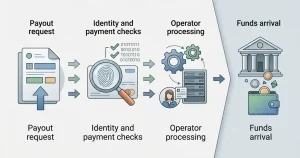
If you’re exploring UK casino options outside Gamban, check the available information carefully and consider what support and safeguards you may need. This list offers a brief reference point on the payout speed reported for each operator.
1. SlotoSport
Payout speed: 1-3 business days SlotoSport lists a payout speed of 1–3 business days.
2. EvoSpin
Payout speed: 1-3 business days EvoSpin lists a payout speed of 1–3 business days.
3. BeOnBet
Payout speed: 1-3 business days BeOnBet lists a payout speed of 1–3 business days.
4. Dieselwin
Payout speed: 1-3 business days Dieselwin lists a payout speed of 1–3 business days.
5. x3bet
Payout speed: 1-3 business days x3bet lists a payout speed of 1–3 business days.
6. Jetsetspins
Payout speed: 1-3 business days Jetsetspins lists a payout speed of 1–3 business days.
7. SpinFormula
Payout speed: 1-3 business days SpinFormula lists a payout speed of 1–3 business days.
8. NightLuck
Payout speed: 1-3 business days NightLuck lists a payout speed of 1–3 business days.
9. Zombillion
Payout speed: 1-3 business days Zombillion lists a payout speed of 1–3 business days.
10. Revery Play
Payout speed: 1-3 business days Revery Play lists a payout speed of 1–3 business days.
A ranking of casinos described as “best” is an editorial comparison, not a change to a self-exclusion agreement. The label may suggest that a site suits a particular player, but it cannot establish that gambling there is consistent with an existing commitment to stop.
I treat the word “best” cautiously. It can refer to a reviewer’s preferences or to features being compared; it does not decide whether a person is eligible to gamble. Nor does a position in a list cancel an exclusion, alter its terms or require a gambling business to accept an account.
Self-exclusion is a formal agreement not to gamble. The agreement covers the business or sites named in it, and the excluded customer is responsible for keeping to it. A venue or website covered by the agreement must refuse service. Gambling businesses are also required to offer self-exclusion and must take reasonable steps to prevent an excluded customer from gambling with them.
That boundary matters when a list promotes casinos said to be “non-GAMSTOP” or unaffected by a blocking tool. A ranking cannot show that opening an account elsewhere is compatible with an existing agreement. If another gambling business is not covered by that agreement, that fact alone is not permission to work around the exclusion. Trying to resume gambling through another account can put the commitment at risk.
No ranking can settle that question for an individual. A comparison of casino features is not a review of someone’s exclusion terms, and a promotional description is not a substitute for the agreement itself. The practical decision should not be based on a label or a list position.
There is also a difference between being able to reach a website and being entitled to gamble there under an exclusion. Those are not the same test. A site’s availability, or its appearance in a “best” list, does not remove the player’s responsibility to observe a formal agreement. The safest course during an active exclusion is not to open another account to get around it.
If money has already been spent gambling, the regulator cannot provide a refund for those losses. That is separate from the business’s duties under a self-exclusion agreement; it does not make a workaround acceptable or reverse the agreement.
A ranking may help compare a product. It cannot rewrite a commitment. The boundary remains.
Non-GAMSTOP slots and the limits that still apply in Britain
A slot’s controls are not determined by the label attached to a casino in an advert. In Britain, online slot rules apply to play offered by UK-licensed operators: autoplay is banned, and each spin must last at least 2.5 seconds. These are operating conditions, not signs that a game is suitable for every player.
The ban on autoplay changes how a session proceeds. A player must initiate each spin rather than set a sequence running unattended. The minimum spin duration also limits how quickly one spin can follow another. Neither rule removes the possibility of losing money, makes a slot low-risk, or cancels a self-exclusion agreement. Basic friction is not a safeguard against every harm. Different things.
I have seen how a feature can be presented as a mark of control when it is simply a rule about how the product operates. A slot without autoplay is still a slot. A spin that takes the required time is still a chance to gamble. Those conditions should not be read as approval to return to play.
UK Slot Rules
In Britain, UK-licensed operators must ensure that autoplay is banned and each spin lasts at least 2.5 seconds.
For someone who has self-excluded from UK-licensed online casinos through GAMSTOP, the exclusion remains the relevant boundary. Looking for slots described as non-GAMSTOP does not change that agreement. Playing through another account or business to resume gambling could breach its terms; opening another account elsewhere is not a solution. A person who has made a formal agreement not to gamble is responsible for keeping to it, while gambling businesses must take reasonable steps to prevent excluded customers from gambling with them.
There is also a regulatory distinction behind the wording. Remote operators offering gambling to people in Great Britain must hold the relevant UK Gambling Commission licence. A site’s description of its games, or a claim about a blocking tool, does not establish that it is authorised to serve British customers. The British slot rules do not turn an unlicensed site into a compliant one, and they do not make gambling there compatible with an active exclusion.
Non-UKGC Licensed Casinos: Rules and Risks
The practical point is narrow but important: autoplay and spin duration govern the mechanics of online slots in Britain. They do not assess whether a player should be gambling, and they do not override a decision to self-exclude. Where an exclusion is active, searching for a different route to slots risks turning a technical distinction into a breach of a personal agreement. The safer course is not to resume play through another account.
“Outside Gamban” does not remove the need to self-exclude broadly
A site described as outside Gamban is not a self-exclusion arrangement. The label says nothing about which places are covered by an individual agreement, and it does not replace the need to exclude from every setting where gambling may be tempting. Online and land-based routes have different practical steps.
For online gambling, self-exclusion can be requested through GamStop or directly from an individual casino. These routes address access through a scheme or a specific business; neither should be treated as permission to gamble somewhere else. Playing at non-GamStop casinos while an exclusion is active could breach its terms. Opening an account elsewhere to get around an exclusion is not a safe alternative.
Land-based self-exclusion requires a separate step. A person can visit an arcade, betting shop or casino and tell the manager or a member of staff that they want to self-exclude. The venue can provide the relevant form. Taking identification photos and keeping a copy of the completed form can help retain a record of the request.
The distinction matters in practice. Someone who has excluded from online gambling may still encounter gambling in a venue, while a venue-based request does not itself cover online accounts. The arrangements need to match the places where the risk arises. Broad coverage, not a tool label.
Self-exclusion is not just a setting on a device. Gambling businesses are required by law to offer it, and an agreement with one business does not automatically mean that every other gambling setting has been addressed. I have seen how easy it is to mistake a technical barrier for a complete plan; the two do different jobs.
Where gambling may be tempting, the practical response is to use the relevant online and venue-based self-exclusion routes rather than rely on whether a particular casino appears accessible through a blocking tool. A barrier can help interrupt access. It cannot make an existing exclusion disappear.
Do
- Use multi-operator schemes for broad online coverage
- Visit venues personally for land-based exclusion
- Keep a copy of completed exclusion forms
Don’t
- Rely on software labels to manage exclusions
- Treat a technical block as a complete plan
- Use a device tool as a substitute for a formal agreement
When a casino is not part of a multi-operator exclusion
A multi-operator scheme and a single-business exclusion cover different ground. GAMSTOP is designed to block access across participating licensed online gambling websites and apps. A separate request to one gambling business applies to that business; it is not, by itself, a registration with a scheme covering multiple operators. The distinction is about the scope of the agreement, not a label that establishes whether a particular casino is included.
For an individual gambling website or app, the route is through its Responsible Gambling or Safer Gambling page, following the self-exclusion instructions there. If the process is not clear, the business’s customer service team can explain how to make the request. The agreement is with that gambling business, so its reach should not be assumed to extend to other companies, even where their sites look similar or use related branding.
Once the business has agreed to the exclusion, it has concrete duties. It must close the customer’s account, return any funds held in it, and remove the customer’s details from its marketing databases. These are not optional courtesies attached to a promotional promise. They form part of how the self-exclusion agreement is meant to work.
The practical point is easy to miss: an account closure at one operator does not amount to a broader block across the market. Conversely, a multi-operator registration is not a reason to treat a single-business agreement as irrelevant. Each route has its own scope, and the customer remains responsible for keeping to the formal agreement made with the business.
I have seen the wording of exclusions treated as a technicality, as if a different account or a separate site made the commitment disappear. It does not. If a business has accepted a self-exclusion request, opening another account to continue gambling is not a way around the agreement. The boundary may be narrower than a multi-operator scheme, but it is still binding in practice.
A clean distinction. A real obligation.
“No Gamban slots” is not the same as a slot-free safeguard
A claim that slots are available without Gamban describes, at most, a relationship with a blocking tool. It does not say whether the games have safeguards, whether the operator is authorised to serve people in Britain, or whether playing would be consistent with an existing self-exclusion. Those are separate questions. The label answers none of them.
The distinction matters because a blocking tool and a gambling business have different roles. A tool may restrict access on a device; a gambling operator is responsible for its own customer controls. In Britain, online slot rules also apply independently of whether a blocking tool affects a particular site. Autoplay is banned, and each online slot spin must last at least 2.5 seconds.
Those controls govern how slots can be played. They do not make gambling safe for someone who has chosen to exclude themselves. A slower spin is still a spin. No autoplay is not a substitute for an exclusion agreement.
From the operator side, an exclusion is not just a setting to be worked around. It is a formal agreement not to gamble, and the customer remains responsible for observing it. Gambling businesses must take reasonable steps to stop an excluded customer from gambling. That responsibility does not turn a new account into a clean slate.
I have seen how a product label can narrow attention to one feature while leaving the important condition out of view. “No Gamban” can sound like a technical distinction. It does not establish permission to resume play. If self-exclusion is active, opening another account elsewhere to get back to slots is not a safeguard; it can breach the agreement.
The practical boundary is plain: tool compatibility and eligibility to gamble are not the same thing. A site’s relationship with Gamban cannot cancel a person’s commitment to self-exclude, and a slot’s compliant design cannot do so either. Technical access is not approval.
How does self-exclusion work?
You provide personal details to identify yourself, choose the venues or online sites to exclude yourself from, select a duration and receive confirmation. For online gambling, you can use GAMSTOP to exclude yourself across participating UK-licensed operators or contact an individual casino; for land-based casinos, ask at the customer service desk.
How do I return from self-exclusion?
For GAMSTOP, contact the scheme directly to request removal. A 24-hour cooling-off period applies, and it may take operators a further 24 to 48 hours to update your status.
How long does it take for GamStop to become active after sign-up?
The 24-hour cooling-off period starts once your identity has been verified, and your exclusion remains active during that period.
How does GamStop benefit me?
GAMSTOP is free and lets you block access to existing accounts and prevent new accounts with participating UK-licensed online gambling operators for your chosen period. It applies across multiple websites and apps rather than just one casino.
Material created by the team Rolletto