The guide explains how overseas casino licences, GamStop coverage, payment terms and complaint routes compare with UKGC oversight.
What a UKGC Licence Means in Practice
A UKGC-licensed online casino is an operator authorised by the UK Gambling Commission to serve customers in Great Britain. The important part is not where the company has its office, where its website is hosted or which country it calls home. It is whether the operator holds the relevant UKGC licence for the service it provides to people in Great Britain.
That distinction is easy to miss when a casino presents itself as an international brand. A company may be based abroad and still need a UK Gambling Commission licence to serve this market. Equally, a site’s use of British pounds, familiar games or a UK-facing design does not, by itself, make it UKGC licensed. The licence is about the operator’s authorisation, not the appearance of its website.
I have found it useful to separate three things that promotional pages often blend together: the brand name a customer sees, the company running the gambling service and the regulator that has authorised that company. A recognisable brand is not the same as a licence. Nor does a company’s location settle the question. The decisive distinction is whether the operator serving Great Britain customers is within the UKGC system.
The licence follows the service
In practical terms, the UKGC licence marks the regulatory boundary for operators serving Great Britain. A business cannot avoid that requirement simply by locating its headquarters or other operations elsewhere. Where the service is aimed at customers in Great Britain, the operator needs the relevant Gambling Commission licence.
That is why “UK-based” and “UKGC licensed” should not be treated as synonyms. The first describes location; the second describes regulatory authorisation. A business can be based outside Britain and hold a UKGC licence, while a site that appears tailored to British customers may not hold one. The wording matters. Location is background; authorisation is the point.
The same distinction applies when looking for a UKGC-licensed online casino list. A list is only meaningful if it identifies the actual operating company and its authorisation, rather than relying on brand familiarity or a casino’s own description of itself. The phrase “licensed” can be used in broad marketing language, but a licence from another regulator is not a UK Gambling Commission licence. One label cannot be substituted for another.
Casino Guides to Licensing, Access and Payments
What the label does—and does not—tell you
A UKGC licence tells the reader that the operator is authorised within the British regulatory system for the relevant service. It does not tell the whole story about a particular site, its games or whether its terms are suitable. Those are separate questions. The licence is a threshold fact, not a review verdict.
I used to regard the licence badge as a kind of overall quality mark. That was too simple. It answers a narrower question: is this operator authorised by the UK Gambling Commission to serve this market? It does not, on its own, amount to a promise that every interaction will be straightforward or that every customer will be satisfied. Those conclusions need evidence of their own.
This is also why a search for “which online casinos are licensed by the UKGC” should not be answered by naming brands without tying them to the company behind the service. A brand can be operated by a legal entity whose name is less familiar than the casino’s public-facing name. The licence question attaches to the operator, not merely to the logo or domain.
The contrast with a non-UKGC site
A non-UKGC online casino sits outside this specific authorisation system. That description does not, by itself, explain where the operator is based or what other licence it may hold. It simply means the site does not have a UK Gambling Commission licence. Those details belong to separate questions; they should not be inferred from the phrase “non-UKGC”.
For a British-facing site, this is more than a difference in branding. Operators serving customers in Great Britain require a UKGC licence regardless of their base of operation. So a foreign address does not excuse an operator from the requirement, and a foreign licence does not become a UKGC licence by being displayed beside a British flag or pound symbol.
The practical test is therefore narrow and useful: identify the operator, then establish whether it holds a UK Gambling Commission licence for serving Great Britain. Do not confuse a company’s country, a site’s design or a general claim of being “licensed” with that specific authorisation.
An operator’s location is background information; the decisive point is whether they hold the specific authorisation from the UK Gambling Commission to serve the Great Britain market.
That is the baseline. An operator either falls within the UKGC system for this market or it does not. The distinction is about who has authorised the service—not how convincingly the website presents itself.
How Non-UK-Regulated Casino Sites Are Structured
A non-UK-regulated casino is an online gambling site that operates without oversight from the UK Gambling Commission. The defining point is the absence of UKGC regulation, not the absence of any licence at all. Many such sites identify a regulator in another jurisdiction, so “unregulated” can be misleading if it is taken to mean that no authority is involved.
The distinction is easier to see by separating the website from the licensing arrangement behind it. A casino site is the service presented to its customers; its licence is associated with an operator and a regulatory jurisdiction. The site may use a brand name that does not make that jurisdiction obvious. As a result, the label “non-UKGC casino” describes its position outside the UK Gambling Commission’s oversight, rather than giving a complete account of who runs it or where its licence comes from.
This is also why a casino site without a UKGC licence should not automatically be described as unlicensed. It may hold a licence issued elsewhere. Malta, Curaçao, Gibraltar and Anjouan are among the jurisdictions commonly associated with non-UK-regulated casinos. Those names indicate where licensing may be based; they are not interchangeable labels for a single regulatory system.
Curacao Casino Licence in the UK: What It Means
In practical terms, the licensing location is one part of the operator’s structure, while the brand is what appears on the casino website. They can be related without sharing the same name. A company may operate a site under a consumer-facing brand, while the licence information identifies a legal operator or another entity connected to the service. The names therefore need to be understood in context rather than treated as synonyms.
That distinction matters because the phrase “non-UKGC casino site” can refer to several things at once in casual conversation: a website that lacks UKGC oversight, a brand associated with an overseas licence, or the operator named in the licensing information. Those are related, but they are not identical. The website is the visible product; the licence points to a regulatory location; the operator is the entity associated with running the gambling service.
From the inside, this is where marketing language can blur the picture. “International” describes reach or presentation, not the regulator. “Licensed” says that a licensing claim exists, but not, by itself, which jurisdiction it refers to. The useful description is more exact: a site outside UKGC oversight may be licensed in Malta, Curaçao, Gibraltar or Anjouan. The location is the point.
The same structure applies whether someone calls the service a non-UKGC casino website or a casino site outside the UKGC. Neither phrase identifies a particular licence or tells the whole story of the operating arrangement. They are broad descriptions of the relationship to the British regulator. The specific licensing jurisdiction has to be stated separately if the aim is to describe the operator’s regulatory base.
Malta
One of the jurisdictions commonly associated with non-UK-regulated casinos.
Curaçao
One of the jurisdictions commonly associated with non-UK-regulated casinos.
Gibraltar
One of the jurisdictions commonly associated with non-UK-regulated casinos.
Anjouan
One of the jurisdictions commonly associated with non-UK-regulated casinos.
There is no single “offshore” model hidden behind these terms. The shared feature is that the UK Gambling Commission is not overseeing the casino. Beyond that, the licensing jurisdiction may differ. Malta, Curaçao, Gibraltar and Anjouan each appear in this part of the market, but naming one does not make it equivalent to another. A jurisdiction is a location for the licensing arrangement, not a generic badge that explains every detail of a site.
This is why I avoid treating “UKGC licensed casino sites” and non-UK-regulated sites as two versions of the same product with only a different label. The licence points to a different regulator, and that changes what the description means. A foreign licence claim is about a foreign licensing framework; it is not UKGC oversight by another name. Separate terms. Separate regulator.
For a clear description, the wording needs to keep those layers apart: the casino brand is what is seen on screen, the operator is the business behind the service, and the licensing jurisdiction is where the relevant licence is based. A site may be discussed as a non-UK-regulated casino because it is outside the UK Gambling Commission’s oversight, while also being associated with a licence from one of the jurisdictions commonly found in this market. That is the structure the label conveys—and no more.
What UK Law Says About Using an Overseas Casino
The legal position is easier to understand when the operator’s duties are separated from the player’s. The Gambling Act 2005 is directed at businesses that supply gambling services into the British market. It does not make an individual player’s act of placing a bet the offence at issue.
Casino Without a UK Licence: Rules and Risks
That distinction matters because an operator can fall outside the rules for lawful commercial gambling in Great Britain without the person using its site committing a criminal offence. Under UK law, a player does not face criminal prosecution or a fine simply for gambling on a site that lacks the required British authorisation. That is a statement about the player’s legal liability, not a declaration that the site is approved for the market.
For businesses, the requirement is different. A remote operator serving customers in Great Britain must hold the relevant UK Gambling Commission licence, wherever the company itself is based. A licence issued overseas does not replace that obligation. A non-UKGC casino may have permission to operate under another jurisdiction’s rules, but that does not give it permission to supply gambling services in Britain.
I have seen the two sides blurred in promotional language. “Available to British players” describes access; it does not establish that the operator is authorised to serve the British market. “Licensed” may refer to a regulator abroad, rather than the UK Gambling Commission. The words can be accurate in isolation and still leave the central distinction unstated.
The operator’s position is not the player’s position
The Act’s focus on operators explains why the consequences do not fall evenly on both sides of a transaction. The business is responsible for meeting the requirements that apply when it offers gambling to customers in Great Britain. A player who accesses an unlicensed site is not thereby taking on the operator’s licensing duty.
Nor does the absence of a specific offence for the player turn the arrangement into regulated British gambling. Online gambling in the UK is lawful through sites holding the appropriate UK Gambling Commission licence. A casino outside that system does not become part of it because a British customer can open an account or place a bet.
Legal Liability
While players generally do not face criminal prosecution for using unlicensed sites, the operators themselves may be failing to meet legal requirements for serving the British market.
This is the point often lost in blunt claims that using an overseas casino is either “legal” or “illegal”. The first word may be used to describe the player’s lack of criminal liability; the second may be used to describe an operator’s failure to meet the requirements for serving the British market. Those are different questions, with different subjects. Short answer, different duties.
The law also does not explicitly bar British citizens from using gambling services that hold licences in other countries. That absence of a player-specific prohibition should not be read as a positive endorsement of every overseas site, or as a confirmation that its licence covers British customers. The operator’s position still depends on whether it is supplying services into the market and whether it has the required UK authorisation.
What the distinction does—and does not—settle
For someone trying to understand the legal status of a non-UKGC casino, the key is to avoid treating the player’s position as proof of the operator’s. The player may not commit a criminal offence by gambling there, while the operator remains outside the licensing framework required for lawful service in Great Britain. Both statements can be true at once.
Equally, a foreign licence answers a narrower question: whether a regulator elsewhere has licensed the business under its own system. It does not answer whether that business holds the UK Gambling Commission licence required to serve customers in Great Britain. That question is about the operator’s authority, not the player’s criminal liability.
So “non-UKGC casino” is a description of regulatory status, not a conclusion about what happens to an individual player under criminal law. The law places the relevant market-entry obligation on the operator. A player’s lack of criminal liability does not remove that obligation, convert an overseas licence into a British one, or make the site part of the UK-regulated market.
“Best” Is Not a Safety Standard: Reading Offshore Offers
For UK players considering casinos outside the UKGC-licensed market, it is worth checking the available information carefully before choosing. This list offers a concise reference point based on the details provided.
1. SlotoSport
Payout speed: 1-3 business days SlotoSport lists a payout speed of 1–3 business days.
2. EvoSpin
Payout speed: 1-3 business days EvoSpin lists a payout speed of 1–3 business days.
3. BeOnBet
Payout speed: 1-3 business days BeOnBet lists a payout speed of 1–3 business days.
4. Dieselwin
Payout speed: 1-3 business days Dieselwin lists a payout speed of 1–3 business days.
5. x3bet
Payout speed: 1-3 business days x3bet lists a payout speed of 1–3 business days.
6. Jetsetspins
Payout speed: 1-3 business days Jetsetspins lists a payout speed of 1–3 business days.
7. SpinFormula
Payout speed: 1-3 business days SpinFormula lists a payout speed of 1–3 business days.
8. NightLuck
Payout speed: 1-3 business days NightLuck lists a payout speed of 1–3 business days.
9. Zombillion
Payout speed: 1-3 business days Zombillion lists a payout speed of 1–3 business days.
10. Revery Play
Payout speed: 1-3 business days Revery Play lists a payout speed of 1–3 business days.
A large welcome bonus can make a casino look generous at first glance. In practice, the headline figure tells little about how much of the offer can be kept or how much play is required before winnings become withdrawable. I have seen the promotion do its job on the landing page while the key condition sits lower down, in terms most people skim.
Wagering requirements are the main adjustment. They set the amount of qualifying play needed before bonus funds or related winnings can be withdrawn. A specialist review has reported offshore welcome offers with requirements of 35x or more. That is a report about an offer, not a reliable description of every casino or a promise that the terms will stay the same.
The multiplier alone is not enough to understand the condition. A specialist review has also described a 40x requirement that could be calculated against the bonus and deposit together, the bonus alone, or the bonus and free spins together, depending on the offer. Those bases produce materially different obligations. The promotional headline may be identical; the qualifying amount is not.
That is where “best” becomes a slippery label. It can mean the biggest advertised bonus, but a larger offer paired with a demanding requirement may be less useful than a smaller one with clearer terms. A ranking that compares headline figures without explaining the calculation is comparing the shop window, not the product.
Do
- Identify which funds the wagering calculation uses
- Establish which parts of the promotion are included
- Check the terms for eligibility and withdrawal
Don’t
- Rely on the headline bonus figure alone
- Assume “best” or “top” indicates a safety standard
- Treat a bonus as money already won
I would read the offer in this order: identify what funds the wagering calculation uses, establish which parts of the promotion are included, then check what the terms say about eligibility and withdrawal. The precise wording matters. “Bonus” may not mean only the bonus amount, and a free-spin promotion may be treated as a separate component. If the rules leave the calculation unclear, the headline cannot resolve it.
The same caution applies to labels such as “trusted” or “legit”. They are not measures of bonus value. Nor does a polished promotion establish that an operator is safe or that its terms are stable. An offer describes a commercial arrangement; it is not a substitute for assessing the operator or the wider conditions attached to playing there.
I have also learned not to treat the bonus as money already won. It is conditional credit, and the conditions determine what it is worth. The useful comparison is not simply which site advertises the most. It is whether the calculation can be understood before accepting the promotion, and whether the resulting play requirement is acceptable.
A “top” list can make the decision appear simpler by compressing complicated terms into a score. That score may conceal the distinction between a requirement applied to the bonus and one applied to a combined amount. In my view, a comparison that omits that distinction is incomplete, however confident its verdict sounds.
The sensible reading is therefore literal, not promotional: separate the headline from the conditions, and treat every multiplier as incomplete until its calculation base is clear. A bonus may add value, but the word “best” cannot tell anyone how much.
GamStop Does Not Cover Every Casino
GamStop is a UK self-exclusion scheme, not a universal switch that blocks every gambling website. A casino outside the scheme is not included in its self-exclusion arrangements. That is the practical meaning of “not on GamStop”: the exclusion does not extend to that site through GamStop.
VPN-Friendly Casinos in the UK: What the Label Means
The distinction matters because search phrases such as “UKGC casino without GamStop” can combine two different ideas. A UK Gambling Commission licence describes an operator’s regulatory status; GamStop describes participation in a self-exclusion scheme. They are not interchangeable labels. A site’s use of “UKGC” in a page title or promotional claim does not, by itself, establish that the site is covered by GamStop.
I treat the boundary as a question of scope, not wording. If a casino is not part of GamStop, the scheme does not make that casino part of the exclusion. Calling it a casino “not blocked” by GamStop is a shorthand for that limit; it should not be read as proof that the site is licensed, safe, or suitable for someone who has chosen to self-exclude.
This is also why “UKGC casinos outside GamStop” is an imprecise description. The phrase may refer to a site that claims a UK connection, a site licensed elsewhere, or simply a casino not included in GamStop. Those are not the same thing. The meaningful point for self-exclusion is whether the operator is within the scheme, not whether a website uses familiar regulatory language.
Attention: GamStop is not a universal switch; it only applies to participating networks and does not cover every casino, particularly those outside its system.
A self-exclusion decision has a defined reach. It applies within the scheme’s participating network; it does not automatically become a restriction across every casino a person might encounter online. A site outside that network can therefore remain outside the scheme’s reach. That is a boundary, not a loophole in GamStop’s stated function.
The wording on casino pages can blur that boundary. “Not affected by GamStop” may sound like a special feature, when it simply describes non-participation. “UKGC casino not covered by GamStop” is especially easy to misread because it puts a regulator’s name beside a scheme the casino is not part of. The phrase alone settles neither the operator’s licence status nor the scope of its consumer protections.
I would separate the checks. First, establish what the operator’s licensing claim actually says. Then establish whether the casino is included in GamStop. One answer cannot stand in for the other. A licence label is not evidence of scheme participation, and absence from GamStop is not evidence of a licence.
For anyone relying on self-exclusion, the difference is material: GamStop does not cover every casino. A site outside its network is not brought into the scheme simply because it accepts UK visitors, describes itself as UK-facing, or appears alongside UKGC-related wording. The scheme has a boundary. That is the point.
Different Licences, Different Oversight
A licence is not a single, standard package of safeguards. Its practical meaning depends on the rules imposed by the issuing authority and what that authority is responsible for overseeing. Treating every non-UK licence as equivalent obscures the differences that matter when a casino’s systems or handling of funds are called into question.
Non-Gamban Casinos in the UK: What Exclusion Means
The UK Gambling Commission and regulators elsewhere operate under their own frameworks. A casino’s licence from Malta, Curaçao, Gibraltar or Anjouan therefore does not, by itself, establish that the operator is subject to the same requirements as a UKGC-regulated casino. Nor does the name of a jurisdiction tell the full story: the relevant question is what its rules require and what oversight the regulator actually provides.
Anjouan offers a concrete illustration. Its framework does not require casinos to have random number generators independently tested, to undergo audits, or to keep player funds separate from operating money. Those omissions describe the framework; they do not prove that every Anjouan-licensed operator skips testing, has never been audited, or misuses funds. But a practice that an operator may choose to follow is not the same as a condition the regulator requires.
That distinction is easy to miss in a casino’s marketing. “Licensed” can sound like a broad assurance that games, accounts and company finances have all been checked to a common standard. In reality, the word identifies a regulatory relationship. The substance lies in the licence conditions and the authority’s role—not in the label on a website.
From the inside, this is where comparisons often go wrong. A review may place several non-UKGC casino operators side by side and treat their licence names as interchangeable credentials. That can make a list look more informative than it is. A jurisdiction name alone says little about whether the operator must arrange independent game testing, submit to financial audits or segregate customer money. Specific rules matter. So does whether a regulator has a role when those rules are not followed.
Anjouan Licensing
The Anjouan framework does not require casinos to independently test random number generators, undergo audits, or keep player funds separate from operating money.
Anjouan’s authority also does not handle, mediate or decide player complaints. That is a separate practical limit from the absence of requirements around testing, audits and fund segregation. It means the licence should not be read as a promise that the authority will step in to resolve an individual dispute. The details of complaint handling are a different issue; the point here is that regulatory oversight has boundaries.
This does not make every non-UK framework identical, or establish that every operator under one framework behaves the same way. It does mean that “regulated” is not a complete description. A licence’s value depends on the obligations it creates and the oversight attached to them. Different rules. Different reach.
The Protection Gap Between UKGC and Offshore Casinos
The difference between a UKGC-licensed casino and a site operating outside the UKGC system is not just the name on a licence. It changes which protections are built into the gambling relationship and which public routes remain available if something goes wrong.
In my experience, responsible-gambling controls matter most before a problem becomes a dispute. At a UKGC-licensed casino, mandatory tools form part of the operating requirements. Outside that system, the same requirements do not automatically follow the player. An offshore site may offer controls of its own, but their presence, scope and continued availability cannot be assumed to match the UK standard.
That is a practical distinction, not a technicality. A deposit limit, for instance, is useful only if it can be set and relied on when needed. If a non-UK-regulated casino does not provide an equivalent safeguard, the player has fewer built-in ways to control gambling activity through the account. Advertising may describe a site as “responsible”; the label itself does not establish what controls are available or how they work.
There is also a difference in where a complaint can go. Players using offshore casinos forfeit access to the UK’s Financial Ombudsman Service. Nor should they assume they can turn to the UK Gambling Commission’s complaint arrangements as though the operator held a British licence. The UK protection framework does not travel with a customer simply because the site accepts a British player.
That leaves a thinner safety net. The operator’s own process may still exist, but it is not a substitute for protections required under the UKGC system or for access to UK institutions. The distinction can be easy to miss while an account is working normally. It becomes more consequential when a control is unavailable or a dispute cannot be resolved informally.
A UKGC casino licence checker can help establish whether an operator is licensed for the British market; it cannot make an offshore site subject to UKGC safeguards. The key point is not that every non-UK-regulated casino will mishandle a customer. It is that the protections and public recourse available through a UKGC-licensed casino should not be presumed elsewhere.
Less back-up.
Payments and Withdrawals: Where Offshore Terms Bite
The cashier is where an offshore offer meets the operator’s actual payment arrangements. Non-UK-regulated casinos may accept cards, e-wallets, bank transfers and cryptocurrencies, often using alternative processors. A method shown for deposits is not, by itself, evidence that the same route will be available for withdrawals. Processing can depend on the casino’s terms and the payment channel used.
Attention: A payment logo may indicate how to deposit funds, but it is not a guarantee that the same method will be available or seamless for withdrawals.
I learned to treat a payment logo as a route into the account, not a promise about the route back out. The difference matters: a deposit may be accepted while a withdrawal is handled through another method, or held while the operator asks for additional verification. Delays, frozen accounts and onerous checks are risks with non-UK-regulated casinos. The cashier does not tell the whole story.
Published withdrawal estimates conflict. Some accounts put payments at 24 hours to five business days; others warn that a withdrawal can stretch to three or four weeks. Those are materially different expectations, not two ways of describing the same service. Outside the UKGC system, there is no regulatory clock compelling an operator to meet a stated processing window.
Crypto can make a payment possible where a card route is unavailable, but it does not remove the operator’s control over approval and release. Nor does a fast deposit establish that a casino is safe or trusted. The practical issue is whether the withdrawal terms explain processing stages, verification requirements and any conditions that can delay release. A clear deposit route is only half the transaction.
From the counter, the distinction was always plain: money arriving is the easy part; money leaving depends on the operator’s procedures. No payment method fixes that imbalance.
When a Complaint Has No Independent Route
A complaint process can look complete on a casino’s website while still ending with the operator. Under Anjouan’s framework, the casino must respond to a complaint within 30 calendar days. That sets a response window; it does not create an independent body with authority to review the dispute.
This distinction matters when the customer and operator disagree about how a rule was applied. The complaint is put to the business involved, and its response remains the available formal answer within that framework. An Anjouan-licensed casino does not provide an independent dispute-resolution route comparable to the alternative dispute resolution services approved for UKGC-regulated operators.
Non-UK-Registered Casinos: How Licensing Works
From the other side of the counter, a stated deadline can sound like a remedy. It is only a timetable for the operator’s reply. Without an independent route, there is no equivalent process within the Anjouan system for a separate organisation to assess the case and mediate or adjudicate it. A reply may resolve the issue, but the framework does not guarantee an outside review if it does not.
That is the practical limit for a casino not licensed by the UKGC: a complaint can be raised, and the operator has a defined period to answer, but the route does not continue to an independent adjudicator. The distinction is easy to miss in polished complaint-page wording. A deadline is not an appeal.
Checking an Anjouan Licence Claim
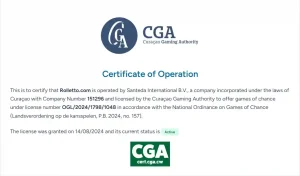
An Anjouan casino licence is not permission to operate in the United Kingdom. It also does not override restrictions on other markets named in the licence terms. That distinction matters: a licence claim can be genuine while still saying nothing about whether the operator is authorised to serve customers in Great Britain.
I treat the claim as something to verify, not as a trust badge. The public register entry should identify the same company that operates the casino. A mismatch between the company named on the site and the one shown in the register leaves a basic question unanswered: which business is actually covered? The expiry date matters too. An entry that is no longer current cannot establish that the operator holds an active licence.
This is a different check from looking up a UK Gambling Commission licence. An Anjouan entry cannot stand in for one, and an Anjouan casino licence does not authorise UK operation. The distinction is not cosmetic.
Even a matching, current entry has limits. Anjouan-licensed casinos do not guarantee that player funds are kept separate from company funds. If an operator fails, players are unsecured creditors, rather than having a guaranteed claim to ring-fenced balances.
I have seen licence logos used as shorthand for safety. The register, date and company match are more useful evidence—but they do not change what the licence permits. A real licence is not a UK licence.
What payment options are available at non-UK casinos?
They may accept credit cards, e-wallets, bank transfers and cryptocurrencies, sometimes through alternative processors. Some also allow deposits charged to a mobile phone bill or deducted from a prepaid balance.
Are non-UK-regulated casinos legal for UK players to use?
UK law does not explicitly prohibit British players from using gambling services licensed in other countries, and players do not commit a criminal offence by gambling on an unlicensed site. However, operators serving customers in Great Britain require a UK Gambling Commission licence.
Are sites that are not on GamStop legal for players in the UK to access?
Not being on GamStop means the casino is outside the UK Gambling Commission’s self-exclusion scheme; it does not by itself make access by a player a criminal offence. Operators serving customers in Great Britain still require a UK Gambling Commission licence.
Material created by the team Rolletto