

The regulator named on a casino’s licence matters more than its hosting location, and jurisdictions do not offer interchangeable oversight.
What “Non-UK-Regulated” Means in Practice
A non-UK-regulated casino is an online gambling site that operates without oversight from the UK Gambling Commission (UKGC). The phrase describes the regulator responsible for the site, not necessarily where its website is hosted, where its staff work or where its players are based. Those details can differ. The useful distinction is the one in the licence: a foreign authorisation is not UKGC oversight.
In practice, the label covers sites associated with a range of licensing jurisdictions, including Malta, Curaçao, Gibraltar and Anjouan. These names identify different authorities and legal frameworks; they are not interchangeable badges. Nor does the fact that a casino displays a jurisdiction’s name establish, by itself, what entity holds the licence or what activities that licence covers. The basic term tells only that UKGC oversight is absent.
That is why “non-UK registered” can be misleading shorthand. Registration might suggest a company entry or a website sign-up, while the relevant issue here is regulatory oversight. An online casino not registered in the UK could still be licensed elsewhere; conversely, the word “licensed” on a site does not mean it holds a UK Gambling Commission licence. I have seen promotional copy blur those meanings because a broad claim sounds reassuring without saying which authority stands behind it. The wording matters.
Online Casino No Registration in the UK: What It Means
A casino’s market-facing name may not be the same as the legal name of the operator. The licence relationship belongs to an operator, not to a phrase in a logo or an informal label such as “international casino.” So a site described as a Malta-licensed casino, for instance, belongs in the wider category of non-UK-regulated casinos if it lacks UKGC oversight. That description does not turn its foreign authorisation into a UK licence, and it does not settle every question about the operator’s status.
The same distinction applies to Curaçao online casinos and sites associated with Gibraltar or Anjouan. They may be discussed together because each jurisdiction is commonly linked with casinos operating outside the UKGC system. But grouping them is a matter of classification, not a claim that their regulators impose identical requirements. “Offshore” is often used as a catch-all in conversation; I find it less precise than naming the jurisdiction and then stating plainly that the site is not overseen by the UKGC.
Non-UK-Regulated Casinos: Licensing and Player Risks
Searches for casinos not registered in the UK can also mix up two different ideas: the casino’s gambling licence and its participation in a self-exclusion scheme. A casino not registered with GamStop is not necessarily a separate kind of licence. The wording may describe a site outside that scheme, but it does not identify which regulator, if any, oversees the operator. A non-UK-regulated casino and an online casino not registered with GamStop can overlap in everyday discussion, yet the terms answer different questions. One concerns regulatory oversight; the other concerns scheme participation. That distinction is easy to lose in a short label.
The same care is needed with claims about “new” or “best” casinos. Newness says nothing about the licensing jurisdiction, and “best” is a promotional judgement rather than a regulatory category. There is no single licensing feature hidden inside those labels. The first question of classification remains simple: is the site under UK Gambling Commission oversight, or is it associated with another jurisdiction instead? Until that is clear, descriptive terms do little work.
From inside the industry, I learned to read licence language as a statement about the relationship between an operator and an authority, not as a general certificate of quality. A jurisdiction’s name can tell where a licence is said to come from; it cannot, on its own, establish that the UKGC supervises the casino. Nor should a foreign licence be described as UK registration simply because a site accepts a particular currency or presents itself to an international audience.
So the practical meaning of “non-UK-regulated” is deliberately narrow: the online gambling site operates without UK Gambling Commission oversight, and its licensing is associated instead with another jurisdiction, if it is licensed there. Malta, Curaçao, Gibraltar and Anjouan are among the jurisdictions commonly associated with this category. The label is a starting point for understanding the regulatory distinction, not a verdict on every aspect of a casino. Keep the categories separate.
Jurisdictions
Common jurisdictions associated with non-UK-regulated casinos include Malta, Curaçao, Gibraltar, and Anjouan.
GamStop Is a Boundary, Not a Safety Guarantee
GamStop is a UK self-exclusion scheme. A casino outside it is not connected to that scheme, so a person who has excluded themselves through GamStop should not assume that the exclusion will prevent access to every gambling site. The boundary is specific: it applies to participating operators, not to every website that can be reached from the UK.
That distinction is easy to lose in the wording. “Not on GamStop” describes a relationship with a self-exclusion system; it does not describe the quality of a casino’s safeguards. It is not a certificate of reliability, a sign that a site is safer, or evidence that it will handle a gambling problem responsibly. It says what the operator is not part of. Nothing more.
What exclusion does—and does not—cover
Self-exclusion is meant to create friction between a person and gambling. When a casino is part of GamStop, the scheme can support that boundary across participating operators. Casinos not on GamStop sit outside it. A block or exclusion arranged through the scheme cannot be treated as a universal switch for all online gambling.
In practice, that leaves a gap. An account may remain accessible elsewhere, and a person trying to stop may encounter gambling promotions or find a site that does not recognise the exclusion. The fact that a casino accepts customers from Britain does not make it part of GamStop. Nor does a familiar payment option or a polished website tell anything about whether an exclusion will be honoured across other operators.
Casino Guides to Licensing, Access and Payments
I regard this as the central point, not a technical footnote. A self-exclusion tool has a defined reach. It cannot control a site outside its network.
The protections that may disappear with the boundary
The difference is not limited to whether GamStop applies. Non-UK-regulated casinos may operate with less stringent responsible-gambling and data-protection rules than UK Gambling Commission-licensed operators. Players using offshore casinos also lose access to the UK’s Financial Ombudsman Service and to mandatory responsible-gambling tools.
Those tools matter because they can make restraint operational rather than aspirational. Deposit limits, time-outs and self-exclusion options can help interrupt a pattern before it escalates. A non-UK-regulated site may not provide equivalent safeguards, and a person should not infer that it does simply because the site displays a responsible-gambling page. A statement of policy is not the same as a required tool that can be applied consistently.
There is a second difference: what happens when a concern is raised. At a site outside the UK system, the usual UK routes for seeking help or redress may not be available. That can leave the player dealing directly with the operator, under its own procedures, rather than using the UK’s established protections. Less recourse. Less leverage.
Data protection is part of the same calculation. If a site’s rules and oversight differ from the UK framework, the handling of personal information may also differ. The exact practices depend on the operator, but the UK protections attached to a locally regulated service should not be assumed to follow an account to an offshore site.
Loss of Protections
Players using non-UK-regulated casinos lose access to the UK’s Financial Ombudsman Service and mandatory responsible-gambling tools.
“Reputable” is not the same as protected
Searches for reputable casinos not registered with GamStop often combine two separate questions: whether an operator appears credible, and whether a player retains the protections associated with the UK system. A positive reputation, a responsive support team or a smooth registration process cannot restore GamStop coverage or access to UK-based remedies.
The same applies to a site described as a UK casino not registered with GamStop. The phrase can sound as if the operator belongs to the UK’s regulated market while merely opting out of self-exclusion. That is not what the label establishes. It only indicates that the site is outside GamStop; it does not prove that UK safeguards apply.
I would be cautious about treating a list of casinos outside GamStop as a solution to an exclusion. A list cannot tell whether gambling is safe for someone who has chosen to stop, and availability is not protection. Asking which casinos are not registered with GamStop may produce names and payment claims, but those details do not change the scheme’s limits or replace its safeguards.
Payment branding does not alter the boundary either. A PayPal or mobile-billing option, where offered, does not make a casino part of GamStop, and it does not create a responsible-gambling protection. The same is true of a site’s location or the wording used in its advertising.
A boundary worth taking literally
For someone using self-exclusion to stop gambling, a casino not registered with GamStop is not a workaround that preserves the same protections. It is outside the scheme. That matters most when gambling is becoming difficult to control: the exclusion may not cover the site, and the operator may not provide equivalent tools or UK routes for support and redress.
Non-GamStop European Casinos: UK Rules Explained
The practical reading is plain. GamStop can help create a barrier within its reach; it does not guarantee safety across the wider online market. A site’s willingness to accept an account is not evidence that gambling there is appropriate, protected or compatible with an existing decision to self-exclude.
How Offshore Sites Handle Payments and Withdrawals
A non-UK-regulated casino may show several ways to fund an account: credit cards, e-wallets, bank transfers and cryptocurrency. The route shown at the cashier is not always the route that ultimately processes the transaction. Offshore operators may use alternative payment processors, so the company name on a statement or payment confirmation can differ from the casino’s brand.
That difference is more than a cosmetic detail. A processor can affect which currencies or payment methods are accepted and how a transaction is labelled. It also means that seeing a deposit option does not establish that the same method will be available for a withdrawal. The operator’s cashier terms and account-specific instructions matter; payment methods are not interchangeable simply because they appear together on a page.
Crypto is another possible route. It can be used to fund gambling without charging a credit card, thereby getting around the UK restriction on credit-card-funded gambling. That describes the payment mechanism, not an endorsement or a guarantee of privacy, speed or a successful cash-out. The value of a crypto balance can also change between deposit and withdrawal, while the casino may impose its own processing steps.
Cryptocurrency
Crypto can be used to fund gambling without charging a credit card, bypassing UK restrictions on credit-card-funded gambling.
A less conventional method has been mentioned in a specialist review: deposits charged to a mobile phone bill or taken from a prepaid balance. That is a report about a particular offering, not a dependable feature of non-UK-regulated casinos generally. Payment menus change, and availability may depend on the operator, processor and account. It should not be treated as evidence that the same channel can be used to withdraw winnings.
Why payout estimates conflict
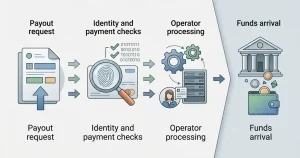
Published descriptions of withdrawal speed do not agree. Some put payouts at the faster end, from 24 hours to five business days, while another account says a withdrawal can stretch to three or four weeks. These are materially different expectations, not two ways of describing the same service. The time may depend on the payment route and on whether the operator has finished its checks, but the presence of a fast estimate does not rule out a prolonged delay.
The practical distinction is between a casino’s advertised processing time and the point at which funds arrive. A request may need to be reviewed before it is sent; then the payment provider or receiving bank has its own part in the process. Without a regulatory clock that can be enforced in the way players expect from a locally regulated service, a published estimate is not the same as a binding deadline. Delays can leave an account holder waiting while the operator and payment channel each form part of the chain.
Online Casinos With No Sister Sites in the UK
Withdrawal caps are also described in some specialist reviews, but should not be assumed to apply across the market. Where an operator sets daily, weekly or monthly limits, a large balance may have to be paid in instalments rather than as one transfer. The relevant terms may distinguish between a request limit and the amount actually released over a period. That distinction can change how long a full balance takes to reach a bank or wallet.
Verification is part of the payout process
Identity and payment checks can arise when funds are withdrawn, even if a deposit went through without difficulty. Operators may ask for documents to confirm identity, address or control of the payment method. Some specialist reviews also describe more demanding requests at certain offshore sites, including notarised documents or a video call. Those reports should not be read as a standard procedure at every operator, but they show why a successful deposit does not settle the question of what will be required at cash-out.
From the operator’s side, verification is presented as a way to establish who owns the account and where the funds should go. From the player’s side, a request that arrives late in the process can feel like a new barrier, particularly where the requested format is difficult to arrange. The wording of the terms and the timing of the request matter. An account can be held up while documents are reviewed, and an apparently simple transfer can become a sequence of messages, uploads and further checks.
Attention: A payment method being listed for deposits does not guarantee that the same method is available or approved for withdrawals.
There is a useful distinction between a payment method being listed and a withdrawal being approved through it. A bank transfer, e-wallet or crypto option may be accepted for deposits but subject to different cash-out rules. Those rules may include a nominated withdrawal route, verification before release, or limits on how much can be sent at once. A mobile-bill or prepaid deposit mention, in particular, says nothing by itself about withdrawals.
For casinos not on GamStop, payment convenience should therefore be read as a description of the cashier, not a promise about access to winnings. I have seen the gap between a short processing estimate and the real sequence: operator review, verification and payment-provider handling. The terms determine the route. The cash-out process determines the wait.
Live-Casino Claims, Bonuses and the Terms Behind Them
“Best” is a label, not a test. A page promoting live casinos outside GamStop may put a bonus, a game lobby or a fast-sounding offer first, but none of those tells the full story of what happens when a promotion is accepted. I have seen how these offers are built: the headline is meant to be easy to compare, while the conditions determine what can actually be withdrawn. The terms do the work.
The same applies to claims about a site being “safe” or “top”. A polished live-casino section does not establish how a bonus is calculated, whether winnings are capped or how long an offer remains available. Nor does a list of new casinos establish that their promotional terms are consistent. Those are separate questions, and the wording in the offer is where the practical answer sits.
What the wagering figure applies to
A wagering requirement says how much qualifying play must take place before bonus-related funds can be withdrawn. The multiple alone is not enough to understand the condition: the crucial detail is the amount to which it applies.
A specialist review has reported offshore welcome bonuses with wagering requirements of 35x or more. That is a reported example, not a reliable description of every current offer. A separate specialist review has described a 40x requirement applying to the bonus and deposit together, to the bonus alone, or to a bonus and free spins combined, depending on the promotion. The difference matters. Applying the same multiple to a larger combined balance creates a different hurdle from applying it to the bonus alone.
This is why a large headline figure can mislead without being technically false. The terms may define which balance counts, which games contribute and what happens to the bonus if the conditions are not completed. The offer’s short summary may not carry those details. Read the full promotional rules, not just the banner. Small print, large consequences.
Free spins are not simply free
Free spins can have their own wagering conditions, expiry rules and withdrawal caps. A specialist review has reported free-spin winnings subject to wagering requirements of 30–50 times those winnings and withdrawal caps of £5–£50. Those figures should be treated as a description reported by that review, not as terms applying to every package.
Reported Free Spin Constraints
Some specialist reviews report free-spin winnings subject to wagering requirements of 30–50 times and withdrawal caps between £5 and £50, with expiry windows of 24–72 hours.
The distinction between a winnings cap and a wagering requirement is important. A cap can limit the amount that may be withdrawn from the promotion, while wagering conditions can require further play before any eligible amount becomes withdrawable. A package can therefore look generous at the point of sign-up while leaving the value of the promotion constrained by more than one condition.
Expiry is another part of the calculation. A specialist review has reported free-spin packages expiring within 24–72 hours. That does not make the window standard across all offers; it makes the expiry time a term to locate before accepting. If spins must be used quickly, or winnings must then meet separate conditions, the promotion may suit someone able to play within that window and be a poor fit for someone who cannot.
Live tables do not change the terms
A live-casino lobby may make a promotion look tailored to table games, but the terms decide whether those games contribute to wagering and, if so, how. A live label is not evidence that every game qualifies equally. The rules may distinguish between game types or exclude particular play from bonus progress. The promotional page and its terms need to be read together.
This is also why mobile presentation can obscure useful detail. A short card may show the offer and a button while leaving the full conditions elsewhere. The format does not change the agreement. The relevant questions remain what balance is counted, which games qualify, when the offer expires and whether a cap limits withdrawal.
A list of casinos not registered with GamStop can help identify options, but a ranked list cannot settle those questions for an individual promotion. Terms can differ between offers at the same operator and can change over time. “Best” has no fixed meaning until the offer’s conditions are compared with what the claim implies.
The useful comparison is not the largest bonus headline. It is the offer’s complete mechanics: what must be played through, what counts toward that requirement, how long the promotion lasts and whether a maximum withdrawal applies. In live casino or on mobile, the same rule holds. Read the condition behind the claim.
The UK Legal Position in 2026
The key legal distinction is between the business supplying gambling and the person using it. Under the Gambling Act 2005, the focus is on operators that provide gambling services to the UK market. A company does not avoid that requirement simply by being based abroad: operators serving customers in Great Britain need a UK Gambling Commission licence.
That rule concerns the operator’s authority to serve the market. It should not be turned into a claim that an individual player automatically commits a crime by using a site without that licence. UK law does not make gambling on an unlicensed site a criminal offence for the player. Nor does it expressly bar British citizens from using gambling services licensed in another country.
Those points are not the same as saying that every non-UK registered casino is authorised to serve people in Britain, or that using one is without risk. The requirement on operators remains. A foreign licence does not replace the UK licence required for a business supplying customers in Great Britain, and the player’s position does not grant the operator permission to operate here.
Do
- Understand that gambling on an unlicensed site is not a criminal offence for the player
- Check local laws in the specific part of the UK you are in
Don’t
- Assume “legal for players” means the operator is approved for the UK
- Mistake a foreign licence for a replacement of the required UKGC licence
I have seen these two sides blurred in marketing copy: “legal for players” can be made to sound like “approved for the UK”. It is not. One concerns the absence of a criminal offence for the individual; the other concerns the operator’s obligation when supplying the British market. Different questions. Different consequences.
The wording also needs care because “UK” can conceal a jurisdictional distinction. The Gambling Act 2005 applies in England, Wales and Scotland, but not Northern Ireland. That makes it important not to treat a general statement about British market rules as a complete account of the law in every part of the United Kingdom. Local law should be checked before using an offshore gambling service, along with the practical implications of doing so.
For anyone comparing non-UK registered casinos in 2026, the useful legal test is therefore not simply whether a site has a foreign licence or accepts a British customer. The relevant issue for the operator is whether it is properly authorised to supply gambling services in the market concerned. The separate question for the player is what local law says about access and what protections may be unavailable outside the domestic system.
The distinction is narrow but important: a player’s conduct may not be a criminal offence, while the operator may still be supplying services without the licence required for Great Britain. Neither point should be used as a shortcut for the other.
Gamban and Casinos Outside GamStop
GamStop and Gamban are often mentioned together, but they are not interchangeable. GamStop is the UK Gambling Commission’s self-exclusion scheme. Casinos outside it are not included in that scheme, so a GamStop exclusion does not itself prevent access to those sites.
Gamban is a separate tool, and its relationship with a particular casino cannot be inferred from that casino’s GamStop status. A site being outside GamStop does not establish whether Gamban blocks it; nor does a claim that a casino is “Gamban-friendly” prove that it has been checked or that access will remain blocked across devices and circumstances. The two questions require separate answers.
GamStop vs Gamban
GamStop is a UKGC self-exclusion scheme, whereas Gamban is a separate blocking product; one does not imply the other.
That distinction matters because “registered with Gamban” can suggest a formal operator register comparable to GamStop. It should not be treated as one. A casino’s absence from GamStop says something specific: it is not part of that UK self-exclusion scheme. It does not provide a complete account of whether a blocking tool will restrict access.
I have seen these labels used as if one could stand in for the other. It cannot. GamStop is a self-exclusion route; Gamban is a separate blocking product. Neither label, on its own, establishes that every gambling route is closed or that an operator provides the responsible-gambling safeguards required of a UK-licensed site.
The practical point is narrower, but important: Casinos not on GamStop sit outside that scheme, and a Gamban claim should be assessed independently rather than assumed from the casino’s licensing or exclusion status. Non-UK-regulated sites may not provide the UK-mandated responsible-gambling tools available through licensed operators. A blocking tool should not be mistaken for operator oversight, and neither should be treated as a complete safeguard.
“Protected” is too broad a word. The mechanisms differ, and the boundary matters.
What a UK-Registered Casino Changes
When considering non-UK-registered casinos in 2026, payout timing is one practical detail to check. This list gives a concise reference to the payout speed provided for each operator.
1. SlotoSport
Payout speed: 1-3 business days SlotoSport lists a payout speed of 1–3 business days.
2. EvoSpin
Payout speed: 1-3 business days EvoSpin lists a payout speed of 1–3 business days.
3. BeOnBet
Payout speed: 1-3 business days BeOnBet lists a payout speed of 1–3 business days.
4. Dieselwin
Payout speed: 1-3 business days Dieselwin lists a payout speed of 1–3 business days.
5. x3bet
Payout speed: 1-3 business days x3bet lists a payout speed of 1–3 business days.
6. Jetsetspins
Payout speed: 1-3 business days Jetsetspins lists a payout speed of 1–3 business days.
7. SpinFormula
Payout speed: 1-3 business days SpinFormula lists a payout speed of 1–3 business days.
8. NightLuck
Payout speed: 1-3 business days NightLuck lists a payout speed of 1–3 business days.
9. Zombillion
Payout speed: 1-3 business days Zombillion lists a payout speed of 1–3 business days.
10. Revery Play
Payout speed: 1-3 business days Revery Play lists a payout speed of 1–3 business days.
“UK-registered casino” is common shorthand, but registration is not the key distinction. For an operator serving customers in Great Britain, the relevant status is holding a UK Gambling Commission licence. The operator’s headquarters or country of incorporation does not change that requirement.
That makes the phrase “UK-registered” potentially misleading. A company may be based outside the UK and still need a UKGC licence to serve the British market. Conversely, having a company address or business registration in the UK does not, by itself, establish that its casino is authorised to operate here. The licence concerns the gambling service and the market it serves.
I have seen marketing language blur those points because “registered” sounds like a simple corporate detail, while a gambling licence is a specific permission. They are not interchangeable. The practical question is whether the operator holds the relevant UK Gambling Commission licence for serving customers in Great Britain.
An operator without that licence does not become UK-authorised merely by accepting British customers, displaying prices in pounds or presenting a British-facing website. Its base of operation is not a workaround. Equally, an overseas address alone does not mean an operator lacks the required status: the licensing obligation follows the market being served, not the office location.
That is the difference a UK licence makes to an operator’s market status. It identifies the business as authorised to serve Great Britain under the UKGC system; it is not a label for any casino that happens to be accessible from the country. A site’s wording should therefore be read as a claim to verify, not as proof created by the word “UK”.
The distinction is narrow but important. Corporate location, audience and regulatory permission are separate things. Only the last answers whether the operator has the required licence for the British market. No shortcut.
What “Trusted” Can—and Cannot—Mean Outside GamStop
“Trusted” is a label, not a regulatory status. On a casino website or review page, it may describe the publisher’s impression, the operator’s presentation, or a set of checks that are not explained. It does not, by itself, establish independent oversight or guarantee how a complaint will be handled.
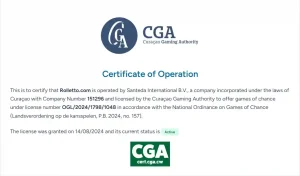
I have found that the useful question is not whether a site calls itself trustworthy, but what can be checked behind the claim. A licence entry should relate to the operator actually taking deposits. The licence’s expiry date and the company name should match the information shown by the casino. A mismatch is not a minor detail: it can leave uncertainty about which business is responsible for the account.
Even a matching licence does not mean every regulator offers the same safeguards. Under Anjouan’s framework, the licensing authority does not investigate, mediate or decide individual player complaints. Anjouan-licensed casinos also lack an independent dispute-resolution route comparable to the services approved by the UK Gambling Commission. A badge or a polished complaints page cannot replace that route.
Anjouan Licence Limits
Anjouan-licensed casinos lack independent dispute-resolution routes, mandatory RNG testing, independent audits, and requirements for segregated player funds.
The limits extend beyond disputes. Anjouan’s rules do not require casinos to have random-number generator testing, independent audits or segregated player funds. A site may describe its games or operations as “fair”; that wording is not proof that those checks are mandated. If the operator fails, the absence of segregated funds also means players are unsecured creditors.
That is why trust should be treated as a claim to examine, not a conclusion. A licence record can help establish who is authorised under a particular framework, but it cannot create protections that the framework does not require. Nor does it turn an overseas authorisation into UK Gambling Commission oversight.
For casinos not registered with GamStop, the same distinction applies: being outside that scheme says nothing on its own about the quality of a licence, complaint handling or financial safeguards. “Trusted” is marketing shorthand. The paperwork matters more.
Malta-Registered Casinos and the Licensing Distinction
Malta is one of several jurisdictions associated with casinos that operate outside UK Gambling Commission oversight. A Malta licence and a UKGC licence are not interchangeable: the former does not, by itself, authorise an operator to serve customers in Great Britain.
That distinction can be obscured by the word “licensed”. In casino marketing, it often appears as a broad reassurance, while the practical question is which authority issued the licence and what market that licence covers. A Malta-registered operator may hold authorisation from the Malta Gaming Authority, but that status alone does not establish that it has permission to serve the British market.
I have seen how the label can do more work than the detail. A jurisdiction named in a footer may tell something about an operator’s regulatory base; it does not settle the separate question of UK market status. The distinction matters even when the site looks familiar or accepts customers from Britain.
Malta also sits alongside Curaçao, Gibraltar and Anjouan among the jurisdictions commonly associated with non-UK-regulated casinos. That does not make their licensing systems identical, nor does it mean every operator associated with Malta has the same permissions. The licence belongs to a particular company and operation, not to a whole category of sites.
For British customers, the central point is narrow: a Malta-issued licence is foreign authorisation, not UKGC approval. “Registered in Malta” is not a substitute for confirming what the operator is authorised to do. Two different questions.
Curaçao Sites Outside GamStop: Check the Licence Scope
A Curaçao licence and GamStop status answer different questions. The licence identifies a jurisdiction associated with the operator; GamStop is the UK Gambling Commission’s self-exclusion scheme. A casino outside that scheme is not registered with it, but that fact alone says nothing about what the casino’s licence permits.
Non-GamStop Curacao Casino Sites: UK Licensing
Curaçao is one of several jurisdictions commonly associated with non-UK-regulated casinos, alongside Malta, Gibraltar and Anjouan. The label “Curaçao casino” is therefore not a shortcut for deciding whether a site may serve customers in Great Britain. Operators offering gambling to customers there need a UK Gambling Commission licence, wherever the business is based. A foreign licence is not a substitute.
I have seen licensing labels used as if they settled every question about an operator. They do not. The relevant distinction is between the jurisdiction named on a site and the market in which it is offering gambling. Those are separate matters.
Nor should rules stated for one jurisdiction be carried over to another. The stated restriction for Anjouan is specific: an Anjouan licence does not permit its holder to operate in the United Kingdom or other restricted markets. That does not establish Curaçao’s licensing conditions, and it would be misleading to present the Anjouan rule as a Curaçao rule.
For a Curaçao site outside GamStop, the useful starting point is to identify which jurisdiction’s licence is claimed and what that licence covers. Then consider separately whether the operator holds the UKGC licence required to serve Great Britain. The two checks are not interchangeable. Different questions.
What payment methods work best at non-UK-regulated casino sites?
E-wallets, bank transfers, credit cards and cryptocurrencies may be available, often through alternative processors. The best option depends on the casino’s available methods and its withdrawal terms; payouts can take from 24 hours to several weeks.
Are non-UK-regulated casinos legal for UK players to use?
UK law does not explicitly prohibit British players from using gambling services licensed abroad, and players do not commit a criminal offence by gambling on an unlicensed site. Operators serving customers in Great Britain are required to hold a UK Gambling Commission licence.
Are sites that are not on GamStop legal for players in the UK to access?
Not being on GamStop describes a site’s absence from the self-exclusion scheme, not its legal status. UK law does not explicitly prohibit players from using gambling services licensed abroad, but operators serving Great Britain require a UK Gambling Commission licence.
What are non-UK-regulated casinos?
They are online gambling sites without oversight from the UK Gambling Commission. They may be licensed by another jurisdiction, such as Malta, Curaçao, Gibraltar or Anjouan.
How do casinos outside GamStop operate?
They operate outside the UK self-exclusion scheme, so a GamStop exclusion does not block access to them. Some are licensed in other jurisdictions, but not being on GamStop does not establish which regulator, if any, oversees a site.
What payment options are available at non-UK casinos?
Options can include credit cards, e-wallets, bank transfers and cryptocurrencies, often processed through alternative providers. Some sites also accept deposits charged to a mobile phone bill or deducted from a prepaid balance.
What is the biggest risk of playing at a non-UK-regulated casino?
The main risk is having fewer protections and less recourse if a dispute arises: players may lack access to the UK’s Financial Ombudsman Service and mandatory responsible-gambling tools. At Anjouan-licensed casinos, player funds are not guaranteed to be segregated, so customers may be unsecured creditors if the operator fails.
Material created by the team Rolletto