Licences from Malta, Curaçao and other jurisdictions establish oversight there, but do not by themselves authorise service in Great Britain.
What a Non-UK Casino Licence Does—and Does Not—Mean
A non-UK-regulated casino is an online gambling site that operates without oversight from the UK Gambling Commission (UKGC). It may still hold a licence issued elsewhere. Malta, Curaçao, Gibraltar and Anjouan are among the jurisdictions that license online gambling businesses. The important distinction is that a licence from one of those authorities is not a UKGC licence.
That sounds straightforward, but casino advertising often compresses two separate ideas into one. A site may be “licensed” in the sense that an overseas authority has issued it a licence; that does not establish that it is authorised to serve customers in Great Britain. The licence identifies a regulatory relationship with the authority that issued it. It does not, by itself, transfer that authority’s permission to another market.
I have seen how easily those meanings blur in promotional copy. “Licensed” is reassuring language, but without the jurisdiction attached it leaves out the part that matters. A statement that a casino holds an online licence may be true while saying nothing about whether the operator has the authorisation required for Great Britain. The words are accurate. The implication can be misleading.
A licence has a jurisdiction
A casino licence is not a universal certificate. It comes from a particular regulator and operates within that regulator’s framework. So when a site refers to an overseas licence, the claim concerns the licensing jurisdiction—not the UKGC. A licence granted abroad cannot be treated as a UK casino licence simply because the casino’s website is available to people in Britain or presents its services in English.
This is the distinction behind the phrase “non-UK-regulated casino.” It describes the site’s relationship with the UKGC: the UK regulator does not oversee it. The term does not necessarily mean that the business has no licence at all. It may be licensed overseas, or its licensing position may be described in other ways. Those are separate questions from whether it has UKGC oversight.
Casino Guides to Licensing, Access and Payments
For operators serving customers in Great Britain, the relevant authorisation is a UK Gambling Commission licence, regardless of where the business is based. An overseas headquarters does not remove that requirement, and an overseas licence does not replace it. The location of the company and the market it serves are different parts of the picture.
What an overseas licence does not establish
An overseas licence does not establish that a casino is authorised to serve customers in Great Britain. Nor does the word “licensed” alone tell a reader which regulator is responsible for the operator. Those details should not be collapsed into a single label.
I have found it useful to separate three claims that promotional pages often run together: that a business holds a licence, that a particular regulator issued it, and that the business is authorised for a particular market. The first claim does not automatically prove the second or third. Each describes something different.
That distinction also explains why “licensed online casino” is an incomplete description when the market is Great Britain. The phrase can refer to a casino licensed in another jurisdiction, but it does not answer whether the operator holds the local authorisation required to serve British customers. A new licence, a foreign licence, or a licence mentioned prominently on a website does not change the identity of the regulator that issued it.
No shortcut here.
The same principle applies when casinos describe themselves as international or non-UK-based. Those labels may describe where an operator is situated or how it presents its business, but they do not say whether it has UKGC oversight. “Non-UK-based” and “non-UK-regulated” are not interchangeable: the first concerns location; the second concerns regulation. An operator can be based outside Britain and still need a UKGC licence if it serves customers in Great Britain.
For readers, the practical meaning is not that every overseas licence is identical, or that the licensing jurisdiction is irrelevant. It is that an overseas licence and UKGC authorisation answer different questions. The overseas licence concerns the regulator that issued it. The UKGC licence is the relevant authorisation for an operator serving the Great Britain market.
Attention: A statement that a casino is licensed does not automatically prove it holds the specific authorisation required to serve customers in Great Britain.
So a site’s claim to be licensed should never be read as a complete description of its status in Britain. The jurisdiction behind the licence matters, and so does the market in which the operator offers gambling. “Licensed” can be a true statement. It is not, on its own, proof of UKGC regulation.
The Legal Position for Players in Great Britain
The legal distinction is easy to blur: a site’s position under gambling law is not the same question as whether an individual player commits an offence by using it. The Gambling Act 2005 is directed at operators supplying gambling services to the UK market. It does not make the player’s act of gambling on an unlicensed site a criminal offence under UK law.
That does not mean an overseas licence gives a casino permission to serve customers in Great Britain. A licence issued abroad may regulate the operator under that jurisdiction’s rules, but it is not a substitute for the authorisation required to offer gambling services in the British market. The operator’s compliance question and the player’s criminal liability question are separate. One does not settle the other.
UK law does not expressly forbid British citizens from using gambling services licensed in another country. Read carefully, that is a limited statement about what the law says about the player; it is not a general declaration that every non-UK-regulated casino is lawful for the operator to offer to British customers. Nor does the absence of a criminal offence for the player turn a foreign licence into UK approval.
Non-Gamban Casinos in the UK: What Exclusion Means
I have seen this distinction obscured by the word “legal” in casino marketing. It can refer to the operator’s status where its licence was issued, or to the player’s exposure to prosecution in Britain. Those are different claims. A statement that a casino is licensed overseas says nothing by itself about whether it holds the authorisation needed to supply gambling services in Great Britain.
An Anjouan casino licence illustrates the point. It does not authorise operation in the United Kingdom, or in other markets identified as restricted by that licence. A player’s position under UK criminal law should not be confused with the scope of the operator’s permission. The licence may exist; its reach remains limited.
There is also a territorial detail. The Gambling Act 2005 applies in England, Wales and Scotland, but not Northern Ireland. “Great Britain” refers to those three nations, not the whole United Kingdom. Anyone gambling from another jurisdiction needs to consider the rules that apply there rather than assuming that the British position carries across the UK or abroad.
So the careful legal summary is narrow: the UK regime targets operators serving the market, and a player who gambles on an unlicensed site does not commit a criminal offence under UK law. That does not establish that the service itself is authorised in Britain, and it does not answer what another country’s laws may require. Players remain responsible for checking the law where they are located and understanding the implications of using an offshore gambling service.
Legal Risk
While gambling on an unlicensed site may not be a criminal offence for the player under UK law, it does not guarantee the absence of legal or financial risks.
In practice, “no player offence” is not the same as “no legal or financial risk”. It is a statement about criminal liability under UK law, not a guarantee about the operator, the terms of play, or any dispute that may follow. The distinction matters. Markedly so.
UKGC-Licensed Casinos: What the Licence Requires
For an operator serving customers in Great Britain, a licence from the UK Gambling Commission is not a badge that can be replaced by permission from another country. The operator’s registered base does not change that requirement. A company based overseas that offers gambling to the British market still needs the relevant UKGC authorisation.
That distinction is easy to blur in promotional language. A site may describe itself as “licensed” and name a regulator, but the word alone says nothing about whether it holds permission to serve customers in Great Britain. In this market, the question is not simply whether a casino has a casino operating licence somewhere. It is whether the operator has the UKGC licence required for its British-facing service.
I have seen how these labels work in practice: the licence jurisdiction can be placed beside a logo, while the commercial message focuses on games, payments or bonuses. Those details do not convert an overseas authorisation into a UK one. A Malta Gaming Authority licence and a UK Gambling Commission licence are separate permissions issued by separate regulators. One cannot be read as evidence of the other.
Casino Without a UK Licence: Rules and Risks
The UKGC licence is therefore the relevant authorisation for a British-facing online casino. An overseas licence may indicate that another jurisdiction regulates the operator, but it does not satisfy the British requirement. That remains true even if the casino accepts customers from Great Britain or presents its overseas credentials prominently.
There is a practical difference for customers, too. At an offshore casino, players do not have access to the UK’s Financial Ombudsman Service or the mandatory responsible-gambling tools associated with the UK system. The absence of those routes is not repaired by a foreign licence. Different regulator; different framework.
A casino licence application is consequently more than a formality or a marketing asset. For an operator intending to serve Great Britain, the relevant UKGC permission is part of the basis on which that service can be offered. An overseas company cannot avoid the requirement simply by locating its business elsewhere or relying on a licence issued abroad.
When comparing casino licences, the useful distinction is not “licensed” versus “unlicensed” in the abstract. It is whether the operator holds the authorisation relevant to the market it is serving. A foreign licence may matter under the rules of its issuing jurisdiction; it does not, by itself, make the casino a UK Gambling Commission-licensed online casino.
Different permission. Different protections.
How to Read a Casino Licence and Check Who Holds It
A licence badge is a claim, not proof. I start with the company named in the casino’s terms and conditions, then check whether that same company appears on the relevant regulator’s public register. The site name, its payment brand and the company holding the licence can all differ. That is not automatically a problem, but the relationship needs to be clear and verifiable.
Verifying a Licence
Step 1: Identify the company
Find the legal entity name listed in the casino’s terms and conditions.
Step 2: Consult the register
Search for that specific company name on the relevant regulator’s public register.
Step 3: Match the details
Confirm that the registered company name, licence status, and expiry date align with the site’s claims.
The jurisdiction matters just as much as the company name. A licence issued overseas does not become a UK Gambling Commission licence because a casino accepts sterling, advertises to British customers or displays a regulator’s logo. Operators serving customers in Great Britain require the relevant UKGC authorisation, wherever the operator is based. A UK-licensed casino should therefore be checked against the Commission’s register, not assessed from a badge or a marketing description.
For an overseas licence, use the regulator’s own register where one is available. Compare the registered company name with the legal entity stated on the casino site; check that the entry relates to the operation being assessed; and read the status and expiry information shown there. A genuine licence held by a related company is not necessarily evidence that the casino’s contracting company is covered. The link has to hold together.
The Anjouan checks
An Anjouan casino licence needs particular care before any recommendation. Verify that the licence has a public register entry, that the named company matches the company in the casino’s terms, and that the entry’s expiry date has not passed. If the details cannot be matched, or the entry cannot be confirmed, the licence claim is not established.
Anjouan’s licence does not authorise operation in the United Kingdom or other markets listed as restricted. Nor does the presence of an Anjouan entry tell the whole story about how a casino is tested or how a dispute will be handled. The framework does not require RNG testing, audits or segregation of player funds, and the authority does not handle, mediate or adjudicate player complaints. Those are material limits, not small-print technicalities.
VPN-Friendly Casinos in the UK: What the Label Means
I would keep a record of the register entry and the casino’s legal terms as they appeared when checked. A page can change; a regulator entry can change too. If the company name, licence status or expiry information conflicts across those records, a confident-sounding badge does not resolve the conflict. No clean match, no recommendation.
What a licence does not prove
A valid entry establishes a particular regulatory relationship; it is not a general quality certificate. It does not, by itself, prove that every game has been independently tested, that funds are protected, or that a player has an effective route to resolve a complaint. Those points need separate evidence, and the protection available depends on the regulator and the applicable framework.
Payment branding is separate. A casino described as a licensed Litecoin casino still needs to be checked by its operator and licence details; accepting a cryptocurrency does not establish who regulates the site. The same test applies to claims about licensed online casino sites generally: identify the legal company, identify the regulator, and confirm the register entry rather than treating the word “licensed” as a complete answer.
Licence checks are a paper trail, not a guarantee. The jurisdiction, company and current register record must agree closely enough to show which operator is accountable under which framework.
Do
- Check the regulator’s own public register
- Verify the company name in the terms and conditions
- Confirm the licence expiry date
Don’t
- Rely solely on a licence badge or logo
- Assume a site is UK-licensed because it accepts sterling
- Treat a brand name as the legal licence holder
Malta and Other Overseas Licensing Routes
Malta is one of several jurisdictions associated with non-UK-regulated casinos. Curaçao, Gibraltar and Anjouan are also used. The location printed in a casino’s terms identifies a licensing route; it does not, by itself, establish that the operator may serve customers in Great Britain.
That distinction is easy to lose in marketing. “Malta licensed” can sound like a general assurance about access, oversight and player protections. In practice, it tells only part of the story: the casino claims a connection to a particular jurisdiction’s licensing system. It does not turn that authorisation into a UK Gambling Commission licence. The same is true of a Curaçao, Gibraltar or Anjouan licence.
For operators, the decisive point in Great Britain is where the service is being supplied, not simply where the company is based. An operator serving customers in Great Britain requires a UK Gambling Commission licence regardless of its base of operation. A licence issued elsewhere does not replace that requirement.
One market, several licensing locations
Malta is often prominent in discussions of international online gambling, but it is not the only licensing location used by non-UK-regulated casinos. A casino may be associated with Malta, Curaçao, Gibraltar or Anjouan, and those names should not be treated as interchangeable labels for one shared system.
The jurisdiction matters because a licence belongs to a particular authority and legal framework. It is not a portable status that follows a brand into every country. A casino’s overseas authorisation may describe its relationship with the regulator that issued it; it does not establish UK authorisation or put the operator inside the British licensing system.
I have seen the wording on a site do more persuasive work than the underlying detail. A flag, regulator’s name or badge can give a page the appearance of a single, familiar standard. The label is not the standard. The country and regulator behind it matter.
Malta is a route, not a UK substitute
A Malta-licensed online casino remains an overseas-licensed casino for the purpose of this distinction. The Malta Gaming Authority is a regulator, but the existence of its licence does not show that the operator also holds permission from the UK Gambling Commission. “Licensed in Malta” and “licensed for Great Britain” answer different questions.
That point applies equally when the wording shifts from one casino to several. Malta-licensed online casinos are not automatically a single class with identical terms, ownership or permissions. The licence location alone cannot establish those details, and it cannot be used as a shortcut for assessing whether a site is authorised to serve the British market.
The same caution applies to Gibraltar and Curaçao. Both appear among jurisdictions used by non-UK-regulated casinos, but naming a jurisdiction is not a comparison of the protections or permissions attached to a particular operator. Anjouan is another route; its presence in a site’s licensing statement likewise does not make it a UK licence.
Different jurisdictions. Different status.
What the location can and cannot tell
A licensing location can help identify which authority a casino says oversees it. It cannot, on its own, settle whether the casino is authorised in Great Britain. Nor does the phrase “remote casino operating licence” mean one universal licence recognised across borders. The issuing jurisdiction defines the context of that authorisation.
Malta (MGA)
An overseas licensing route that does not substitute for a UK Gambling Commission licence.
Curaçao
An offshore jurisdiction often used by non-UK-regulated casinos, including crypto-focused sites.
Anjouan
A licensing route that does not authorise operation in the UK and lacks mandatory RNG testing or audits.
Gibraltar
One of several overseas jurisdictions that may license casinos operating without UKGC oversight.
This is why broad claims about a “safe licensed online casino” can obscure the important distinction. A licence in Malta or another overseas jurisdiction may be relevant to the operator’s status there, but it is not evidence of UK Gambling Commission authorisation. Conversely, the UK requirement is not met merely because an operator has an established overseas base.
I would keep the comparison narrow: first identify the named jurisdiction, then separate that status from permission to serve Great Britain. The licensing route explains where the claim originates. It does not answer every question about a casino, and it does not erase the boundary between overseas authorisation and a UK licence.
MGA Licensing: What It Signals for UK Readers
An MGA-licensed casino holds authorisation associated with the Malta Gaming Authority. That identifies an overseas licensing route; it does not, by itself, show that the operator is authorised by the UK Gambling Commission to serve customers in Great Britain. Those are separate regulatory questions.
The distinction matters because a licence is not a general passport. A Malta licence may describe the operator’s status under Malta’s system, while the UKGC licence is the relevant authorisation for an operator serving the British market. A site can display an MGA licence and still fall outside the UKGC system. The logo alone does not settle the question.
In my experience, the word “licensed” does a lot of work in casino marketing. It can sound like a single, universal approval, when the practical meaning depends on who issued it and what market the authorisation covers. “Malta licensed” tells part of the story. It does not establish UK authorisation.
The same distinction applies to a Malta-licensed casino reached through a mobile app. An app is a way to access a gambling service, not evidence that the operator holds the UK permission required to serve Great Britain. The relevant point is the operator’s authorisation, not whether the service is opened in a browser or downloaded to a phone. Different interface. Same operator question.
Nor does the size of a casino change that requirement. A small casino licence in the UK is not a substitute for the relevant UKGC authorisation: operators serving customers in Great Britain require that licence regardless of their base of operation. An overseas licence cannot be treated as a smaller or simpler version of it.
This is why “MGA-licensed” should be read precisely, rather than as shorthand for “approved for UK play”. Non-UK-regulated casinos operate without UK Gambling Commission oversight; Malta is one of the jurisdictions that may license them. The existence of that overseas licence and the existence of UKGC authorisation are not interchangeable facts.
For a reader assessing a Malta-licensed casino, the useful distinction is straightforward: the MGA connection identifies an overseas regulatory relationship, while UKGC status is a separate matter. I would not infer the second from the first. A familiar regulator’s name can reassure, but it cannot answer a different licensing question.
An MGA licence identifies an overseas regulatory relationship but is not interchangeable with UKGC authorisation for the British market.
Curaçao Licences, Crypto and Payment Routes
Curaçao is one of the jurisdictions used by non-UK-regulated casinos. A Curaçao licence is an overseas authorisation; it is not a UK Gambling Commission licence. The distinction matters when payment choices are presented as a sign that a site is suitable for British customers. A cashier can show several ways to deposit without changing the regulatory status of the operator.
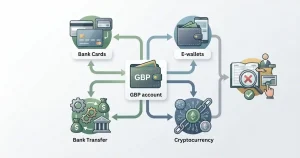
Offshore casinos may offer card payments, e-wallets, bank transfers and cryptocurrency, sometimes routed through alternative processors. The available methods can vary by operator and may change. A payment option being visible at deposit does not mean the same route will be available for a withdrawal. The operator’s terms and payment rules determine whether funds can be returned by that method, and those rules may be more restrictive than the deposit screen suggests.
Crypto has a specific, limited connection to British payment rules: it can bypass the UK ban on gambling funded by credit cards. That does not make a cryptocurrency deposit equivalent to a credit-card payment, nor does it turn a Curaçao-licensed casino into a UK-licensed one. It also does not remove the ordinary practical risks of sending funds to an operator outside the UK regulatory system. A transaction may be difficult to reverse, and exchange rates or processing arrangements can affect the amount received.
E-wallets and bank transfers bring their own checks and processing steps. Alternative processors can make the name shown on a transaction differ from the casino brand, which can complicate the task of recognising or tracing a payment. The route should be understood before a deposit is made, rather than inferred from a logo in the cashier. A familiar payment brand is not an endorsement of the casino.
A specialist review has also described some offshore sites as accepting deposits charged to a mobile phone bill or taken from a prepaid balance. That is a reported option, not a dependable feature of Curaçao-licensed casinos as a group; availability can change, and payment terms need to be checked with the operator.
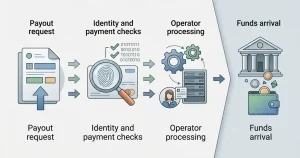
The same caution applies to cryptocurrency casinos marketed as “licensed” or “no KYC”. Those labels do not establish what checks will apply when a withdrawal is requested. An operator may ask for identity or payment verification later, and a supported deposit route does not guarantee a matching withdrawal route. The payment method is only one part of the arrangement.
From inside the industry, the cashier is often designed to make depositing feel simple; withdrawal conditions sit elsewhere in the terms. That gap matters. A Curaçao casino licence and a convenient payment route are separate claims, and neither alone establishes what happens when a payment is delayed or disputed.
What “Best Licensed” Means When the Licence Is Overseas
When considering a casino that may not hold a UK licence, check its licensing status and terms independently before signing up. This list gives a limited factual reference point for reviewing the options.
1. SlotoSport
Payout speed: 1-3 business days The stated payout speed is 1–3 business days.
2. EvoSpin
Payout speed: 1-3 business days The stated payout speed is 1–3 business days.
3. BeOnBet
Payout speed: 1-3 business days The stated payout speed is 1–3 business days.
4. Dieselwin
Payout speed: 1-3 business days The stated payout speed is 1–3 business days.
5. x3bet
Payout speed: 1-3 business days The stated payout speed is 1–3 business days.
6. Jetsetspins
Payout speed: 1-3 business days The stated payout speed is 1–3 business days.
7. SpinFormula
Payout speed: 1-3 business days The stated payout speed is 1–3 business days.
8. NightLuck
Payout speed: 1-3 business days The stated payout speed is 1–3 business days.
9. Zombillion
Payout speed: 1-3 business days The stated payout speed is 1–3 business days.
10. Revery Play
Payout speed: 1-3 business days The stated payout speed is 1–3 business days.
“Best licensed” sounds like a ranking of regulatory strength. In practice, it can mean something much narrower: the operator holds a licence somewhere, and the marketing presents that fact as reassurance. For a UK reader, the important distinction is what that licence makes the operator provide—and which routes remain available if something goes wrong.
I have seen licence wording do a lot of work in a small space. A badge, a regulator’s name and a polished “safe and secure” claim can create the impression that the protections are interchangeable. They are not. An overseas licence does not bring a casino into the UK Gambling Commission’s system, and it does not make UK safeguards apply by association.
The comparison should therefore start with the protections, not the label. Non-UK-regulated casinos may operate under less demanding responsible-gambling and data-protection requirements than UKGC-licensed operators. That does not establish that every overseas site handles data poorly or treats gambling harm casually. It does mean the licence alone cannot prove that UK-level requirements govern its practices.
Note: Overseas licences often provide fewer responsible-gambling and data-protection requirements than those mandated by the UKGC.
What “best” can conceal
At a UKGC-licensed casino, mandatory responsible-gambling tools form part of the regulatory framework. At a non-UK-regulated casino, those UK requirements do not follow the customer overseas. The same applies to UK complaint routes: playing at an offshore casino removes access to the Financial Ombudsman Service and to the responsible-gambling tools that UK rules require.
That difference matters more than a banner promising “player protection”. The phrase may describe the operator’s own policy, but it is not evidence that the policy matches UK requirements or that a UK body can enforce it. In my experience, the useful question is not whether a site says it cares about customers; it is what obligation sits behind the claim.
Dispute handling is another point where broad promises can blur the details. Anjouan-licensed casinos do not offer an independent dispute-resolution route comparable to the approved ADR services used within the UKGC framework. A casino may have an internal complaints process, but that is not the same as an independent adjudicator. The distinction is plain. Different routes.
A more useful basis for comparison
When an overseas site calls itself one of the best licensed online casinos, the claim should be read as a statement about its own chosen criteria unless those criteria are explained. “Best” might refer to games, payments or customer service; none of those, by itself, establishes the strength of the regulatory protections. A licence can be genuine and still leave a UK customer without UK complaint options.
I would separate the assessment into two questions. First, what does the licence require the operator to do? Second, what can a customer actually rely on if a dispute arises or a responsible-gambling intervention is needed? Those answers should not be collapsed into a single star rating or a reassuring badge.
This also helps distinguish a “best UK licensed casino” from an overseas casino that happens to accept British customers. The first description implies UK authorisation; the second does not. Calling an overseas site “UK licensed” would misstate its position, even if it holds a licence elsewhere. The wording matters because customers often read “licensed” as shorthand for a common set of protections.
No overseas licence should be treated as a substitute for UKGC safeguards. Nor does the word “best” repair the gap. A fair comparison states what protections apply, what complaint route exists, and where those protections stop. Anything less is marketing, not a measure of regulatory cover.
Regulatory Comparison
- An overseas licence is not a substitute for UKGC authorisation.
- Player liability and operator authorisation are separate legal questions.
- Licence badges are claims that must be verified via public registers.
- Offshore sites lack access to the UK’s Financial Ombudsman Service.
- New site launches do not automatically imply UK regulatory protection.
Finding Casinos With and Without a UK Licence
A list of UK-licensed online casinos is useful only if it identifies sites authorised for customers in Great Britain, rather than grouping together every casino with a licence somewhere. The key distinction is the regulator overseeing the operator. A company’s overseas base does not settle the question: operators serving customers in Great Britain need a UK Gambling Commission licence, wherever they are based.
I have seen directories blur that line by placing a UKGC-licensed site beside an offshore licensed casino under a broad label such as “licensed”. The word may be accurate in a narrow sense, but it does not say who issued the licence or whether the operator is within the UK system. Different categories, different oversight.
A non-UK-regulated casino is an online gambling site operating without UK Gambling Commission oversight. That is the relevant meaning of “without a UK licence”; it does not necessarily mean the site has no licence at all. It may hold authorisation from another jurisdiction, but that does not make it UKGC-licensed or part of the British licensing system.
Non-UKGC Licensed Casinos: Rules and Risks
For anyone comparing a list of UK-licensed casinos, the useful question is not simply whether each entry calls itself licensed. It is whether the operator serving Great Britain holds the relevant UK Gambling Commission licence. A directory that does not make that distinction can create a false equivalence between UK-authorised operators and non-UK-regulated sites.
The same care applies to lists of casinos with no UK licence. Treat that description as a category, not as a recommendation or a claim that all the sites share the same terms. An overseas licence and the absence of UKGC oversight are separate points; neither should be inferred from a casino’s branding, currency or apparent location.
In my experience, the cleanest comparison keeps the categories apart: UKGC-licensed operators on one side, non-UK-regulated casinos on the other. A mixed list may be longer, but it is less informative unless it clearly states which regulator applies to each operator. “Licensed” is not the whole answer. The jurisdiction matters.
New Casino Sites: Fresh Launch Does Not Mean Fresh Protection
A launch date is a marketing detail, not a regulatory status. I have seen “new” do a lot of work in casino copy: it suggests a clean start, current technology and a chance to get in early. None of those claims establishes who operates the site or which regulator oversees it.
For customers in Great Britain, the key distinction is straightforward. An operator serving them must hold a UK Gambling Commission licence, wherever the business is based. A newly opened site without that authorisation does not become a UK-licensed casino because its branding, games or payment pages look familiar. It remains outside the Commission’s oversight.
The same distinction matters when a launch is described as a new MGA-licensed casino. A Malta Gaming Authority licence is an overseas authorisation; the word “new” does not turn it into a UK Gambling Commission licence. The two descriptions answer different questions: one concerns the site’s launch, the other its regulator.
I would treat claims such as “brand-new” or “freshly regulated” as separate statements, not as proof of one another. A casino may be new to the market while its operator has a history elsewhere; equally, a polished launch says nothing by itself about the protections available to customers. The operator’s status matters more than the age of the website.
That is why lists of new UK licensed casinos can blur an important line if they mix UK-authorised sites with non-UK-regulated casinos. A fresh launch is not evidence of UK authorisation. And an overseas licence, including an MGA licence, should not be presented as though it were one.
New is a date. Protection depends on the regulatory status behind the site.
Is it legal for a UK player to gamble at an Anjouan-licensed casino?
UK law does not explicitly prohibit British citizens from using gambling services licensed in another country, and players do not commit a criminal offence by gambling on an unlicensed site. But an Anjouan licence does not authorise a casino to operate in the UK; operators serving customers in Great Britain need a UK Gambling Commission licence.
What payment methods work best at non UK regulated casino sites?
Offshore casinos may accept credit cards, e-wallets, bank transfers and cryptocurrencies, sometimes through alternative processors. Some also allow payments through a mobile phone bill or prepaid balance; withdrawal times vary by method and can range from 24 hours to several weeks.
What is the biggest risk of playing at a non UK regulated casino?
You have fewer protections if something goes wrong: Anjouan-licensed casinos do not guarantee that player funds are segregated, and you may be an unsecured creditor if the operator fails. You also lack access to UK-approved independent dispute resolution and the UK’s Financial Ombudsman Service.
Can I complain to the Anjouan regulator if a casino won’t pay me?
No. The Anjouan authority does not handle or adjudicate player complaints, and Anjouan-licensed casinos do not provide an independent dispute-resolution route comparable to UKGC-approved services. Operators must respond to complaints within 30 calendar days under Anjouan’s framework.
Are non UK regulated casinos legal for UK players to use?
UK law does not explicitly prohibit British citizens from using gambling services licensed abroad, and players do not commit a criminal offence by gambling on an unlicensed site. However, an overseas licence does not authorise a casino to serve customers in Great Britain; operators serving that market need a UK Gambling Commission licence.
Material created by the team Rolletto