A practical guide to streamed dealers, casino formats, roulette odds, demos and the limits of game statistics.
What “Live” Means in a UK Casino
“Live” describes how a casino game is presented and run, not a guarantee about its theme, rules or outcome. In a live-dealer game, gameplay is streamed in real time from a studio where a human dealer conducts the game. Players submit bets through an on-screen interface while the stream shows the dealer’s activity. The screen combines two functions: a broadcast of the live game and controls for placing a wager.
That distinction matters when a title includes a familiar name. A search for Monopoly Live casino may refer to a particular branded game, but the words alone do not establish how that game works or whether a particular operator offers it. The term “live” should be read as a description of the format only where a human dealer is conducting a streamed game. It should not be used to infer rules, features or outcomes from the title.
I have seen marketing language make this boundary look less important than it is. “Live” can sound like a broad promise of a more authentic or more interactive experience. The practical meaning is narrower: the game is being conducted in real time by a person in a studio, and bets are placed through the online interface. The title and presentation may vary; the format is defined by the live dealer and stream.
When choosing a UK casino for Monopoly Live, check the practical details as well as whether the game is available. The information here gives a limited point of reference: stated payout speed.
1. SlotoSport
Payout speed: 1-3 business days SlotoSport lists a payout speed of 1–3 business days. This is the only supplied detail to consider when assessing it for this page.
2. EvoSpin
Payout speed: 1-3 business days EvoSpin lists a payout speed of 1–3 business days. No other operator details were provided.
3. BeOnBet
Payout speed: 1-3 business days BeOnBet lists a payout speed of 1–3 business days. The available information does not establish whether Monopoly Live is offered.
4. Dieselwin
Payout speed: 1-3 business days Dieselwin lists a payout speed of 1–3 business days. That is the only specific detail available for this verdict.
5. x3bet
Payout speed: 1-3 business days x3bet lists a payout speed of 1–3 business days. No further details were supplied.
6. Jetsetspins
Payout speed: 1-3 business days Jetsetspins lists a payout speed of 1–3 business days. The supplied information is limited to this practical detail.
7. SpinFormula
Payout speed: 1-3 business days SpinFormula lists a payout speed of 1–3 business days. No information was provided about its Monopoly Live offering.
8. NightLuck
Payout speed: 1-3 business days NightLuck lists a payout speed of 1–3 business days. This is the only stated operator detail.
9. Zombillion
Payout speed: 1-3 business days Zombillion lists a payout speed of 1–3 business days. No other facts were supplied to assess it for Monopoly Live.
10. Revery Play
Payout speed: 1-3 business days Revery Play lists a payout speed of 1–3 business days. The available information does not confirm whether it offers Monopoly Live.
The screen interface is part of the arrangement, not a separate game. It gives players a way to submit bets while the dealer-led round is under way. The streamed activity and the electronic controls therefore sit alongside each other. A game can be online and still involve a human dealer; “online” describes how it is accessed, while “live dealer” describes the way the game is conducted.
That is different from a digital game in which the outcome is produced by software rather than shown as part of a live dealer stream. The distinction is about the format, not whether the game is fair, favourable or more likely to pay. A human dealer does not make a wager safer, and a studio broadcast does not alter the basic fact that a player is placing a bet.
There is also a legal condition behind the phrase “UK casino”. Live dealer casinos may operate legally for the UK market when the operator holds the relevant licence from the UK Gambling Commission. Remote gambling operators selling into the British market must be licensed by the Commission, even if the business is based elsewhere. A live stream does not create an exception to that requirement.
Online Bingo in the UK: Formats and Slots
The licence applies to the operator’s provision of gambling, rather than being a quality label for an individual game. That is an important distinction in how casino pages are presented: a polished stream or recognisable title does not, by itself, show that the company offering it is authorised to serve customers in Great Britain. The relevant question is whether the operator holds the required UK licence.
The Gambling Act 2005 governs gambling in England, Wales and Scotland, while Northern Ireland is outside that Act. In the British online market, the central point remains that a remote operator serving customers there needs the appropriate Gambling Commission licence. For a UK-facing live casino, licensing is a condition of legal operation, not an optional feature added to the stream.
I would separate three things that advertising often compresses into one: the game’s name, its live presentation and the operator’s legal status. A recognisable name can identify a theme. A live presentation means real-time studio gameplay with a human dealer. The licence concerns the business providing the gambling service. One does not prove the others.
So, when the phrase Monopoly Live casino appears, it should not be treated as proof of a particular set of mechanics or as evidence that every site using similar wording offers the same product. The reliable meaning of “live” is limited to the dealer-led format. The UK condition is equally clear: the operator needs a Gambling Commission licence to offer remote gambling legally in the British market.
Attention: A recognizable game title or polished live stream does not prove that the operator is authorized to serve customers in Great Britain; they must hold a UK Gambling Commission licence.
That is the useful starting point. Format first. Licence second. Title claims kept in their place.
Playing Online: The Practical Trade-Offs
A live game changes the rhythm of play. A digital game can move from one result to the next without waiting for a person to run the action. In a live format, events unfold at the table’s pace. The dealer’s actions and the game’s sequence take time, so the experience is slower than a digital version.
That difference is not a defect. It is part of the exchange. A player gets a real-time view of a human-run game, but gives up some speed and control over how quickly the next round begins. I have found it useful to think of live play less as a faster route to a result and more as a different kind of viewing and participation. The pace is built in.
The connection is part of the experience
A live game depends on a stable internet connection. The stream has to reach the device while the game is taking place, and the on-screen controls have to carry a player’s decisions back to the table. If the connection is unreliable, the practical experience can become frustrating: the picture may not keep up, or a decision may be harder to make at the right moment.
That is the basic trade-off with online delivery. The game is not simply a static interface that can be treated as independent of the connection. It combines a moving stream with interactive controls. A weak or interrupted connection can therefore affect both what is visible and how comfortably a player can take part.
Penny Slots in the UK: Stakes, Spins and RTP
It is worth separating a slow game from a slow connection. The live format has a slower pace by design; that does not mean every delay is part of the game. Waiting for a dealer’s action is different from a stream that stutters or a control that fails to respond. I would not confuse the two. One is the table’s rhythm, the other is an online delivery problem.
More time between decisions
The slower pace can make a session feel less compressed than playing a digital game. There is time to follow what is happening on screen, but that does not remove the need to pay attention. Decisions still have to be made within the game’s flow, and the player is following an event that continues in real time rather than a sequence generated entirely on demand.
This matters when choosing between formats. Someone who values quick, repeated rounds may find the live table less convenient. Someone who prefers to watch a human dealer run the game may regard the waiting as part of the appeal. Neither preference makes the format better in general. The difference is operational: live play takes longer and depends on the stream remaining usable.
The same point applies to searches for Monopoly Live online. The phrase can suggest that the online version will behave like a quick digital game, but “online” describes where it is accessed, not a guarantee of speed. A live casino experience retains the pacing constraints of a live game. The name of a game does not change that general feature of the format.
Live play is characterized by a slower pace by design, which is distinct from technical delays caused by an unreliable internet connection.
The cost of the slower format
Live games also have higher minimum bets than digital versions. That is a practical distinction, not just a matter of presentation. The format may be attractive because it feels closer to a table in a casino, but that does not mean it suits every budget. A slower pace can mean fewer decisions over a period of play; it does not make each decision less consequential.
I see these features as a package: a live stream, a human-run pace, a stable-connection requirement and higher minimum bets. The appeal may be the real-time atmosphere, but the conditions are not interchangeable with those of a digital game. A person comparing online casinos with Monopoly Live should keep the format itself in view, rather than assuming that every online option offers the same pace or feel.
There is no advantage in treating a live table as a digital game with a camera attached. The stream and the table’s rhythm are central to how it works. A stable connection helps the experience remain coherent; it cannot make the game move faster or change its minimum bet. Those are separate considerations.
Before playing, I would set a budget and stick to it, then review the table rules and paytable. That is especially important where the live format’s minimum stake is higher than the equivalent digital game. The online presentation can make a table feel accessible, but the real cost of a session is shaped by its conditions, not by how polished the stream looks. Entertainment, not advice.
Amatic Online Casinos UK: Games and Terms
Choosing a Casino Without a “Best” List
A “best” casino label compresses several different decisions into one sales phrase. One site may suit a player looking for a particular live table; another may have terms that make a promotion irrelevant to that player. Neither label establishes whether the operator is authorised to offer real-money gambling to people in the UK. I treat licensing as the starting condition, not a badge that settles every other question.
For a live-dealer casino serving the UK, the relevant baseline is a licence from the UK Gambling Commission. A casino holding that licence may legally offer live dealer games in the UK. That is more meaningful than a broad claim such as “trusted” or “top rated”: those words are marketing judgments, while the licence is the regulatory condition for operating in this market.
This distinction matters when a page presents a supposed best Monopoly Live casino or a shortlist of the best Monopoly Live casinos in the UK. A ranking can create the impression that the first name is objectively safer or more suitable. It cannot establish that by position alone. The question I would settle first is whether the operator is licensed for the UK market; only then does it make sense to compare the particular features relevant to the intended use.
Licensing
Remote gambling operators serving the UK market must be licensed by the UK Gambling Commission to operate legally, regardless of where the business is based.
A familiar game name does not change that order. Searching for Monopoly Live rules, results or a bonus may lead to pages with confident descriptions, but those descriptions do not substitute for the operator’s regulatory status. Nor does a casino’s promotion prove that the promotion applies to a live game. The word “bonus” can cover different offers and conditions; its practical value depends on the terms attached to that offer. A name in a headline is not evidence of eligibility.
In my experience, the neatest promotional claims often blur separate questions. Is the casino permitted to serve UK customers? Is the named game actually available there? Does a particular offer cover that game? These are not interchangeable checks. A licensed operator can still have terms that make a bonus unsuitable, and an appealing offer cannot turn an unlicensed site into a UK-licensed one.
That is why I would not treat an operator ranking as a substitute for checking the underlying condition. A list can be useful as a starting point for comparison, but the order itself is not a regulatory finding. “Best” says little unless the basis is clear, and even a stated basis may reflect the priorities of the list-maker rather than the needs of every player. The label is not the evidence.
Mines Casino Game in the UK: Rules and Risks
Licensing also has a practical meaning beyond presentation. The UK framework requires operators selling remote gambling to people in Great Britain to hold the relevant Gambling Commission licence. This makes the licence a threshold for a legal UK-facing casino, rather than an optional quality mark that can be weighed against a larger bonus or a more prominent game page. For a live-dealer offer, the same threshold applies.
I separate that baseline from judgments about design, game choice or promotions. Those can be compared, but they do not answer the licensing question. Likewise, a casino’s use of terms such as “official”, “premium” or “recommended” should not be mistaken for proof of regulatory approval. Promotional language describes how a business wants to be seen. A licence establishes whether it meets the relevant UK requirement.
There is no honest universal winner in a category like best Monopoly Live casino UK 2026. The phrase suggests a stable verdict, while the useful first distinction is simpler: a casino serving UK players with live dealer games needs the appropriate UK Gambling Commission licence. After that, the remaining choice depends on the specific game availability and terms being considered, not on a ranking headline.
That is the baseline. Not a recommendation.
Playing or Trying a Live Game
The word “play” can mean two different things on a casino page: taking part with money at stake, or opening a free-play version to get a feel for the format. They may look similar on screen, but they are not the same activity. A demonstration is not a route to cash winnings.
Difference between play and demo
A demonstration is a free-play version used to explore the interface and format without staking real money; it is not a route to cash winnings and results are not withdrawable.
For a live-dealer game, the key feature is the streamed table: a human dealer runs the game in real time, while players use an on-screen interface to place bets. A demo, where offered, is a separate way to explore a game without treating the session as real-money play. The title alone does not tell the whole story. With a search such as “Monopoly Live”, it is worth distinguishing the name being searched from the actual mode shown on the casino page; I would not assume that every result bearing a familiar title has identical rules or presentation.
That distinction matters because the real-money interface is not simply a demonstration with a cash button added. In paid play, the bet is a financial decision, and the available controls determine what is being staked. In a demo, any displayed balance or result belongs to the practice session, not a withdrawable account. A successful round there is not evidence of a real payout, and it does not create a claim to one.
What a demo can show
A free-play session can help make the basic sequence less unfamiliar: where the game is displayed, how the betting interface is arranged, and what happens as a round progresses. It can also reveal whether the pace and presentation suit the player. That is useful as orientation, not as a way to test a strategy for guaranteed returns.
I keep that boundary firm. Practice may explain how to operate an interface; it cannot remove the financial risk attached to real-money play. Demo results should not be treated as a forecast of what will happen in a later paid session. Different sessions are not linked by a promise that a win is due.
Online Casino Without ID in the UK: What It Means
What changes when money is involved
In real-money play, a selection made through the on-screen controls becomes a wager rather than a practice choice. That changes the consequence of each decision, even if the screen looks familiar. Before playing, the table rules and paytable need to be understood, and a spending budget should be set in advance. A budget is a boundary, not a target to spend.
I would also separate curiosity about a game from the decision to deposit. Watching a live stream or trying a demonstration can answer practical questions about presentation without requiring a real-money session. If the only available route is a paid game, that is not the same as a free trial. The label and the terms on the page matter more than the promotional wording around them.
“Try it free” sounds simple. The detail is what counts: a demo can offer practice, but it does not offer real winnings. Nor should a demo result be used to justify raising a later stake or continuing after a budget has been reached. That is where a low-pressure test can become a misleading comparison.
For anyone looking up how to play Monopoly Live, the safest description is limited: check what the casino actually presents, distinguish a demonstration from a real-money table, and read the rules shown for that game before placing a wager. I would not infer the specific mechanics from the name alone. No shortcut.
Before Playing
- Distinguish if the session is a demonstration or real-money play
- Read the specific table rules and paytable
- Set a spending budget in advance
- Confirm the operator’s UK licensing status
Live Games, Physical Wheels and Digital Roulette
The clearest difference between live dealer roulette and computerized roulette is how the result is produced. At a live table, a dealer spins a physical wheel and the ball comes to rest in a numbered pocket. In a computerized version, a Random Number Generator (RNG) determines the result. In either case, the basic bet is tied to the number where the ball lands: a player wins if they selected that number.
That distinction matters more than the visual style of the screen. A camera feed of a wheel shows a physical process taking place; an animated wheel can represent a result generated by software. Both may look like roulette, but the mechanism behind the outcome is different.
I have found that the word “live” can carry more weight in advertising than it does in the rules. It describes the way a game is presented, but it does not, by itself, explain the game’s full mechanics. The important question is whether the result comes from a physical wheel with a dealer or from a computerised process. A themed title or studio presentation does not answer that question on its own.
That is relevant to searches for a Monopoly Live casino game or game-show experience. The name may suggest a particular mix of branding and entertainment, but it is not enough to establish how a specific game works. The general roulette distinction can be stated; any separate bonus features, wheel sections or special rules need to be confirmed from that game’s own published rules. Guessing from the title would turn an assumption into a description.
Amatic Casino Games in the UK: How Access Works
For ordinary roulette, the visible sequence is straightforward: bets are placed, the wheel is spun, and the ball lands on a number. What changes between live and computerized play is not the basic meaning of a winning number, but the method used to produce the result. With live dealer roulette, the wheel and ball are physical. With RNG roulette, software selects the outcome.
This is also why a game’s presentation should not be confused with evidence about its mechanics. A lively studio, a host or a branded set may make a title feel like a game show, but those details do not establish whether it uses a physical roulette wheel or a random-number system. I separate the sales language from the game rules. That is the useful distinction.
The format does not make a roulette result predictable. A physical wheel is not a promise of fairness to an individual player, and a computerised wheel is not a clue to what comes next. Each round still resolves around the number selected and the number produced. The presentation changes; the bet remains exposed to chance.
“Live” describes the mechanism. Not a forecast.
What Statistics Can—and Cannot—Tell You
Roulette statistics describe probabilities and costs; they do not tell anyone what the next result will be. A record of earlier outcomes can show what happened, but it cannot turn a past sequence into a reliable forecast. The same applies to a tracker: it may organise results, but it does not make future spins more predictable.
Past results and trackers are descriptive records of what happened; they cannot be used as reliable forecasts for future spins.
The house edge is a measure of the casino’s mathematical advantage over time, not a fee deducted from every individual bet. In roulette, a straight-up bet carries a 2.9% house edge, while other bets carry a 2.7% edge. Those figures describe the built-in disadvantage across play, not the outcome of a particular session. A player can win or lose in the short term; the edge does not promise a fixed result on any one spin.
That distinction matters when a strategy is presented as a way to “beat” the game. A staking plan changes how much is placed and when. It does not alter the underlying odds or remove the possibility of losing. Martingale is a familiar example of a system that increases stakes after losses in an attempt to recover them. It can still lead to losses; a pattern of increasing bets is not protection against an unfavourable run. Blackjack also retains a house edge, and systems such as Martingale can result in losses there too.
I have seen past-result charts given more authority than they deserve. A streak on a screen can look like evidence that a number is “due” or that a pattern is forming. That is a reading of the record, not a change in probability. History is descriptive. It is not a forecast.
A tracker can therefore be useful as a record-keeping tool, provided its limits are clear. It can summarise previous outcomes or help someone review their own activity. It cannot identify a winning sequence in advance, and it cannot make a bet safer by displaying more data. More information is not the same as more predictive power.
The practical use of statistics is narrower, but more honest: they help explain the game’s structure and the cost built into it. They do not supply a method for guaranteeing profit. I treat any claim that a staking system or results history removes the house edge with caution. The edge remains. So does the risk of loss.
Casino Sites, Table Limits and the Cost of Live Play
A casino’s live-game lobby can show what is available, but the table itself determines whether a particular game fits a player’s budget. The minimum stake is the entry price for each round; it is not a suggested budget for a session, and it says nothing about how long play will last. I learned to separate those points after treating a low minimum as if it made the overall cost predictable. It does not.
One specialist review reports entry stakes of around 20p at many live roulette and baccarat tables. That is a useful indication of what some tables may offer, not a market-wide price or a promise about any particular casino site. The same review notes that blackjack tables often begin at higher limits. A player comparing live tables should therefore look at the individual table’s displayed minimum, rather than assume that the price of access is consistent across games.
Live Roulette & Baccarat
Some tables may offer entry stakes starting around 20p.
Live Blackjack
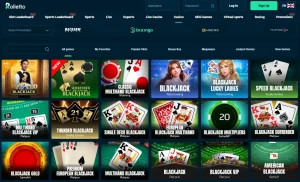
These tables often begin at higher minimum limits compared to roulette.
This matters when comparing sites that list Monopoly Live alongside other live tables. A lobby listing establishes that a game is offered; it does not establish the stake required to join, or whether that stake suits a player’s planned spend. Table limits can vary, so the relevant details are the terms shown for the specific table at the time of play. No ranking or promotional label can replace that check.
I have seen “low stakes” used as a broad selling phrase. The practical meaning is narrower: a particular table accepts a smaller opening bet. It does not mean that losses are capped, that a session will be inexpensive, or that the minimum stays the same across a casino’s live games. A budget set before play is still the guardrail, and it should not be raised to keep a session going.
The comparison is straightforward, if less glamorous than the lobby. Check the table’s entry stake, match it to a fixed budget, and leave the table if that budget is used. Blackjack may require a higher starting stake than live roulette or baccarat, so a site that suits one table may not suit another. Table-level conditions matter. Labels do not.
Roulette Variants, Odds and Sensible Tips
The difference between American and European roulette is visible on the wheel and reflected in the stated chance of a winning number. American roulette has two green pockets, marked 0 and 00. European roulette has one green pocket, marked 0. That extra pocket changes the odds: the chance of winning is stated as one in 38 on the American wheel and one in 37 on the European one.
Those figures are useful for comparing these roulette variants, not for predicting the next result. A run of results on one wheel does not make a particular number due, and a tracker cannot turn past spins into a forecast. I have seen statistics presented with the confidence of a plan. They are descriptions, not leverage.
The practical tip is to identify the variant before placing a bet. A table’s name or appearance is not a substitute for checking its rules. The 00 is the detail that separates the American layout from the European one; overlooking it means comparing the wrong odds. Review the table rules and paytable before play, since the layout alone does not explain every condition attached to a bet.
There is also a limit to what roulette figures can say about a branded live game. The word “live” describes a format, not a promise that the game uses either roulette wheel. Roulette odds apply only where the game actually offers roulette under the relevant layout and rules. They cannot be carried across to another game simply because its name or presentation suggests a casino theme.
That distinction matters when looking for statistics or tips about a particular title. A general roulette comparison can clarify the effect of the extra green pocket; it cannot establish the rules or outcomes of a different game. I keep those questions separate. No borrowed odds.
Before play, set a budget and keep to it. Treat the stated odds as a comparison between layouts, rather than a reason to increase stakes or recover a loss. The American wheel has the less favourable stated chance of a winning number; neither layout makes results certain. Knowing which variant is in front of you is useful. It is not a system.
Do
- Identify the roulette variant (American or European) before betting
- Review the paytable and rules for the specific game
- Stick to a fixed budget
Don’t
- Assume the game layout alone explains all conditions
- Use statistics as a system to predict results
- Increase stakes to recover a loss
A Demo Is Practice, Not a Payout
A free-play demonstration is a way to see how a game is presented without staking real money. If a Monopoly Live demo is available, its purpose is to let someone explore the interface and follow the experience. It is not a route to cash: any balance shown in a demo is not withdrawable, and results there do not create real winnings.
The distinction matters because a live dealer game has a real-time studio stream and an on-screen betting interface. A demonstration may reproduce parts of that presentation, but it should not be treated as proof that the real-money version will feel identical or produce the same results. A screen can look familiar while the financial stakes are entirely different.
I have seen “free” used as if it meant risk-free access to the same opportunity. It means no real-money stake is being made in the demonstration; it does not mean the demo can pay out. That is the boundary.
For a UK player considering a Monopoly Live demo, the sensible use is limited: become familiar with the displayed controls and see whether the format is appealing. It cannot show what a real-money session will return, and no demo result predicts a later outcome. Practice, not income.
When moving from demonstration to real-money play, the change is not merely a different balance on screen. Actual bets put money at risk. A demo is therefore not a substitute for checking the real table’s rules and paytable, setting a budget beforehand, and keeping to it. Those steps matter precisely because simulated play has no financial consequence while real play does.
Free play can be useful for orientation, but its limits should stay clear. It offers no payout and gives no reliable forecast. This section is for entertainment purposes only, not gambling advice.
Free Play, Bonuses and the Terms Behind Them
A search for a free version of Monopoly Live and a review of its bonus terms can lead to two different things being treated as one: a demonstration game and a promotion attached to a casino account. They are not interchangeable. Free play is for trying the format; it does not produce real-money winnings. A welcome offer, by contrast, comes with conditions that determine which games can be played with it and how any wagering requirement is calculated.
A specialist review of UK casino promotions describes most welcome offers as free spins for slot games, rather than funds for live tables. That distinction matters. A promotion may be advertised prominently while excluding the game that prompted the search. The offer’s terms—not its headline—set the boundary.
The same terms can assign different weighting to different game categories. Live games may count for only a small share of wagering requirements; one stated example is a 10% contribution. In practical terms, eligible live play would make only limited progress against the requirement. The exact treatment depends on the promotion, so a general description cannot substitute for its rules.
I have seen the headline do the selling and the game-weighting clause do the restricting. That is not necessarily a contradiction: the bonus can be available while contributing little when used on a live table. It is a condition with consequences.
Before opting in, the relevant checks are whether the offer applies to live games, what weighting those games receive, and whether a maximum bet condition applies. A bonus is not extra cash without strings. Set a budget before any live play and keep the entertainment purpose separate from the promotional calculation. This is general information, not gambling advice.
How do you play live roulette?
Place your bets using the on-screen controls, then watch the live dealer spin a physical wheel. You win if the ball lands on a number you selected.
What are the different types of roulette you can play with a live dealer?
Live roulette can include European, American and French Roulette. The wheel and rules differ between versions; for example, American Roulette has both 0 and 00, while European Roulette has only 0.
How do you choose a live dealer casino?
Choose a casino that holds a UK Gambling Commission licence, which is required for legal remote gambling in the British market. A live stream or familiar game title alone does not establish that the operator is licensed.
Is the house edge the same at live dealer casinos online?
No, it varies by game and bet. In roulette, straight-up bets have a 2.9% house edge, while other bets have a 2.7% edge; French Roulette also reduces the loss on an even-money bet when the ball lands on zero.
What is the difference between live dealer baccarat and RNG baccarat?
Live dealer baccarat is streamed from a studio with a human dealer conducting the game in real time. RNG baccarat uses software to produce outcomes rather than showing a live dealer-run game.
What is the difference between European and American Roulette?
European Roulette has one green pocket, 0, while American Roulette has two, 0 and 00. The odds of winning are 1 in 37 on the European wheel and 1 in 38 on the American wheel.
Material created by the team Rolletto