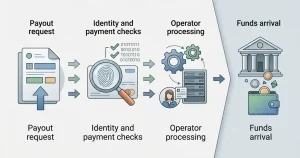
High-stakes access and VIP service do not guarantee better bonus terms, easier withdrawals or fewer checks.
What “High Roller” Means in a UK Online Casino
“High roller” is a label, not a legal status or a standard category across UK casinos. In practical terms, it describes a player whose deposits or stakes are larger than the operator’s typical customer activity. But the phrase alone tells little about what an account includes. One casino may use it for a formal customer tier; another may use it as marketing language for a welcome offer. The useful question is what the operator actually provides, and what rules still apply.
I have learned to separate the image from the mechanics. A high-roller experience can mean access to higher-value play, more personal contact or a tailored account service. It does not automatically mean better terms, faster withdrawals or fewer checks. Nor does it create a separate class of gambling outside the ordinary rules. In Britain, the same licensing framework applies whether a customer deposits modestly or treats the casino as a high-stakes pastime.
A remote operator offering real-money gambling to customers in Great Britain must hold the relevant licence from the UK Gambling Commission. Online gambling is legal for adults aged 18 and over when it takes place with a licensed operator. The Gambling Act 2005 governs gambling in England, Wales and Scotland; Northern Ireland has a different legal framework. A label such as “UK casino” is not proof of a UK licence. Offshore sites may be accessible, but they operate outside the UKGC system and do not provide its protections.
High-roller players should consider both the bonus terms and how quickly they can access winnings. This list offers a starting point for checking the options available to UK players.
1. SlotoSport
Payout speed: 1-3 business days SlotoSport lists a payout speed of 1–3 business days. Check the bonus terms to see whether they suit your play.
2. EvoSpin
Payout speed: 1-3 business days EvoSpin lists a payout speed of 1–3 business days. Review its bonus terms before deciding if it fits your needs.
3. BeOnBet
Payout speed: 1-3 business days BeOnBet lists a payout speed of 1–3 business days. Its bonus details are worth checking before you play.
4. Dieselwin
Payout speed: 1-3 business days Dieselwin lists a payout speed of 1–3 business days. Check the bonus terms to assess whether they suit a high-roller budget.
5. x3bet
Payout speed: 1-3 business days x3bet lists a payout speed of 1–3 business days. Review the available bonus terms before making a choice.
6. Jetsetspins
Payout speed: 1-3 business days Jetsetspins lists a payout speed of 1–3 business days. Check its bonus details to see whether they match your expectations.
7. SpinFormula
Payout speed: 1-3 business days SpinFormula lists a payout speed of 1–3 business days. Its bonus terms are important to review before playing.
8. NightLuck
Payout speed: 1-3 business days NightLuck lists a payout speed of 1–3 business days. Check the bonus conditions to decide whether they suit your plans.
9. Zombillion
Payout speed: 1-3 business days Zombillion lists a payout speed of 1–3 business days. Review its bonus terms before considering it for high-stakes play.
10. Revery Play
Payout speed: 1-3 business days Revery Play lists a payout speed of 1–3 business days. Check the bonus details and conditions before you play.
That distinction has practical consequences. Offshore casinos do not have UKGC oversight, GAMSTOP coverage or access to the UKGC-required dispute-resolution framework. They are also not subject to UK stake-limit and bonus rules. A large advertised package can make a site look generous while leaving the customer with fewer familiar safeguards. Different jurisdiction, different protections.
Age checks are not a formality that can be postponed until a large withdrawal. Operators must verify a customer’s age before allowing a deposit into a gambling account. A high-value account does not bypass that gate. Identity and other account checks may also form part of an operator’s processes, but the key point is that gambling access is conditional on the required verification, not on the customer’s intended level of play.
Account limits are another part of the experience that can be easy to overlook in marketing. Remote operators must prompt new customers to set a financial limit before the first deposit and provide accessible controls for managing account-level limits. Those controls remain relevant at any spending level. An account described as “premium” does not remove the need to consider a budget or make the tools disappear. In my view, that is one of the clearest differences between a genuine service feature and a sales label: safeguards apply to the account, not just to customers the operator considers at risk.
Newest Online Casinos: No Deposit Bonus Guide
UK-licensed casinos must also provide responsible-gambling tools, including self-exclusion. GAMSTOP is a separate self-exclusion service covering participating UK-licensed operators. These options matter because high-value play can magnify the consequences of losing track of time or spending. A personal contact or a dedicated account service is not a substitute for independent controls. If play stops feeling manageable, GamCare and GambleAware offer support and information; self-exclusion can also be used to block access at participating sites.
The regulatory framework also sets boundaries on the games themselves. For online slots, the maximum stake in a game cycle is £2 for customers aged 18 to 24 and £5 for those aged 25 or older. The higher figure is not an invitation to stake at that level; it is a ceiling. A high-roller label cannot override it. Other game types have their own conditions, so the phrase should never be read as a promise that every product permits unrestricted stakes.
I would treat “high roller” as a description of a customer relationship, not a guarantee of status or special rights. The UK framework still requires age verification, account controls and safer-gambling measures, and it still defines which operators can legally serve the market. The term may signal a particular style of service, but the protections and limits attached to a licensed account remain in force. No private tier above the rules.
Choosing a Casino Site Without Mistaking Size for Value
A large welcome bonus is easy to put in a banner. The conditions that determine whether it has practical value sit elsewhere: in eligibility rules, qualifying deposits, game contribution, expiry and withdrawal terms. A specialist review identifies those as factors that shape a bonus’s value; in my experience, the useful comparison starts with the rules rather than the headline.
Attention: A large advertised bonus total is not the same as cash available to withdraw, nor does it guarantee that the operator is trustworthy.
That distinction matters when comparing high-roller casino sites in the UK. A package can look generous while being difficult to claim, restrictive to use or unsuitable for a particular customer. The advertised total is not the same thing as cash available to withdraw. Nor does a large figure establish that the operator is trustworthy.
Start with the operator, not the offer
For real-money gambling in Great Britain, an operator serving local customers must hold the relevant UK Gambling Commission licence, wherever the company is based. Online gambling is legal in the UK only through licensed and regulated sites, and customers must be at least 18. I treat the public register as a basic check, not a decorative badge: the licence should belong to the operator actually providing the service.
This separates locally regulated casinos from offshore sites that may be accessible but operate outside the UKGC system. An offshore site does not provide the same protections: it is not covered by UKGC oversight, GAMSTOP requirements or the UKGC complaints and dispute-resolution framework. Availability is not the same as local regulation. That is the important distinction.
The licence is a starting point, not a complete verdict. I also look for clear information about the operator’s identity, account controls and complaints process. UKGC licensees must provide an internal complaints route and access to an approved Alternative Dispute Resolution service. If the route is hard to find before registration, that is a poor sign about how clearly the business presents less flattering information.
Online Casino Cashback Bonuses: How to Assess Terms
Check the protections that affect the account
A site’s safer-gambling controls should be visible and usable, rather than buried in generic help pages. UK-licensed casinos must provide responsible-gambling tools, including self-exclusion. Remote operators must also prompt new customers to set a financial limit before the first deposit and provide accessible account-level limit controls. These are part of the operating framework, not optional VIP extras.
Age verification is another practical test. Operators must verify a customer’s age before allowing a deposit. A smooth sign-up flow is not a reason to skip that control; the checks are there to establish eligibility before money is accepted.
I pay attention to whether the account area explains where limits and self-exclusion settings live, and whether the complaints information names the steps involved. Those details say more about a site’s operating standards than polished imagery or a prominent “VIP” label. The label is marketing. The controls are the substance.
Read the terms as a joined-up offer
When reviewing casino bonuses aimed at higher-staking customers, I separate the advertised reward from the conditions attached to it. The qualifying deposit, eligible customer, permitted games, expiry and withdrawal rules all affect the outcome. A term can be clear in isolation and still make the offer less useful when combined with another restriction.
I also check whether the offer is presented as a single incentive or whether its value depends on later activity. Terms should make clear what is available immediately and what is conditional. If the headline dominates the page while the qualifying conditions take effort to locate, I do not treat the headline as a reliable measure of value.
Do
- Check for a valid UK Gambling Commission licence
- Verify the presence of internal complaints routes
- Ensure safer-gambling controls are visible
Don’t
- Mistake offshore availability for local regulation
- Rely on a “VIP” label as a substitute for controls
- Overlook the requirement for age verification
Deposit rules deserve attention too. UK-licensed operators cannot accept credit cards for gambling, including credit-card funding routed through a money service business; they also cannot accept wallet payments where the wallet allows credit-card funds to be used for gambling. A site’s deposit information should not imply otherwise.
In practice, the better comparison is not “which casino promises most?” but “which operator explains its offer and protections plainly, and is regulated for the market it serves?” That approach may make a smaller headline look more useful than a larger one. Clarity beats scale.
The High-Roller Experience: Stakes, Limits and Trade-Offs
A high-roller label can suggest that every game, balance and promotion is built around large stakes. In practice, the experience depends on the game being played and whether the stake comes from cash or a bonus balance. Those distinctions matter in Britain, where online slots have a legal stake ceiling and promotional play can carry a separate operator-set cap.
For online slots, the maximum stake in a game cycle is £2 for customers aged 18 to 24 and £5 for those aged 25 or over. The ceiling applies to each cycle, not to a player’s total spend across a session. A larger balance does not remove it. Someone accustomed to placing larger slot bets may therefore find that a UK-licensed casino cannot reproduce the same pace through bigger spins.
That is a regulatory limit, not a measure of what makes a casino “high roller”. It also does not mean every game has the same stake structure: the rule cited here concerns online slots. The practical distinction is easy to miss in promotional language, which can make a broad high-stakes offer sound more uniform than the games and rules allow.
Latest No-Deposit Casino Bonuses UK: What “New” Means
Bonus play introduces another layer. A specialist review has reported bonus-play stake caps of £2–£3 at British-licensed casinos and stakes of £5 or more at some offshore platforms. That comparison describes the offers covered by that review, not a fixed rule for every casino or a promise about current terms. Operators can set conditions for promotional play, and the cap may apply while a bonus is active even when the player’s cash balance would otherwise allow a different stake.
This can create a two-speed experience. Cash play may feel different from bonus play, and the same game may be subject to a lower permitted stake when promotional funds are involved. Increasing the stake without checking the applicable terms can risk breaching them; the consequence may be that winnings are withheld or the bonus is removed, depending on the operator’s conditions. The precise wording is decisive.
The trade-off is not simply “higher stakes versus lower stakes”. A stake cap affects how quickly a balance is exposed to risk and how many rounds it takes to use it. A smaller permitted stake may lengthen play, but it does not make the underlying gambling safer or improve the odds. Conversely, permission to stake more does not make a casino better value. It changes the speed and scale of the session.
There is also a regulatory difference behind the offshore comparison. Operators offering remote gambling to customers in Great Britain must hold the relevant UK Gambling Commission licence, wherever they are based. Offshore casinos without that licence operate outside the UKGC system; a higher promotional stake limit is not equivalent to the protections of a locally licensed site. UK-licensed operators must provide account-level limit controls, and new customers must be prompted to set a financial limit before their first deposit.
Offshore casinos without a UKGC licence operate outside the UK system, meaning they do not provide the same consumer protections or required account-level limit controls.
In my experience, the phrase “high roller” does its most useful work as a description of play style, not as a guarantee of special treatment. A casino can accommodate a customer who prefers larger stakes in some parts of its offer while restricting promotional play or slot stakes elsewhere. The relevant details are the game, the funding source and the condition attached to that play.
Read the stake rules before treating a headline as a usable limit. Check whether it applies to cash, bonus funds or both, and whether it concerns slots specifically. Then compare that with the legal ceiling on slot game cycles. The advertised label is broad. The rules are not.
Welcome Bonuses: The Terms Behind the Headline
A welcome bonus is not a cash amount simply waiting to be withdrawn. The headline describes the advertised reward; the terms determine what qualifies for it, how it can be used and what must happen before any resulting balance can be cashed out. In practice, the important figure is not the largest number on the offer page but the amount attached to the bonus and the conditions governing it.
The qualifying deposit matters because a bonus may only be granted when a deposit meets the offer’s stated criteria. A deposit can be made without producing the advertised reward if the offer has not been selected, the required amount has not been deposited or the promotion is not available to that account. That distinction is easy to miss when the deposit and bonus are presented together as one package. They remain separate sums with separate rules.
UK Casino Birthday Bonuses: Rules and Terms
The claiming step also varies. A specialist review describes offers that require a promo code to be entered during the deposit process, alongside offers applied automatically. That is a practical difference, not a cosmetic one: a code entered incorrectly or at the wrong point may leave the deposit unlinked to the promotion. Where a code is required, its presence in an advertisement does not mean it has been applied; the account’s bonus record is the useful confirmation.
Wagering is the condition that most clearly separates bonus funds from withdrawable cash. Under the Great Britain licensing regime, wagering requirements on bonus funds cannot exceed ten times the bonus amount. The calculation applies to total qualifying stakes, not to a target profit. A £20 bonus with a ten-times requirement calls for £200 in total stakes before the requirement is met. That does not mean £200 must be lost, or that the bonus will produce a withdrawal: results during play can move the balance in either direction, while the offer’s rules still govern what counts.
The cap is a ceiling, not a promise that every offer has the same requirement. A lower wagering multiple may still come with conditions that affect the practical value, while the maximum permitted multiple can make a modest-looking bonus demand substantial turnover. The advertised amount and the amount eventually available to withdraw are therefore different measures. One is the promotional value; the other depends on meeting the applicable rules and retaining a balance that those rules permit to be withdrawn.
The wording should be read as a sequence: what deposit qualifies, whether a code or opt-in is needed, which balance is subject to wagering, and what event makes funds eligible for withdrawal. If those stages are blurred together, the headline can appear more immediate than the offer really is. I have seen the mistake from the operational side: the customer remembers the bonus figure, while the account records whether the conditions were met.
Bonus Claim Process
Qualifying Deposit
Ensure the deposit meets the offer’s stated criteria to trigger the reward.
Activation
Enter the required promo code during deposit or opt-in as specified by the operator.
Wagering
Meet the wagering requirements by placing qualifying stakes before the bonus becomes withdrawable.
A high-roller welcome bonus is not more valuable merely because its headline is larger. The same mechanics apply: qualifying deposit, correct activation and wagering against bonus funds. The terms decide the substance. The headline is only the opening line.
Real-Money Slots and the Cost of Clearing a Bonus
When a slot contributes fully to wagering, each qualifying stake is counted in full towards the requirement. That makes slots the more direct route through a slot-oriented bonus, but it does not make the target small: the required turnover is measured in stakes, not in winnings or the amount left in the account.
Take a £50 bonus with a 35x wagering requirement. Clearing it calls for £1,750 in total bets before cashing out. At full contribution, eligible slot stakes add to that total pound for pound. A spin that loses still counts as a stake; a win does not mean the wagering requirement has been met by that amount. The balance can rise or fall while the progress counter moves towards its target.
That distinction matters when comparing real-money high roller slots in the UK. Larger stakes can build qualifying turnover faster in fewer spins, but they also put more money at risk each time. A bonus requirement is not a promise of a return, and reaching the target does not undo losses incurred along the way. I have seen the headline figure draw attention while the less visible calculation—how much must be staked before withdrawal—does the real work.
UK Casino Sign-Up Offers With No Wagering: Terms
The slot contribution rate should be checked in the offer’s terms, rather than assumed from the game category. Slots often count fully, but an operator can define eligible games or apply different conditions to a particular promotion. If a game is excluded, its stakes may not advance the requirement at all. If it contributes only partly, more total play is needed to generate the same qualifying progress.
This is where casino games can diverge sharply. Live tables and blackjack may contribute less than slots, or nothing. A stake made at a table can therefore have little effect on a bonus balance’s wagering progress, even though it is still real money at risk. A player who moves between games without checking contribution can spend funds while barely advancing towards withdrawal. Bad trade-off.
For anyone comparing high roller slots online for real money, the useful comparison is not simply which game accepts a larger stake. It is whether the game qualifies, what share of each stake counts, and how that rate interacts with the bonus requirement. The account’s displayed progress can help show whether play is counting, but the offer terms determine what the counter means.
Real-money play and bonus play should also be kept distinct in the calculation. A bonus may make a large amount of wagering necessary, while the player’s cash balance remains exposed to the outcome of each spin. High stakes change the pace of that exposure, not the underlying requirement. The practical cost is the turnover demanded and the risk taken while producing it—not the promotional value printed above the offer.
Wagering Risks
Reaching a wagering target does not undo losses incurred during play, and using ineligible games may result in zero progress toward withdrawal.
VIP Treatment: What the Extra Access Can Mean
“VIP” can describe a relationship with an operator, but in a high-roller offer it may also be a label for a sequence of deposit incentives. Those are different things. A package presented as one large total can depend on making several deposits, with each later reward conditional on reaching another stage. The headline adds the stages together; the player encounters them one at a time.
A specialist affiliate review has described offshore welcome packages valued at more than £5,000 across multiple deposit stages. Its example structure begins with a 100% match capped at £500, then describes later deposit matches at rates from 50% to 75%, with free spins allocated as separate rewards. That is a reported package, not a standard UK offer or a promise of cash. The total is only meaningful if each stage’s qualifying deposit, eligibility rules and reward conditions suit the player’s plans.
This is where the word “value” does quiet work. A large advertised figure can combine rewards that are not available immediately, require further deposits, or cannot be withdrawn until their terms are met. A VIP high-roller casino package may therefore look more generous in aggregate than it feels at the point of use. I have found it more useful to separate the first offer from every later stage and assess each on its own.
There is also a jurisdiction issue. Offshore casinos do not hold a UK Gambling Commission licence, and operators selling remote gambling to British customers are required to hold one regardless of where they are based. An offshore package should not be treated as a UK-licensed VIP programme: it sits outside the UKGC system, including its complaint and consumer-protection framework. Large totals do not compensate for that difference.
No Wagering Casino Bonus UK: Terms Explained
Even within a licensed setting, VIP status is not a substitute for clear terms. The practical questions are whether access is automatic or invitation-based, what action triggers each reward, and whether the package’s total depends on deposits that would not otherwise be made. A staged offer can suit someone already planning those deposits; it can be poor value when the later stages create the reason to deposit more.
The label is not the benefit. The mechanics are.
Slot Play, Spin Offers and the Rules That Shape Them
A spin offer is not a block of cash play. It is permission to make a specified number of spins on a named slot, under the offer’s own rules. The detail that changes its value is what happens to any winnings: they may be credited as bonus funds, rather than cash, and become withdrawable only after the attached conditions are met.
A specialist review describes daily spins that reset every 24 hours, with unused spins potentially lost at reset. It also reports wagering requirements of 20x to 65x on spin winnings. Those are figures from that review, not a dependable rule for every casino or offer; the terms attached to the specific promotion govern. I have seen the headline number of spins draw attention while the clock and the treatment of winnings sit in smaller print. That is where the offer takes shape.
The spin itself may also have a capped value. The same specialist review reports values from 10p to 25p per spin, and possible maximum-win caps from £20 to £100. These are reported examples, not market-wide guarantees. A cap can limit the amount retained even when a slot produces a larger result, so the maximum cashable value is not necessarily the same as the game’s displayed win.
Spin Offer Limitations
Free spins often have capped values (e.g., 10p to 25p per spin) and maximum-win caps (e.g., £20 to £100), meaning the cashable value may be lower than the game’s displayed win.
For a high roller, that distinction matters. A free spin’s stake is set by the offer; it is not a way to choose a higher stake or reproduce ordinary high-stakes play. Nor does a “high roller” label change the slot’s rules or odds. Big Bass Splash is one named slot that may appear in spin promotions, but its presence alone says nothing about the spin value, wagering, cap or expiry. Those conditions belong to the promotion.
British rules shape the session too: online slot autoplay is prohibited, and each spin must last at least 2.5 seconds. A slot offer therefore cannot turn into automated rapid play. For real-money spins, the maximum stake per game cycle is £2 for players aged 18 to 24 and £5 for those aged 25 or over. A free-spin offer has its own stated spin value, but any subsequent paid play remains subject to the applicable rules.
I treat “free” as a description of the entry, not the outcome. The practical check is whether the offer specifies when spins reset, what each is worth, how winnings are treated, whether a cap applies and when the resulting balance expires. If those terms are unclear, the headline count tells very little.
Welcome Offers: Eligibility, Expiry and Withdrawal Conditions
A welcome offer is an access condition as much as a reward. The advertised value matters only if the account qualifies, the offer is activated correctly and its winnings can be withdrawn under the stated rules. In my experience, these details are where a strong headline becomes a narrower deal.
UK-licensed welcome offers are for new customers only. A specialist review also describes offers restricted to one per household, with some deposit methods excluded, including certain e-wallets. Those restrictions are offer-specific, so the deposit method accepted by a casino is not necessarily eligible for its promotion. Credit cards cannot be used for gambling deposits at UK-licensed casinos; wallets that allow credit-card funds to be used for gambling are also barred. The distinction matters: an account can be open and funded while still not qualifying for a particular offer.
UK casino sign-up bonuses: how offers work
The claim route should be clear before money is deposited. Some offers require an opt-in or a promo code; others are applied automatically. A qualifying deposit may also be required before free spins are credited. I treat a missing confirmation as a practical warning, not a minor interface detail: without knowing whether an offer attached, it can be difficult to establish which conditions apply.
Expiry is another part of eligibility. Bonus funds and free spins have a defined period in which they must be used; the period described in offer terms commonly falls between seven and thirty days. The clock may start when the bonus is credited, rather than when a player first uses it. That makes a short expiry relevant even when the headline reward looks generous. Check what happens to unused funds or spins when the period ends.
Withdrawal conditions deserve separate attention. A specialist review notes that some free-spin offers cap the amount that can be withdrawn from winnings. In that case, a successful spin does not necessarily translate into an equally large cash balance. The cap, any qualifying conditions and whether winnings first become bonus funds should be read together, not as isolated footnotes.
Claiming Welcome Offers
- Confirm the account is eligible (new customer, household limit)
- Verify the deposit method is not excluded
- Check if a promo code or opt-in is required
- Review the bonus and spin expiry dates
- Identify any caps on withdrawable winnings
That is the useful test for high-roller offers, too: not whether the promotion looks substantial, but whether the account can claim it and what portion can leave as cash. Eligibility first. Then expiry. Then withdrawal.
Blackjack and Bonus Play: A Poor Fit Unless the Terms Say Otherwise
Blackjack can look like a natural choice for a high-stakes player: the game is familiar, decisions feel consequential, and a hand can be completed quickly. A welcome bonus changes the calculation. If the offer is built around slots, blackjack may add little to the wagering target, even while the full stake is exposed to the game’s outcome.
The key detail is the contribution rate in that offer’s terms. Slots may count at their full value, while blackjack can count at a much lower rate or be excluded altogether. A stake that looks substantial on the table may therefore move the bonus progress by only a fraction—or not move it at all. The exact treatment can differ between offers and even between games within the same category.
Online Casino with a 200% Bonus: Terms Explained
That is why the label “high roller” tells little about bonus suitability. It describes the intended scale of play, not how efficiently a casino credits wagering. In practice, a blackjack player may face a choice between continuing with a preferred game and clearing the bonus through eligible play elsewhere. Neither is automatically the better decision: the bonus can impose conditions that do not fit the player’s normal approach.
I have seen the distinction get missed because the balance and the wagering meter sit apart on the account screen. The balance changes after a hand; the meter may barely respond. Those are different measures. Before relying on blackjack to clear a welcome bonus, the rules for that specific offer need to state its contribution and any exclusions plainly.
For players comparing high-roller blackjack casinos in the UK, bonus value should be treated as conditional rather than added to the cash balance. A “matched deposit” is not equivalent to extra withdrawable money while wagering remains incomplete. If blackjack is excluded, playing it with bonus funds may leave the requirement untouched; if it contributes partially, progress can still be slower than the stake size suggests.
Online Casino 100% Bonus: How Match Offers Work
Read the game contribution table first. Then judge the offer on the play it actually counts. No guesswork.
Live Casino Play and Bonus Wagering
Live tables can look like a natural fit for a high-stakes casino session, but they may be a poor fit for clearing a welcome bonus. The reason is not the size of the wager; it is how much of that wager the offer counts.
Slots commonly contribute their full stake towards wagering. Table games may count only a fraction, while live-dealer games often contribute nothing. Where a live game has zero contribution, placing real-money bets there does not move the bonus wagering meter at all. A large stake can therefore produce no progress.
I have seen the distinction missed because the balance and the game both appear available. That does not mean every bet qualifies. Bonus terms can assign different contributions by game category, and a live version of a table game may be treated differently from a standard digital version. The offer’s rules, not the table’s appearance or stake size, determine what counts.
Even where live play contributes, the rate may be far below the full contribution associated with slots. Table games can count at a reduced rate, while live dealer games may be excluded. In practical terms, a player could make repeated bets and see little movement in the wagering total—or none. That is not necessarily a software fault.
For anyone comparing live casinos for high rollers in the UK, bonus value should be judged separately from the live-room experience. A bonus designed around slot play may add little to a session centred on live dealing. The headline balance is not the usable balance until the eligible games and their contribution rates are clear.
Check the specific offer terms for the named live games and their contribution. If the wording is unclear, the displayed bonus progress is a useful check, but it does not replace the rules. Slow progress may be built into the offer. Sometimes, no progress.
Is there a maximum bet limit or wagering rules for bonus funds?
Yes. Under Great Britain’s licensing rules, wagering requirements on bonus funds cannot exceed 10 times the bonus amount; check the offer’s terms for any other conditions on bets made with bonus funds.
What is a welcome or low-deposit free spins offer?
A welcome offer is a promotion for new customers, often combining a deposit bonus with free spins or offering spins after a qualifying deposit. Examples listed include £10 plus 50 free spins at LuckyMate and 100 free spins at BetWright Casino.
Do all games count toward bonus wagering?
No. Slots usually contribute 100%, while blackjack and roulette may contribute 10% or be excluded; live dealer games often contribute nothing. Check the offer terms for each game’s contribution.
What should I check before claiming UK free spins?
Check whether you are eligible, whether a qualifying deposit or stake is required, which games count toward wagering, and the expiry and withdrawal conditions. Free-spin winnings may have wagering requirements or a maximum withdrawal limit.
How does a free daily spin differ from a free spin bonus?
A free daily spin typically resets every 24 hours, and its winnings are usually credited as bonus funds rather than cash. Those winnings commonly have wagering requirements, a capped spin value and a maximum-win limit.
Do I need a promo code to activate the welcome bonus?
Not always. Some offers require a promo code during the deposit process, while others are applied automatically; check the offer terms before depositing.
Material created by the team Rolletto