European roulette uses numbers 1–36 plus a single zero, shaping its payouts, formats and long-run house edge.
The European Wheel: 37 Pockets and a 2.70% House Edge
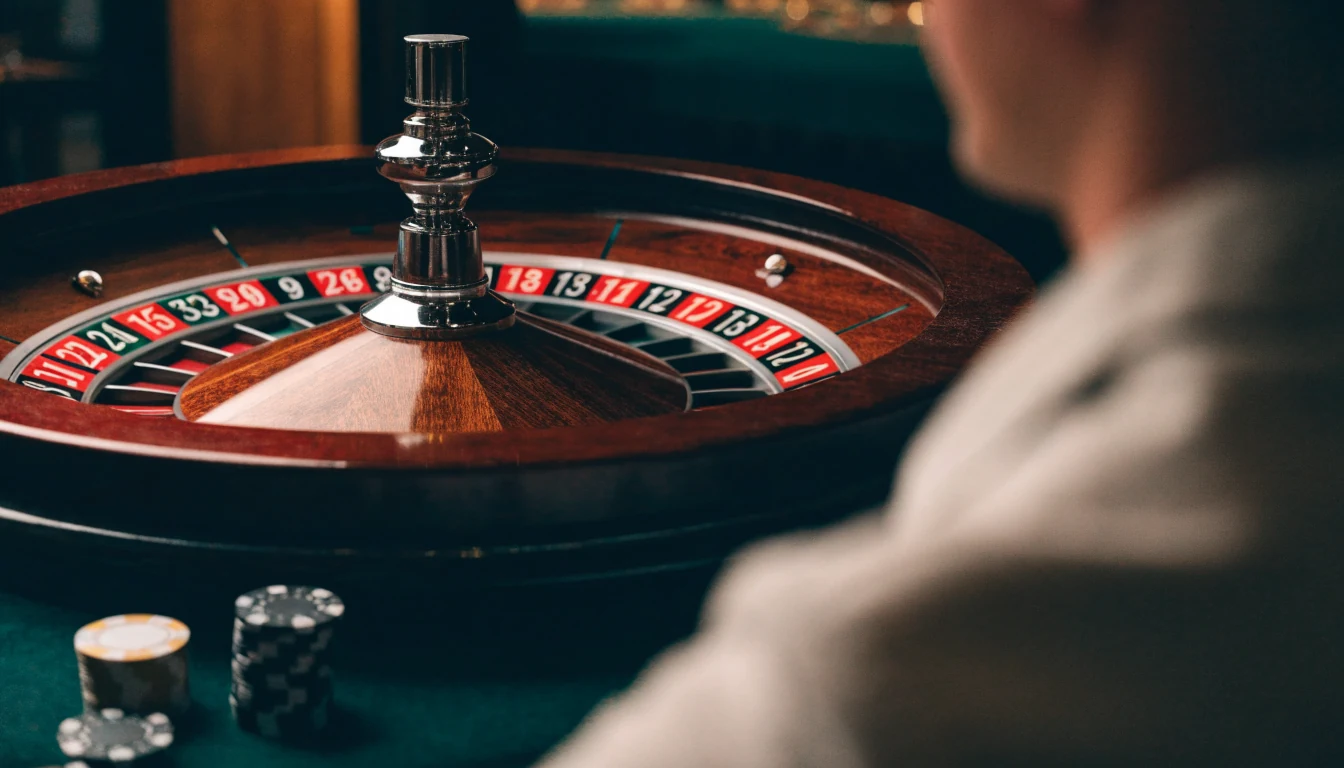
European roulette is built around a wheel with numbered pockets from 1 to 36 and one green zero. That single zero is not decoration or a special round: it is part of the game’s central probability structure. Every spin ends with the ball settling in one pocket, and the wheel gives each pocket the same chance of being selected.
The layout matters because the bets are resolved against the full set of pockets, not just the numbers a player has chosen to cover. A bet can involve one number or a group, but the wheel still has the same 37 possible landing places. The zero is the feature that gives the casino its mathematical advantage over time.
The house edge for European roulette is 2.70%. In practical terms, that is the game’s built-in advantage expressed across sustained play. It is not a prediction of what will happen in a particular session, nor a fee charged separately on each spin. A short run can go either way; the percentage describes the underlying relationship between the game’s odds and its returns over the long term.
I have seen players treat the zero as if it were an occasional interruption to an otherwise even contest. That interpretation misses the mechanism. The zero is always in the pool of possible outcomes, and it affects the balance of every standard bet. It does not need to appear frequently in a particular session to matter to the game’s mathematics. Its presence is enough.
What the edge describes
A house edge is a measure of expected advantage, not a promise about an individual result. Roulette outcomes are independent: the wheel has no memory of earlier spins. A run of one colour, a sequence of numbers, or a recent zero does not make another outcome “due”. The wheel’s previous results do not change the pocket count for the next spin.
Online Casino Tournaments in the UK: Entry and Prizes
That distinction is easy to lose when results are displayed in a history panel. A record of previous outcomes can describe what has happened, but it cannot alter the probabilities of the next spin. The visual pattern may feel informative because people naturally look for sequences and repetitions. In roulette, that feeling is not a forecasting tool.
The 2.70% figure also should not be read as a cap on how much a player can lose or as a limit on how much can be won. It describes the casino’s mathematical advantage in the standard game. Individual results can depart sharply from a long-run expectation in either direction. The edge is a property of the rules, not a timetable for outcomes.
This is why the same wheel can produce a winning session for one player and a losing session for another without contradicting its stated edge. The figure becomes meaningful across repeated play, while a single result remains uncertain. There is no reliable way to make a particular spin follow the long-term average.
Why one zero matters
The European wheel’s single zero keeps its structure relatively straightforward: 36 numbered pockets, plus the green pocket. The zero is neither red nor black, and it is not even or odd. Its role is distinct from the numbered outcomes, but it remains part of the same draw.
In the mechanics of the game, a spin does not favour a number because it has been absent, nor favour a colour because it has appeared repeatedly. The wheel is not correcting a recent pattern. Each outcome is produced afresh, and the possible results remain tied to the wheel’s pockets.
That is the baseline behind the familiar description of European roulette as a single-zero game. It identifies the wheel’s defining feature, but it does not mean the casino advantage disappears. The zero is precisely why the edge exists in standard roulette: the betting terms are set against a wheel that includes a result outside the numbered sequence.
The house edge of 2.70% is a mathematical property of the rules over the long term, not a prediction of individual results or a fee charged per spin.
When I assess the game itself, I separate its simple surface from its less visible arithmetic. The surface is easy to follow: a ball lands, a result is declared. The arithmetic sits underneath, in the number of possible outcomes and the rules that determine how bets are settled. Knowing the pocket count makes the edge easier to interpret without turning the wheel into something predictable.
The phrase “fair chance” can be misleading when it is used to mean that player and casino have equal long-term prospects. Every pocket has an equal chance of being selected, but that is not the same as every bet having an equal expected value. The wheel may be impartial in how it produces outcomes while the game’s rules still preserve a house advantage.
For anyone considering an online European roulette game in the UK, this is the essential starting point: the digital presentation may vary, but the standard wheel’s core mathematics begins with 37 pockets and a 2.70% house edge. The appearance of the interface does not make the underlying probability more favourable. Plain mechanics. No prediction.
What “Best” Means When Comparing UK Roulette Casinos
Choosing a UK online casino for European roulette involves more than the game itself; payout timing is one practical detail worth checking. This list gives a concise reference point for that information.
1. SlotoSport
Payout speed: 1-3 business days SlotoSport lists a payout speed of 1–3 business days, a useful detail to consider when choosing where to play European roulette.
2. EvoSpin
Payout speed: 1-3 business days EvoSpin lists payouts as taking 1–3 business days. This provides a clear indication of its stated payout timing.
3. BeOnBet
Payout speed: 1-3 business days BeOnBet has a stated payout speed of 1–3 business days, offering a practical point of reference for players.
4. Dieselwin
Payout speed: 1-3 business days Dieselwin lists a payout speed of 1–3 business days. That is the available detail to consider alongside its European roulette offering.
5. x3bet
Payout speed: 1-3 business days x3bet states a payout speed of 1–3 business days, giving players a specific timing detail to keep in mind.
6. Jetsetspins
Payout speed: 1-3 business days Jetsetspins lists payouts as taking 1–3 business days. Its stated payout timing is a useful reference when reviewing the option.
7. SpinFormula
Payout speed: 1-3 business days SpinFormula has a stated payout speed of 1–3 business days, the available practical detail for this listing.
8. NightLuck
Payout speed: 1-3 business days NightLuck lists a payout speed of 1–3 business days. Players can use this stated timing as one point of reference.
9. Zombillion
Payout speed: 1-3 business days Zombillion states that payouts take 1–3 business days, providing a clear detail to consider when exploring the site.
10. Revery Play
Payout speed: 1-3 business days Revery Play lists a payout speed of 1–3 business days. This is the available factual point to note for the listing.
“Best” is not a property of a roulette table in isolation. When I compare online casinos, I separate the game from the terms attached to it: whether the operator is authorised to serve the British market, what information it provides about its games, and how bonus conditions treat roulette wagers. A polished lobby can make these details easy to miss. They still determine what an offer is worth.
The first check is regulatory, not promotional. Remote gambling operators serving Great Britain must hold the relevant UK Gambling Commission (UKGC) licence. A platform without a valid UKGC licence cannot legally offer real-money roulette to British residents. The licence should be checked against the Commission’s public register before depositing; a logo or a claim on an operator’s own page is not the same verification.
Then I look at the rules around the account. UKGC-licensed operators must verify a customer’s age before allowing deposits, and they must prompt new customers to set a financial limit before the first deposit. Account-level controls should remain accessible afterwards. Deposit and loss limits, session reminders, reality checks, cool-off periods and GamStop self-exclusion are required player-protection tools for UK-licensed live casino operators. These are operating standards, not optional extras that make a casino generous.
The dispute route matters as well. UKGC licensees must provide an internal complaints process and access to an approved Alternative Dispute Resolution service. I regard that as part of the basic service framework: when a payment, account restriction or bonus decision is challenged, the terms should explain how the complaint can be raised and what independent route is available if the operator’s response does not resolve it.
French Roulette Online Casinos in the UK: Rules
Game information is another useful comparison point. Return-to-player information should be accessible for roulette games, rather than buried behind promotional copy or omitted from the game details. A comparison is only meaningful when the relevant information can be found and tied to the game being offered. The headline label “European roulette” does not settle every question about the product or its terms.
The offer is in the conditions
Bonus funds can look more valuable than they are if roulette contributes little towards the wagering requirement. The relevant term is game weighting: the proportion of roulette stakes that counts towards that requirement. Most UK operators count roulette wagers at 10% to 20%, but a particular offer’s terms take precedence over a broad market range. A low contribution means more wagering elsewhere may be needed before bonus funds can be withdrawn, subject to the offer’s own rules.
The split between formats can matter. A specialist review reports that roulette contribution varies by operator: live roulette may be weighted at 10% or 20%, while RNG roulette may count at 100%. Those figures should be treated as a description reported by that review, not as a promise applying across the market. The bonus terms need to state which games qualify and how each format is weighted. If the wording is unclear, the advertised bonus value is difficult to assess.
Choosing a UK Casino
- Verify the operator holds a valid UKGC licence
- Check the game weighting for roulette in the bonus terms
- Ensure the operator provides a clear internal complaints process
- Confirm the availability of required protection tools like GamStop
A specialist review also reports that, from January 2026, UK rules cap bonus wagering at a maximum of 10 times for licensed operators. Since this is a reported regulatory change, it should not replace checking the current offer terms and applicable UKGC information. The practical comparison remains the same: read the requirement, the game weighting and any conditions affecting withdrawal together. One headline number is not the whole offer.
Payment rules are part of that assessment. UKGC-licensed casinos cannot accept credit cards for gambling, including credit-card funding routed through a money service business; they also cannot accept wallet payments where the wallet enables credit-card funds to be used for gambling. An offer that appears attractive should not obscure the permitted payment arrangements or the account controls surrounding deposits.
When assessing a best European roulette casino in the UK, I therefore treat “best” as a combination of verifiable licensing, clear game information, usable protection tools and transparent bonus terms. The comparison list alongside this section can help narrow the field, but operator claims still need to be read against the relevant register and terms. No slogan can do that work.
Roulette Payouts: Straight-Ups, Splits and Outside Bets
A roulette payout is quoted as a ratio: the amount won relative to the stake on a successful bet. The stake is returned as well as the stated winnings, so a 35:1 payout means the winning bet receives 35 times its stake in winnings, plus the original stake. That distinction matters when checking a game’s paytable or working out the balance after a win.
Online Casinos With No Betting Limits: What to Know
A straight-up bet covers one number. If the ball lands on that number, the payout is 35:1 in both European and American roulette. It is the largest standard payout among the bet types covered here, reflecting how narrowly the bet is focused. A higher return for a winning result is not the same as a more likely win; the payout describes the reward, not the chance of the ball landing on the chosen number.
A split covers two adjacent numbers and pays 17:1 if either one wins. A street covers a horizontal row of three numbers and pays 11:1. These bets widen the selection compared with a straight-up, while their quoted payouts are lower. I have found that the ratio is easiest to read when kept separate from the size of the stake: the ratio stays fixed for the bet type, while the cash return changes with the amount wagered.
Outside bets pay less when successful, but cover broad categories rather than individual numbers. Red or black, even or odd, and high or low each pay 1:1. In other words, the winnings match the stake, with the stake returned too. The label on the table tells what must happen for the bet to win; the payout ratio tells what the casino credits when it does.
| Bet type | Winning payout |
|---|---|
| Straight-up, one number | 35:1 |
| Split, two adjacent numbers | 17:1 |
| Street, horizontal row of three | 11:1 |
| Red/black, even/odd, high/low | 1:1 |
When comparing European roulette payouts online, the useful check is whether the displayed ratio refers to winnings alone or includes the returned stake. Standard roulette ratios express winnings, with the stake added back on a winning bet. Confusing those two amounts can make a paytable look more generous than it is.
The same distinction applies whether the game is played for free or with real money: a displayed ratio describes the game’s return for a winning bet, not the value of a balance or a guarantee of a result. In a European VIP roulette casino, the word “VIP” does not itself change these standard ratios. The paytable remains the practical reference for what each winning bet pays.
For someone learning how to play European roulette, these figures establish the basic trade-off: narrower selections carry higher quoted payouts, while outside bets return less when they win. The arithmetic is straightforward. The outcome is not.
Straight-Up Payout
Example: 35:1 × £1 = £35 winnings plus the £1 stake returned.
Roulette Wheels Online: RNG, Speed and Live Formats
An online European roulette game can present the same familiar wheel while producing each result in different ways. The distinction matters less to the appearance of the table than to the rhythm of play: a software-generated spin can move quickly, while a live game has to follow the physical process on camera.
In an RNG version, a random number generator selects the result. The wheel and ball may be shown as animation, but the outcome is generated by software rather than by a ball travelling around a physical wheel. That makes it possible to move from one spin to the next without waiting for a dealer to complete the sequence. These games can also have lower minimum stakes; RNG roulette is offered with minimums sometimes as low as 10p.
The game still needs to be identifiable as European roulette, rather than merely using a similar-looking interface. Its defining wheel has a green zero alongside the numbered pockets. A digital display can reproduce that layout, but the image alone does not explain how results are generated. That is the practical distinction between an animated wheel and a streamed one.
Online Casino Without ID in the UK: What It Means
Live dealer roulette uses a real wheel, a physical ball and a human dealer, with the game streamed from a studio. The result comes from the ball’s movement on the wheel rather than a software animation. That adds the pauses involved in operating the table and presenting each round. The format is not simply a slower graphic; it is a different production process.
Speed roulette is designed to shorten the interval between rounds. A specialist review reports that this format can exceed 150 spins per hour, against 80–100 at a standard table. Those figures describe a reported pace, not a fixed promise for every game or session. The practical point is that faster rounds leave less time between decisions. The wheel has not changed; the tempo has.
I have found it useful to separate three things that promotional labels often blur: what generates the result, what the screen shows, and how quickly another round begins. RNG games use software for the result and can display a simulated wheel. Live games show a physical wheel in a studio. Speed formats are about pace, and the label alone does not establish whether the wheel is digital or live. Check the game’s description for that distinction.
A fast interface can make roulette feel continuous, but each spin remains a separate chance-based outcome. Faster play does not make a format more predictable; it only means that rounds can arrive closer together. Likewise, a live stream changes the presentation, not the underlying nature of roulette.
RNG Roulette
Software-generated results with animated wheels, allowing for faster play and lower minimum stakes.
Live Dealer
Real wheels and human dealers streamed from a studio, following a physical sequence of play.
Speed Roulette
Designed for a faster tempo, potentially exceeding 150 spins per hour.
Different formats suit different preferences. Some value the short wait between RNG spins; others prefer seeing a dealer and a physical ball. The useful comparison is not which screen looks most convincing, but how the result is produced and how the pace affects the experience. Two things, plainly.
Single-Zero Bets and the Limits of Roulette Systems
On a European single-zero table, zero is the detail that keeps an even-money bet from being an even contest. Red or black, odd or even, and low or high cover broad groups of numbers, but zero sits outside those groups. A result on zero therefore works against the player even when the bet would otherwise have covered the winning number.
La Partage changes what happens to an even-money stake when the ball lands on zero: half is returned rather than the whole stake being lost. That rule reduces the house edge on those bets to 1.35%. It does not remove the edge, and it applies to even-money bets rather than every option on the table. Inside bets do not gain this protection simply because they are played on a single-zero wheel.
In practice, La Partage is a specific table rule, not a general property of every European roulette game. The wheel may have one zero, while the rules attached to a particular table determine whether half of an even-money bet is returned on that result. I used to see players focus on the wheel graphic and miss the rule panel. Small distinction. Real consequence.
Microgaming Slots at UK Casinos: What to Verify
The Martingale is built around a simple instruction: after each loss, double the next stake, then use a win to recover earlier losses and make a net gain. The arithmetic can look persuasive over a short run. But it assumes a player can keep increasing stakes for as long as losses continue, and that assumption is where the system breaks down.
A losing streak can put serious pressure on a bankroll. Each doubling makes the next required stake larger, while a run of losses does not make a win more likely on the following spin. Roulette outcomes are determined by chance; the sequence already produced cannot tell the wheel what to do next. A betting pattern changes the size and timing of stakes, not the underlying odds.
There are practical limits as well as mathematical ones. A bankroll is finite, and a table has a maximum stake. If a losing run reaches either boundary before a recovery win, the planned progression cannot continue. The player is left with accumulated losses and no next stake at the level the system demands. Doubling does not erase that exposure. It concentrates more money into later bets.
The same caution applies to systems that change direction after a run, switch between outside bets, or treat a previous result as a signal. They can organise decisions, but they cannot predict the final outcome. A single-zero table still has a house edge; La Partage lowers it for eligible even-money bets, while a staking system does not lower it further.
That is the useful distinction: a rule can alter the settlement of a particular bet, but a progression only changes how much is at risk from one spin to the next. Systems can feel controlled. Chance remains indifferent.
Betting Systems
Staking systems like the Martingale cannot lower the house edge and can lead to rapid bankroll depletion due to table limits and losing streaks.
Free Play and Real-Money Roulette Are Different Tests
A free European roulette demo is useful for learning the controls and seeing how a particular version presents the wheel, betting area and results. It removes the financial consequence of a stake, though, so it cannot show how real-money play feels when a balance changes. That distinction matters more than the word “free” suggests.
In my experience, practice mode answers a narrow question: can the game be followed and operated? It does not test whether the same pace, table limits or conditions will apply when money is involved. Nor does a run of demo results tell anything reliable about what will happen in a later session. Each spin remains a chance-based outcome.
The format can also affect the experience. RNG roulette generates spins through software and tends to move faster than a physical table. Its minimum stakes can be low, often as little as 10p. A demo may therefore make it easy to explore the interface quickly, but a long sequence of simulated spins is not a substitute for seeing how real stakes affect decisions.
Real-money European roulette has its own practical limits: the table’s minimum stake determines whether a planned bet is available at the amount intended. Live tables in the UK can start at 10p. A specialist review has also reported 5p starting stakes for some auto-roulette and speed formats; that is a format-specific report, not a dependable market-wide rule. The stated minimum is only one part of the test. The pace and the player’s response to staking real money are different matters.
Online Bingo in the UK: Formats and Slots
A demo may be labelled “European roulette slot demo” in a menu or search result, but the word “slot” does not establish that the product is a roulette table game. The label alone is not enough to identify its mechanics. I would treat the game’s own description and interface as the relevant evidence, rather than assuming that a roulette-themed name means standard table roulette.
Free play is a rehearsal of the software, not a rehearsal of the financial decision. It can reveal whether the layout is legible and whether the controls make sense. It cannot establish that real-money play will feel equally comfortable, or that a particular stake is suitable. The distinction is simple. Different tests.
Reading the European Roulette Table Layout
A European roulette table has two connected parts: the betting layout and the wheel. The layout is the felt or screen area where chips are placed; it is not a picture of the wheel’s number order. European roulette has 37 pockets, numbered 1 to 36 plus a single zero. On the betting area, the numbered choices appear in a compact grid, with the zero set apart from the numbered cells.
That separation matters. A chip placed directly on a numbered cell selects one number. Chips can also sit on boundaries between cells, where the marked line indicates a combination of neighbouring numbers. The table therefore uses position to show what a wager covers. At a glance, a chip’s location distinguishes a narrow selection from a broader one.
The grid also supports bets covering groups. The numbers are arranged in horizontal rows and vertical columns, while the areas beside the grid identify groups such as columns and dozens. The zero does not belong to the red or black group, the even or odd group, or the high or low ranges. Its own cell makes that exception visible rather than leaving it implicit.
Table Layout Basics
European roulette features a grid of numbers 1-36 with a single green zero set apart. Bets can be placed on individual cells, boundaries between cells for combinations, or outside areas for group bets.
Outside bets sit around the numbered grid. These marked areas commonly include red and black, even and odd, high and low, plus the column and dozen groups. They are called outside bets because they cover groups shown beyond the individual number cells. The exact positioning can vary slightly between digital tables, but the labels and boundaries do the work: they show which group a chip selects.
I find the layout easier to read when treated as a map, not as a strategy chart. The grid answers “which number or group is covered?” It does not tell anything about where the ball is more likely to land. A tidy arrangement of chips can make a wager easier to track, but it cannot alter the wheel’s chance-based result. No hidden pattern sits in the spacing of the cells.
A European roulette casino table may add interface elements around the layout, such as chip controls or a history panel. Those are presentation features, not part of the betting map itself. The key visual check is the boundary under each chip: a chip centred in a cell selects that number; one resting on a marked line selects the corresponding group. Simple distinction.
When “European Roulette Slot” Means a Different Game
A title containing “European roulette” does not, by itself, identify a roulette table. In a table game, a ball lands in a numbered pocket on a wheel. A slot is a separate game format, even when its name, artwork or symbols borrow from roulette. The wording can describe a theme rather than the mechanics.
Live Dream Catcher Casino UK: Format and Rules
That distinction matters when judging what a game offers. A roulette-themed slot does not inherit the table game’s odds simply because “roulette” appears in its title. Its rules and outcomes belong to the slot game itself. The same applies to labels such as “3D”, “Gold” or “Platinum”: they may signal a presentation or product name, but the words alone do not establish a wheel, a particular set of rules or a specific return.
I have seen titles do a lot of work in a small space. They help a game stand out in a catalogue, but they are not a substitute for the rules panel. The practical check is whether the game actually presents a roulette wheel and table, or instead uses slot-style play with roulette imagery. Then the game’s own information can be read on its terms. Names are not mechanics.
This also keeps “European roulette odds” in the right context. Those odds belong to the relevant roulette rules, not automatically to every product carrying a roulette reference. A themed slot may have its own game information, and the roulette label cannot be used to infer how its outcomes are determined.
In Britain, online slots have specific play restrictions: autoplay is banned, and each spin must last at least 2.5 seconds. These rules concern slot games, not roulette table spins. A roulette-themed title does not become a table game because the design resembles a wheel; nor does a table game become a slot because it is displayed digitally.
There is no reliable catalogue to infer from a handful of familiar-sounding names. “European roulette gold slot” or “European roulette platinum slot” may be used as descriptions or titles in different contexts; the wording alone does not verify that a particular game is available or explain its format. The game rules settle the question. Read the label carefully. Then check the actual game.
Attention: A game title containing "European roulette" may refer to a slot game rather than a table game; check the rules panel to verify the actual mechanics.
Live European Roulette: The Dealer and the Physical Wheel
In a live European roulette game, the picture comes from a studio rather than a software animation: a human dealer spins a physical wheel, releases the ball and announces the result. The camera gives the round a visible sequence—bets close, the ball travels, then the dealer settles the table. That changes the feel of play, not the fact that each result comes from chance.
The stream is not the same as sitting at a physical casino table. Bets are made through the online interface, while the wheel and ball are shown on camera. A live dealer European roulette table may therefore look more immediate than an RNG game, but the practical details still sit with the operator: the available limits, the table rules and how the game is presented on a phone or computer. The studio supplies the wheel. The platform controls access.
For real-money play in Great Britain, that distinction matters. The UK Gambling Commission is the sole regulator of online casino activity there. A platform without a valid UKGC licence cannot legally offer real-money live roulette to British residents. A familiar studio or polished broadcast is not evidence of a licence; the operator’s status should be checked on the Commission’s public register before depositing.
UKGC-licensed operators must verify a customer’s age before allowing a deposit. They must also provide player-protection tools, including deposit and loss limits, session time reminders, reality checks, cool-off periods and GamStop self-exclusion. New customers must be prompted to set a financial limit before their first deposit, with account-level controls available afterwards. These are operating requirements, not optional features added to make a table look responsible.
The payment boundary matters too: UKGC licensees cannot accept credit cards for gambling, including through a wallet that allows credit-card funds to be used. Operators must provide an internal complaints process and access to an approved Alternative Dispute Resolution service. Those protections do not make a session risk-free. They define what a regulated service must put in place around it.
Jackpot King Slots at UK Casinos: What to Check
From the industry side, live presentation can make a round feel social and transparent, but neither the dealer’s manner nor the camera angle changes the underlying game. The physical wheel is real. The safeguards depend on the licence.
European vs American Roulette: The Extra Zero Changes the Odds
The practical difference between European and American roulette is not the colour of the felt or the look of the wheel. It is the number of green pockets competing with the numbered ones. A European wheel has numbers 1 to 36 and one zero: 37 pockets in all. The standard American version adds a double zero, making 38.
That extra pocket changes the baseline. The European game has a house edge of 2.70%; the American version’s is 5.26%. The player-facing rules can look familiar across both tables, but the extra losing outcome is built into every spin. It does not need a special bet or a complicated rule to affect the odds.
This is why a European roulette casino game is often the more favourable standard option when the choice is specifically between the two wheels. The distinction is mathematical, not a claim that any session will go one way. A run of wins or losses does not remove the edge, and the American wheel does not become equivalent to the European one because its layout looks similar.
There is a further variation to watch for in online listings. One specialist review reports that some American roulette tables available in UK online casinos add a third green pocket marked 000. For that version, the reported house edge is 7.69%. This is a specific reported format, not a description of every American table in the market.
The useful comparison is therefore the pocket count and the stated variant, rather than the game’s name alone. “American roulette” can refer to the standard double-zero wheel, while a table showing 000 has another green outcome and a different edge. A European table remains the single-zero comparison point.
In short, European roulette has fewer pockets and the lower house edge; standard American roulette adds 00 and raises it. A table with 000 widens that gap further. Same broad game. Different starting odds.
Material created by the team Rolletto