Ticket layouts, prize patterns and the terms attached to slots and free games help distinguish one online bingo room from another.
Bingo Formats Still Set the Pace
The format determines what appears on a ticket and what counts as a win. That distinction matters more than the room’s styling: two games may both be described as online bingo, yet ask players to complete quite different patterns. I have found that the clearest way to understand a game is to look at the ticket first, then read the stated winning pattern.
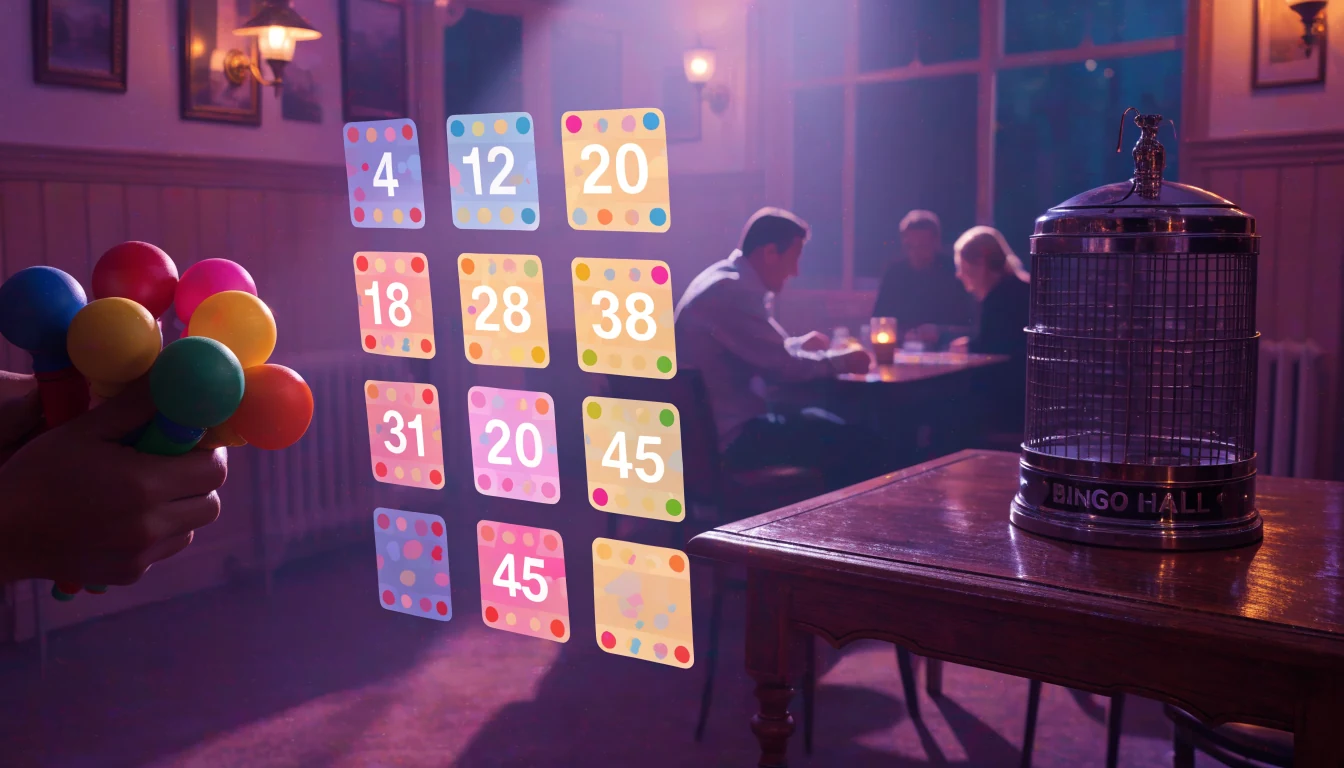
In 90-ball bingo, the ticket is arranged as three rows of nine spaces. The game has a stepped set of wins: completing one line earns a prize, completing two lines earns another, and marking every number on the ticket makes a full house. The structure is easy to follow because each stage is visible on the same ticket. A player can see progress towards a line, then towards the next, while the full-house objective remains the final one.
That sequence is part of what gives 90-ball bingo its familiar character. “Traditional” can sound like a sales label; here, the practical point is the clear progression from a line to two lines and then a full house. The ticket layout and prize conditions belong together. A line is not just a pattern chosen by the player: it is one of the defined ways the game awards a win.
75-ball bingo works differently. Its ticket is a 5-by-5 grid, and the winning condition is based on completing a specified pattern. The pattern may be a cross, an X, a diamond, the letter T, or a picture frame. Rather than following the one-line, two-line and full-house sequence associated with 90-ball games, a 75-ball game asks whether the called numbers have filled the required shape.
That means the pattern is central to reading the ticket. A marked square matters because of where it sits in relation to the target, not simply because it contributes to a row. A cross and a picture frame use the same grid but define progress differently. The game’s stated pattern is therefore part of its rules, not decoration on the screen. Before play begins, the important distinction is what must be completed for the game’s win to count.
American Roulette Online in the UK: Odds and Tables
80-ball bingo adds another layout and another style of target. Its ticket uses an 8-by-4 grid, while winning patterns can include four corners, a letter shape or a full card. As with 75-ball bingo, the result depends on matching the called numbers to a specified shape or completion condition. The four corners target focuses attention on the outer positions; a letter shape asks for a different arrangement; a full-card target makes completion of the entire ticket the objective.
The coloured presentation used for 80-ball patterns can make those targets easier to distinguish, but colour does not replace the rule. The relevant question remains which pattern the game recognises as a win. A ticket can look busy without being complicated once the target is clear. Conversely, a familiar-looking grid can lead to a mistaken assumption if the pattern is not checked.
I have seen players carry expectations from one format into another. That is where confusion tends to begin. Someone used to watching for a line may assume a row is the main milestone in every game; someone accustomed to pattern bingo may look for a shape where the rules instead specify one line, two lines or a full house. The ticket is not a universal template. Same family, different rules.
For online bingo and casino offerings, the word “bingo” can cover all three formats, but the mechanics are not interchangeable. 90-ball bingo is identified by its three-row, nine-column ticket and its line-based progression. 75-ball uses a square five-by-five grid and pattern wins. 80-ball presents an eight-by-four grid with targets such as corners, letters or the full card. Those are practical differences, not variations in theme.
The format also changes how a player judges what is happening during a game. In 90-ball, progress can be read through the line stages. In pattern games, it depends on how much of the named shape has been marked. A partly completed X, for instance, is not itself the same as a completed X. The game’s definition decides the result, not how close a ticket looks at a glance.
90-ball Bingo
Uses a three-row, nine-column ticket with a progression from one line to two lines and finally a full house.
75-ball Bingo
Uses a square 5-by-5 grid where wins are based on completing specified patterns like crosses, diamonds, or frames.
80-ball Bingo
Uses an 8-by-4 grid with target patterns including four corners, letter shapes, or a full card.
That is why descriptions of online casino bingo games should make the format and winning condition explicit. A short label may tell the game type, but the ticket layout confirms what is being played. I treat those two details as a pair: identify the grid, then identify the win. It prevents a common category mistake—assuming all bingo rooms use the same ticket or award prizes in the same way.
Once those mechanics are clear, the different formats are straightforward to tell apart. 90-ball is built around lines and a full house; 75-ball and 80-ball use specified patterns on distinct grids. The terminology may sit side by side on a casino site, but each format keeps its own rules. That is the useful starting point.
When Bingo Rooms Add Slots
A site that combines bingo and slots is not turning one game into the other. It is bringing two separate products under one account and presenting them alongside each other. Bingo remains organised around rooms and ticket purchases; slots sit as another category of games. The shared setting is the commercial arrangement, not a shared set of rules.
That distinction matters because a single homepage can make the offer look more unified than it is. A player may move between a bingo room and a slot game, but the activity in one does not automatically count as activity in the other. A bingo ticket is still a ticket for a particular room and draw. A slot game is a separate choice. The site has grouped them; the games have not merged.
Online Casino Tournaments in the UK: Entry and Prizes
I find it useful to read these offers as a menu of products rather than as one extended game. The bingo side is built around scheduled rooms and communal draws. The slots side provides a different kind of play, often reached through its own section of the site. That separation can be visible in the navigation, even when both products share an account and the same overall brand. A common account is an administrative convenience, not evidence that balances, promotions or rules work identically.
The combination also changes the way a site presents its value. Bingo may be the reason someone arrives, while the slots section is placed nearby as an additional option. Or the site may lead with a broader casino-style offer and keep bingo within it. Neither arrangement tells much about the terms of a particular promotion. The relevant detail is the link the operator actually states: which product must be used, what action triggers an offer, and where its conditions apply. A banner that places bingo and slots together is not itself a rule.
One example of a direct link has been described in a specialist review: some bingo rooms have offered a free slot spin for each bingo ticket purchased. That is a ticket-linked promotion, not a general feature of every combined site. The purchase is connected to the spin by the offer’s stated condition; without that condition, the presence of slots beside a bingo room does not imply that buying a ticket earns anything in the slots section.
Some bingo rooms may offer a free slot spin for each bingo ticket purchased, creating a direct promotional link between the two products.
That kind of offer can make the products feel more tightly joined, but the connection is still narrow. The ticket is bought for bingo, while the spin belongs to a slot game. The promotion does not change the bingo draw, and it does not make the slot game a bingo round. In operational terms, it is an incentive attached to one product and redeemable in another. Small link. Separate games.
The wording around an offer deserves more attention than its placement. “Free” describes the price of the spin, not necessarily the full set of conditions around it. The promotion may define which tickets qualify and how the spin is made available. Those details belong to the offer itself, rather than to the general fact that a site hosts both products. The point here is not to assume a particular restriction, but to avoid treating a headline as a complete description.
There is also a practical difference between a site having both categories and actively cross-promoting them. A combined lobby can simply put bingo and slots within reach of the same account. A cross-promotion goes further by creating a stated reason to move from one to the other, such as the ticket-linked spin described in a specialist review. Without a specific offer, the products may just coexist. With one, the operator has made a defined commercial bridge between them.
UK Online Casino Game Shows: How Listings Work
I would not read that bridge as evidence that the products share an outcome or a strategy. A bingo purchase does not make a slot result more likely, and a slot game does not affect the numbers drawn in a room. The connection, where it exists, is in how the offer is packaged. That is the part that can be understood from the promotion’s wording; the underlying games remain distinct.
For UK players, the phrase “bingo and slots” therefore describes a combined catalogue, not a special hybrid format. The site can place both in one destination and occasionally attach a slot spin to a bingo ticket, but those are separate layers: the games themselves, the account through which they are accessed, and any promotion connecting them. Keeping those layers apart makes the offer easier to interpret and avoids assuming that every bingo ticket carries an extra benefit.
What a Bingo-and-Slots Site Should Make Clear
A site that puts bingo and slots under one account should make the account controls just as visible as the games. The practical test is not how prominently a banner says “play safely”; it is whether the controls can be found, understood and used without having to search through unrelated pages. In my experience, that distinction matters. A tool buried in an account menu may technically exist, but it is less useful when the route to it is unclear.
Do
- Ensure account controls are visible and easy to find
- Use plain terms for limit measurements and resets
- Provide a clear route to self-exclusion
Don’t
- Bury tools in deep account menus
- Use vague wording like “flexible” for limits
- Hide the route to restrict play behind marketing preferences
Deposit limits are a straightforward place to start. One specialist review of account controls reports that players can set limits by day, week or month. The important point is the account-level setting: it should be possible to see the chosen limit and understand what period it covers. Where bingo tickets and slot play draw on the same balance, the wording should also make clear whether the limit applies across both products. Otherwise, a player may think a boundary covers all spending when the account presents it differently.
A limit should not be confused with a record of past spending. Account history helps explain what has happened; a limit is a control over what can happen next. Both are more useful when they sit near the balance and deposit functions rather than being treated as promotional extras. The wording matters, too. “Flexible” can sound reassuring while leaving the actual effect unclear. Plain terms are better: what the limit measures, when it resets and how the account displays it.
The route for changing a limit should be explained before a deposit is made. A site should say whether a change takes effect immediately or is subject to a delay, rather than leaving the account holder to discover the rule after requesting it. The same principle applies to closing an account or taking a break: the relevant option should be distinguishable from routine marketing preferences. A bright button for adding funds and a hidden route for restricting play tell their own story.
Mega Moolah casinos in the UK: what is verified
Identity and age checks are part of account use, not an obscure administrative footnote. UKGC-licensed operators must verify a player’s identity, and the process commonly involves photo ID and proof of address. Age must be checked before an operator allows a deposit. The account should explain what documents may be requested and how a verification issue is handled, without suggesting that a successful deposit proves all checks are complete. A balance on screen is not the same as a fully cleared account.
Self-exclusion should also be accessible from account controls. A site should explain what happens to access when the option is activated and how it applies to the bingo and slots areas under that account. If the products share a wallet, the policy should not leave uncertainty about whether one can still be used after the other is blocked. That is a small wording detail with a large practical effect.
Big Time Gaming Slots at UK Casinos: What to Check
There are less visible protections worth checking in the account area. UKGC licensees must provide an internal complaints process and access to an approved Alternative Dispute Resolution service. The route should be findable, with a clear explanation of what to do if a transaction, restriction or account decision is disputed. A complaints link hidden among general terms is technically present, but not especially transparent.
I would also treat the footer as part of the basic check: if a gambling site does not prominently display its UKGC licence number there, close the tab. Before depositing, the number should be checked against the UK Gambling Commission’s public register. That is a market safeguard, not a substitute for usable account controls.
Taken together, these details show whether a combined bingo-and-slots account is designed around more than deposits and play. Limits, verification, self-exclusion and complaint routes should be explicit and reachable. No slogans required.
License Check
If a gambling site does not prominently display its UKGC licence number in the footer, close the tab immediately.
Real-Money Bingo: Ticket Prices and Prize Scale
Online bingo tickets span a wide range of prices. Low-stakes rooms can offer tickets costing from 1p to 5p, while premium games may charge £1 or more for a ticket. That difference changes the amount committed to a game, but it does not create a simple, fixed exchange between price and prize. A higher ticket price can be associated with a larger advertised prize, yet the amount on offer depends on the particular game.
The practical distinction is between the cost of taking part and the prize attached to the game. A low-priced ticket keeps the outlay small; a premium ticket asks for more in return for entry to a game with a potentially larger headline prize. The prize figure should therefore be read alongside the ticket price, not on its own. A large number in a game title or promotion does not show what one ticket costs, and a low ticket price does not establish how much a winner might receive.
One specialist affiliate review has described a 1p game with a £10 full-house prize, and a £1 game with a jackpot in the hundreds or thousands. Those figures illustrate how far the advertised prize scale can differ between games; they are a snapshot reported by that review, not a standing promise or a market-wide rule. Prize offers change, and the exact terms of a particular room matter.
Play’n GO Slots at UK Online Casinos: What to Check
That distinction is easy to lose in promotional language. “Big prize” is a description of the possible return, not a measure of value. A player spending more on a ticket is paying a higher entry cost; the headline prize alone cannot establish whether that cost is worthwhile. The figures also do not mean that every ticket in a premium game will be associated with a jackpot, or that a low-cost room will always have a small prize. The advertised game terms are the relevant point of comparison.
I find it clearer to compare ticket price and prize separately. First, note the price of one ticket and how many tickets are being considered for purchase. Then look at the stated prize and whether it is a fixed amount or a jackpot. The same headline can feel very different when the entry price changes. Keep the arithmetic plain. Entry cost first; prize second.
For someone considering bingo casino play for real money, the ticket is the direct cost of entering a bingo game. It is not the same thing as a slot stake, even where a site houses both products. The economics here are about bingo tickets: low-cost games make entry cheaper, while premium rooms ask for more per ticket and may advertise a larger possible prize. Neither price category guarantees a return.
That is why “premium” should be treated as a label for the price tier, not a judgement that a game is better value. A £1 ticket is materially different from a 1p ticket in money committed, but the prize comparison still depends on the specific offer. Read the stated ticket price and prize together, and treat examples of large jackpots as examples rather than promises.
Attention: A higher ticket price may be associated with a larger prize, but it does not guarantee a better value or a specific return.
Free Tickets, Free Games and the Conditions Attached
A free bingo ticket and a free slot spin can both be advertised as “free”, but they are different offers. A ticket provides entry to a bingo game without charging its stated ticket price. A spin is a separate slot promotion; a specialist review reports rooms where a slot spin is awarded for each bingo ticket bought. That is not the same as receiving a no-cost bingo entry, and the purchase condition matters.
The distinction is easy to miss in promotions that place bingo and slot games side by side. A free ticket is tied to a room and its game rules. A slot spin belongs to a slot offer, whose terms may govern any winnings. Neither label, by itself, explains what can be played or what happens to a resulting prize.
Restrictions can narrow the apparent value of a ticket. A specialist review describes free tickets limited to particular rooms or ball types, with an expiry as short as 24 hours. Those are reported terms, not a promise that every offer follows the same schedule. The room restriction determines where the ticket can be used; the ball-type restriction determines which eligible game it applies to. An unused ticket may simply lapse when its stated window closes.
That is the part promotional summaries tend to compress. “Free” describes the entry price, not necessarily the flexibility or the treatment of any winnings. I have seen the practical difference in the terms: a ticket that cannot be used in the preferred room is less useful than its headline suggests. A short expiry also leaves little room to wait for a suitable game.
Free Ticket Restrictions
Free tickets may be limited to specific rooms or ball types and can have expiry windows as short as 24 hours.
A free ticket cannot itself be withdrawn as cash. If it wins, the winnings may be credited as cash, but the operator may attach a wagering requirement, potentially the same one used for a deposit bonus. So a cash balance appearing in an account does not automatically mean the amount is ready for withdrawal. The requirement sets what eligible play must happen before cash-out is allowed; its precise wording and scope are what matter.
The same caution applies to free online bingo slot games, if that phrase is being used loosely to describe a bundle. Bingo tickets and free slot play are not interchangeable: a ticket enters a bingo room, while a spin is used on a slot. A bonus that links a purchased ticket to a spin is not a free ticket offer, even if both parts appear together on one page. The conditions may differ, too.
I treat the headline as the beginning of the offer, not its explanation. The terms should make clear which room or ball type qualifies, when the ticket expires, and whether a win carries a wagering requirement. For a linked slot spin, the relevant conditions should be read separately rather than assumed to match the bingo ticket’s terms. “Free” is only one line. The conditions decide the rest.
How Online Bingo Rooms Run in 2026
When choosing an online bingo option in the UK for 2026, payout timing is one practical detail to check. This list gives a brief reference point for that detail.
1. SlotoSport
Payout speed: 1-3 business days SlotoSport has a stated payout speed of 1–3 business days.
2. EvoSpin
Payout speed: 1-3 business days EvoSpin has a stated payout speed of 1–3 business days.
3. BeOnBet
Payout speed: 1-3 business days BeOnBet has a stated payout speed of 1–3 business days.
4. Dieselwin
Payout speed: 1-3 business days Dieselwin has a stated payout speed of 1–3 business days.
5. x3bet
Payout speed: 1-3 business days x3bet has a stated payout speed of 1–3 business days.
6. Jetsetspins
Payout speed: 1-3 business days Jetsetspins has a stated payout speed of 1–3 business days.
7. SpinFormula
Payout speed: 1-3 business days SpinFormula has a stated payout speed of 1–3 business days.
8. NightLuck
Payout speed: 1-3 business days NightLuck has a stated payout speed of 1–3 business days.
9. Zombillion
Payout speed: 1-3 business days Zombillion has a stated payout speed of 1–3 business days.
10. Revery Play
Payout speed: 1-3 business days Revery Play has a stated payout speed of 1–3 business days.
The basic transaction in an online bingo room is simple: a player buys a ticket, numbers are drawn, and a win depends on completing the required pattern before other players. That sequence is the product’s working core, whether the room is busy or quiet. The screen may present the draw as a live event, but the important point is that every ticket is judged against the same pattern and the same sequence of drawn numbers.
From the operator’s side, the room is organised around scheduled games. Tickets are attached to a particular game; once it begins, the draw supplies the numbers against which those tickets are checked. The outcome is not a matter of choosing a number or changing a ticket after the draw starts. The ticket either reaches the relevant pattern in time or it does not.
That makes the pace of a room different from a game that can be started and stopped at will. A player joins a scheduled event, waits for its draw, and follows the calls as the pattern develops. The room’s activity comes from multiple players taking part in the same game, rather than from a succession of private rounds. That shared timing is part of the appeal—and part of the operating logic.
A specialist review describes bingo-room traffic as peaking between 7pm and 11pm, with operators scheduling their largest prize pools in that window. This is a reported pattern, not a fixed timetable for every room: game schedules and prize arrangements remain operator-specific. Still, it explains why an evening room can feel busier than one running at a quieter time. More players may be present, and the advertised prize pool may be larger.
European Roulette Online Casinos in the UK
A larger pool does not change the underlying process. Tickets are bought for a game; numbers are drawn; the stated pattern decides the result. The prize headline can attract attention, but it is the game schedule and ticket conditions that establish what participation means. I have seen those details carry more practical weight than the banner above the room.
The phrase “busy room” can also obscure two separate things: the number of players active at a given time and the value of a scheduled prize pool. They may coincide in the evening, but one does not guarantee the other. The draw still does its work in the same order.
Same mechanism. Different traffic.
Where UK Players Can Access Online Bingo
Online bingo is legal in the United Kingdom, but the operator’s location is not the deciding factor in whether it may serve the British market. A company based overseas still needs the relevant UK Gambling Commission (UKGC) licence if it offers remote gambling to customers in Great Britain. A foreign licence on its own does not meet that requirement.
The licence is specific to the operator and its activity. Bingo and casino-style games may appear on the same site, but that does not make licensing a general permission covering every product by default. The operator must hold the appropriate UKGC authorisation for the services it provides. In practical terms, a site offering bingo alongside slot games must be operating within the UK regulatory system for those activities.
Remote operators serving customers in England, Scotland, and Wales must hold a UKGC licence, regardless of where the company is based.
That framework is intended to set minimum standards, not to certify that every game will produce a particular outcome. UKGC requirements cover fairness, anti-money laundering and responsible gambling. Those obligations shape how operators may run their services and handle gambling activity. They are regulatory conditions, rather than a promise of winnings or a guarantee that a particular session will be enjoyable.
The legal framework also has a geographic boundary. The Gambling Act 2005 applies in England, Wales and Scotland, but not Northern Ireland. For the British market, remote operators serving customers in England, Scotland and Wales need a UKGC licence. So the phrase “available to UK players” should not be treated as proof that a site is authorised to offer gambling in Great Britain.
I have seen licensing treated in marketing copy as a badge that settles every question. It does not. It establishes that the operator is subject to the UK regime and its requirements; it does not remove the need to understand the product or its terms. The distinction matters when considering where to play bingo and slots online: lawful access begins with the operator’s UKGC authorisation, not with a familiar brand, a polished site or an overseas licence.
For a UK-facing service, the key point is straightforward: online bingo belongs within a regulated market, and operators need the relevant local licence to offer it legally in Great Britain. No licence, no lawful offer.
Bingo and Slots on Mobile: Ticket Limits Matter
On a mobile bingo-and-slots site, the practical constraint is often not the screen size but how many tickets can be entered for one game. Most bingo rooms set a per-game cap, commonly somewhere between 10 and 50 tickets, with the limit depending on ticket price. It is a room rule, not a universal mobile setting.
Online Casinos With No Betting Limits: What to Know
That cap changes the purchase decision. A low-priced ticket may come with a higher permitted quantity, while a dearer ticket can have a tighter ceiling. The total cost therefore depends on both the ticket price and the number selected; the maximum shown for one game is not a recommendation to buy that many. I have seen ticket selectors make the quantity look like a routine part of joining. It is still a spending choice.
On a phone, the quantity control may sit close to the ticket selection and game entry details. The important point is to distinguish the number of tickets selected from the room’s maximum. Reaching the cap means no further tickets can be added to that game, even if more are available for another room or later draw. A limit applies to that particular game, rather than defining a general allowance across the whole site.
The combined setting can make it easy to move between bingo and slots, but the ticket cap remains attached to the bingo room. It does not describe how many slot games can be opened, nor does it imply that buying tickets unlocks a particular slot feature. Those are separate product conditions.
Bingo Ticket Purchase
- Check the price of a single ticket
- Verify the number of tickets selected
- Confirm the room’s maximum ticket cap
- Review the total cost before confirming entry
I look for the quantity and the resulting ticket cost before confirming entry. If the limit is shown only after a selection, the total deserves another check before purchase. A crowded selector can obscure the distinction between the chosen quantity and the maximum; the amount charged is what matters.
Mobile access does not remove the room’s cap. It makes that cap worth noticing at the point of purchase. The rule is simple. The total can still surprise.
A Bingo Slot Machine Is a Different Kind of Game
The phrase “bingo slot machine” can blur two separate products. A bingo room is built around tickets, a draw and a shared pattern: players’ results depend on whether their tickets complete the room’s winning pattern before other players do. A slot-style game is a separate game with its own outcome. It may sit alongside bingo, but it does not turn the room’s draw into a slot round.
That distinction matters when reading game descriptions. A bingo-themed screen or title does not necessarily mean the game uses bingo-room rules. The relevant detail is how the result is decided: by completing a pattern in the room, or by the side game’s own format. Different rules mean different prize structures and different ways of assessing the game.
I have seen “bingo” used as a label that makes a side game feel like an extension of the room. The label is not the mechanic. The terms and rules should make clear which product is being played.
Return to player, or RTP, is another point to keep separate. It describes a game’s theoretical return over play, not what an individual session will pay. Side games often have lower RTP percentages than the bingo room itself. That is a comparison of game-level figures, not a forecast of a particular result; a short run can look very different.
New UK casino sites: Amatic slots and offers
The useful reading habit is simple: identify the game first, then assess its own rules and RTP information. A bingo-themed side game is still a side game. The room’s ticket-and-draw structure should not be assumed to apply to it.
Can a Bingo Site Include Slot Games?
Yes. A bingo site can include slot games, and one specific arrangement links a slot spin directly to a bingo ticket purchase. A specialist review describes rooms where each ticket bought comes with a free slot spin.
That wording needs reading carefully. The spin is attached to buying a bingo ticket; it is not a free spin detached from the room’s purchase conditions. The bingo ticket remains the main transaction, while the spin is an added feature. “Free” describes the extra spin’s price at the point it is awarded, not a promise that it has no terms or that it will produce a cash return.
The link is also specific: one ticket, one spin under the offer described. It does not mean every room on a bingo site has slots, or that every bingo ticket earns a spin. Availability depends on the room and its current promotion. The offer’s terms determine which tickets qualify and how the spin is credited, so the headline alone cannot establish those details.
In practice, this gives a direct answer to whether slot games can be played through an online bingo site: they can, where the site provides a slot game and the relevant ticket-linked offer. The important distinction is between general access to slots and a spin earned through a bingo purchase. A room may provide the latter as a defined promotion rather than treating slot play as part of every bingo game.
The mechanics are simple; the qualification is in the terms. A ticket purchase triggers the stated extra, subject to the offer’s conditions. That is the useful detail.
Are online bingo winnings taxable in the UK?
No. Recreational players do not pay tax on online bingo winnings in the United Kingdom.
How long do online casino withdrawals take in the UK?
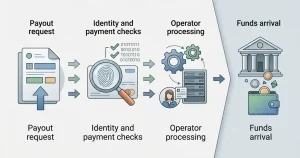
E-wallet withdrawals typically process within 24 hours after the operator releases the funds.
When is the best time to play for smaller prize pools?
Peak bingo-room hours are 7pm to 11pm, when the largest prize pools are scheduled. Playing outside those hours may mean smaller pools.
Material created by the team Rolletto