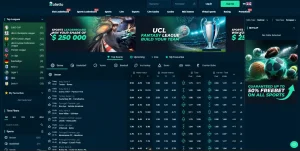
The guide separates the dealer-led stream from the betting controls and explains how wheel type, zero and casino terms shape a session.
How Lightning Roulette Fits Into an Online Casino
Lightning Roulette sits within the live-casino part of an online casino. The game is presented through a real-time studio stream, with a human dealer at the centre of the action. Bets are placed through an on-screen interface. In practical terms, the screen combines two things: a view of the live game and a digital way to participate.
That arrangement is different from simply opening a game that runs entirely on the device. The studio supplies the live presentation; the casino’s interface supplies the controls for placing bets. The player does not need to be in the studio. The stream brings its activity to the online session, while the interface gives the player a way to take part remotely.
The separation matters. A video image is not itself a betting control, and a betting panel is not the studio game. They appear together, but serve different purposes. The stream shows the dealer-led session as it happens. The interface is where a player makes selections and submits them. An online casino with Lightning Roulette is therefore acting as the access point between the studio game and the person using the site.
When considering live Lightning Roulette in the UK, it helps to check practical details alongside the game itself. The verdicts below stick to the available payout information for each operator.
1. SlotoSport
Payout speed: 1-3 business days SlotoSport lists a payout speed of 1–3 business days. This is the available practical detail for readers to consider.
2. EvoSpin
Payout speed: 1-3 business days EvoSpin lists a payout speed of 1–3 business days. This is the available practical detail for readers to consider.
3. BeOnBet
Payout speed: 1-3 business days BeOnBet lists a payout speed of 1–3 business days. This is the available practical detail for readers to consider.
4. Dieselwin
Payout speed: 1-3 business days Dieselwin lists a payout speed of 1–3 business days. This is the available practical detail for readers to consider.
5. x3bet
Payout speed: 1-3 business days x3bet lists a payout speed of 1–3 business days. This is the available practical detail for readers to consider.
6. Jetsetspins
Payout speed: 1-3 business days Jetsetspins lists a payout speed of 1–3 business days. This is the available practical detail for readers to consider.
7. SpinFormula
Payout speed: 1-3 business days SpinFormula lists a payout speed of 1–3 business days. This is the available practical detail for readers to consider.
8. NightLuck
Payout speed: 1-3 business days NightLuck lists a payout speed of 1–3 business days. This is the available practical detail for readers to consider.
9. Zombillion
Payout speed: 1-3 business days Zombillion lists a payout speed of 1–3 business days. This is the available practical detail for readers to consider.
10. Revery Play
Payout speed: 1-3 business days Revery Play lists a payout speed of 1–3 business days. This is the available practical detail for readers to consider.
I have always thought of this as a hand-off between systems rather than a single piece of software doing everything. The studio provides a human-led game in real time; the online casino presents that stream and gives the player a digital route into it. That is the basic shape of live dealer play, whether someone is considering Lightning Roulette or another game offered in a live section.
The phrase “live” can sound more dramatic than the arrangement needs to be. What it means here is that gameplay is streamed from a studio as it takes place, with a human dealer present. It does not mean that the player is physically at the table. The player’s participation is online, through the casino’s interface. The distinction is useful because the experience is both a broadcast and an interactive game: watching is only one part of it.
For someone comparing an online casino Lightning Roulette option with a standard digital game, the first difference to notice is how the experience is delivered. The live version has a studio stream and a dealer; the online interface carries the player’s choices into the session. A conventional digital game may present its activity directly on screen without that studio-and-dealer arrangement. The point here is not that one format is better. They are different ways of putting a casino game online.
Games & Slots: UK Casino Game Guides
A live table can feel more like a shared event because the dealer is visible and the game unfolds in real time. But the online session remains mediated by the platform. The player sees the stream through the casino site or its game interface, and places bets using the controls provided there. The interface is not merely decoration around the video: it is the working part that turns an online viewing session into participation.
This can also clarify what “online casino with Lightning Roulette” means in ordinary terms. It is not a separate kind of venue. It is an online casino that makes the live game available through its site, connecting the studio stream with the betting interface. The studio and the casino platform have distinct roles, even if the player encounters them within one screen.
The visual presentation may make the experience feel immediate, but it still depends on a working connection between the player’s device and the online service. The stream must reach the screen, and the interface must carry the player’s selections. That is the practical foundation of live play. If either side of that connection is disrupted, the experience can become difficult to follow. No theatrical language changes the underlying arrangement.
In the UK, online gambling is legal for adults aged eighteen and over when the operator holds a UK Gambling Commission licence. That legal framework applies to the casino service providing access, rather than changing the basic live format: a studio stream, a human dealer and betting through an on-screen interface. The licence is part of the conditions under which a legal online casino serves British players.
Attention: In the UK, online gambling is only legal for adults aged eighteen and over when the operator holds a UK Gambling Commission licence.
The label “Lightning Roulette” identifies the game being offered, while “live casino” describes the way it is delivered. Those terms are often combined in listings, but they answer different questions. One names the game; the other signals a studio-based, dealer-led format accessed online. Keeping those ideas separate makes casino descriptions easier to read and reduces the chance of mistaking a promotional label for an explanation of how the service works.
The central point is simple. An online casino provides the route in; the studio supplies the real-time game; the dealer leads the session; and the player uses the on-screen interface to place bets. That is the framework behind live casino access. The session is entertainment, not gambling advice.
The Live Roulette Format Behind the Game
The defining difference in live roulette is the source of the result. A dealer spins a physical wheel, and the ball’s landing place determines the outcome. In computerized roulette, a Random Number Generator (RNG) produces the result instead. The screen may make both formats look like versions of the same game, but the process behind the image is different.
That distinction matters when assessing what “live” means. It is not simply a label for a roulette interface with moving graphics. In a live dealer game, the wheel and dealer are part of the actual play. In an RNG game, the result comes from software, even if the presentation uses an illustrated wheel or an animation that resembles a spin. One is a physical event shown as it happens; the other is a computer-generated outcome presented on screen.
The live format depends on the wheel being spun by a human dealer. The result is visible through the broadcast, rather than represented only by a digital animation. That can give the game a more recognisably casino-like character, but it does not make the wheel a different kind of game. The format changes how the result is produced and presented; it does not, by itself, establish different rules or better chances.
Online Bingo in the UK: Formats and Slots
I have seen “authentic” used as a selling word for live tables. The practical meaning is narrower: a physical wheel is in use, and a dealer operates it. That is a real difference from an RNG, but it is not evidence that the game is more favourable, more predictable or more transparent in every respect. The word does not settle those questions.
A physical wheel, not a visual effect
A live roulette broadcast gives the wheel a role beyond decoration. The dealer spins it, and the ball comes to rest in one of its pockets. The camera carries that event to the player’s screen. The image is therefore tied to the physical action taking place at the table, rather than generated as a depiction of a result already selected by software.
That does not mean a viewer can infer anything useful about future outcomes from the motion of the wheel or ball. Seeing a real object move is not the same as having a reliable way to predict where it will stop. Nor does the presence of a dealer turn the result into a personal decision: the dealer performs the spin, while the wheel and ball produce the outcome.
In a computerized version, the RNG is the mechanism that determines the result. The software may then display that result with a wheel animation, but the animation is not the physical source of the outcome. This distinction is easy to miss because the screen can make the two formats look similar. The surface can be familiar; the process is not.
The distinction is about method. Not mystique.
What “live” changes—and what it does not
For a game such as Lightning Roulette, the live-casino label points to the dealer-led physical-wheel format. It does not, on its own, explain every feature attached to the game or tell how any special element works. Those details belong to the game’s stated rules and presentation, not to the general meaning of live roulette.
That separation is useful because promotional language can blur the categories. “Real wheel” describes the equipment and process. It does not mean that every part of the experience is physical: bets and information are still handled through the on-screen interface. Likewise, “computerised” does not mean that a roulette game must look like a plain set of numbers. It describes the use of an RNG to generate results, not the visual style surrounding them.
Online Casino Without ID in the UK: What It Means
I would treat the wheel as the format’s central distinction, not as a promise. A live table gives the game a visible physical sequence; an RNG version gives it a software-generated one. Neither description says that past spins can guide the next result. A physical wheel is not a memory device, and an animation is not a record of what the RNG will produce later.
There is also a difference in how the result is experienced. A live spin unfolds on screen as a dealer operates the wheel, while computerized roulette can present a result without that dealer-led physical sequence. The live presentation may feel closer to watching a table in a casino. That is a matter of format and atmosphere, not proof of an advantage.
“Real-time” is another phrase that can sound broader than it is. In this context, it points to the live game being shown as the dealer conducts it. It does not mean the stream gives a player control over the wheel, or that viewing the action reveals a dependable pattern. The result remains the result of the spin.
For anyone comparing live roulette with an RNG version, the useful question is therefore not which screen looks more convincing. It is whether the result comes from a dealer spinning a physical wheel or from a Random Number Generator. In live dealer roulette, it is the former. In computerized roulette, it is the latter. That is the format difference; claims beyond it need to be judged separately.
What Makes a UK Casino Suitable for Live Roulette
A suitable UK casino for Lightning Roulette is not simply one with the game visible in its lobby. The practical test is whether the operator is properly licensed and whether the live table’s pace, entry stake and technical demands fit the way the session is intended to work. “Best” is a marketing label, not a useful assessment on its own.
Selecting a UK Casino
- Verify the operator holds a UK Gambling Commission licence
- Check the table’s minimum entry stake
- Ensure a stable internet connection for the live stream
- Confirm the table’s pace fits the intended session
Start with the licence
For real-money gambling offered to people in Great Britain, the operator must hold the relevant UK Gambling Commission licence. A live dealer casino without that authorisation is not a legal choice for this market, even if its website is accessible or its games appear familiar. The licence is the first filter, not a decorative badge beside a company name.
I treat that distinction as basic due diligence. A polished stream cannot substitute for the regulatory status of the business taking bets. Nor does a game’s presence on a site establish that the site is permitted to serve British customers. Check the operator’s own licensing information against the Gambling Commission’s register; the name and status should be clear enough to verify. If the operator’s identity or licence is difficult to establish, that is a reason to stop rather than infer legitimacy.
Match the table’s pace to the session
Live dealer roulette moves more slowly than a digital version because the game proceeds through a real-time table rather than an entirely computer-driven sequence. The interval between rounds is part of the format. It can suit someone who wants to follow a dealer-led game, but it is a poor fit for a session built around rapid, repeated decisions.
That difference matters when comparing tables. A live lobby may make several games look interchangeable, while the actual rhythm can affect how long a session lasts and how often a player has to make a decision. The relevant question is not whether a table is advertised as “fast”, but whether its live pace is comfortable without encouraging a longer session than planned. Set a budget beforehand and keep to it. No chasing.
Jackpot King Slots at UK Casinos: What to Check
Check the entry stake, not just the game name
Minimum bets vary between tables and can make a particular casino unsuitable even when its roulette offering looks appealing. A specialist review has reported that some live roulette and baccarat tables begin at around 20p, while blackjack tables can set higher starting stakes. That is a report about particular tables, not a dependable market-wide price: limits can change, and the displayed minimum for the chosen roulette table is what matters.
A low minimum can make it easier to keep individual bets within a planned budget, but it does not make gambling risk-free or guarantee that a session will remain inexpensive. The table’s current limit should be visible before play begins. If it does not fit the planned spend, choosing another table—or not starting—is the sensible outcome. A game title alone says nothing about the amount needed to join.
Treat connection quality as part of the choice
A live stream needs a stable internet connection. If the picture or connection repeatedly drops, the table becomes harder to follow and the interface may not reflect the smooth, continuous experience implied by its presentation. This is not a minor technical detail: live play depends on receiving the stream and submitting decisions through the on-screen controls.
The casino’s suitability therefore depends partly on the conditions in which it is being accessed. A reliable connection and a device that can display the stream clearly are practical prerequisites, not extras. Review the table rules and paytable before beginning, then assess whether the pace, stake and stream are workable together. This is entertainment, not gambling advice.
Casino Suitability
- A valid UK Gambling Commission licence is a mandatory requirement
- Table minimums must fit within the planned budget
- A stable connection is essential for a usable live experience
- The live dealer pace is slower than digital RNG versions
First-Person Roulette: What the View Does—and Doesn’t—Tell You
A first-person presentation changes the angle from which a roulette game is seen. It can make the screen feel closer to the action, but that impression is about presentation, not proof that the game uses different rules or produces different outcomes. I keep those questions separate: what the interface shows, and what kind of roulette is actually being played.
That distinction matters when a familiar live game appears in a less familiar view. A close-up or player-centred layout may make the experience feel more direct. It does not, by itself, establish that the wheel, the dealer’s role or the way results are generated has changed. Nor does the phrase “first person” tell me anything reliable about the odds. Those are questions for the game information and table rules, not for the camera perspective.
For live roulette, the underlying format involves a dealer spinning a physical wheel. Computerised roulette, by contrast, uses a Random Number Generator. A viewing style is not a third mechanism between those two. If a game is presented as live, the relevant distinction is still whether the result comes from a real wheel and dealer or from computer-generated play; the viewpoint alone cannot settle that.
Presentation is not evidence
I have seen interfaces encourage assumptions simply by making one part of a game more prominent. A close view can make a wheel seem more immediate, while a compact layout can make the same game feel more like a conventional digital product. Neither appearance demonstrates a change to the underlying process. It is an easy distinction to lose when the screen is doing much of the explaining.
The same caution applies to a first-person Lightning Roulette casino game. The label describes how the experience is framed, not a separate set of roulette rules. It does not establish that the wheel behaves differently, that a result is more predictable, or that a particular feature is active. Those details have to be stated in the game’s own information. A visual impression cannot fill in missing terms.
Divine Fortune UK Casinos: What the Game Facts Show
This is also why I would not treat a change in viewpoint as a sign of improved chances. A perspective can affect how clearly the action is seen or how involved the session feels. It cannot show that a future result has become more likely. Past spins, visual cues and statistics displayed around a table do not turn the view into a forecasting tool.
What to check instead
When considering whether to play first-person Lightning Roulette, the useful questions remain practical and factual: is the game identified as live roulette, what do its displayed rules say, and does the table information explain the features being offered? The presentation can then be judged for what it is—a way of viewing the game—without assigning it powers the screen cannot demonstrate.
If the interface leaves a point unclear, that is a reason to pause rather than infer. A camera angle does not explain a payout condition. A dramatic close-up does not verify a special rule. And a familiar title does not, on its own, confirm which version or settings are on screen. I look for explicit information, not atmosphere. Marketing is not mechanics.
The sensible reading of a first-person view is therefore narrow: it changes the player’s visual perspective. Whether the game is live or computerised depends on its underlying format, and whether a particular rule applies depends on the stated game rules. Keeping those layers apart makes the presentation easier to assess without mistaking immersion for evidence.
Online Casino Offers and the Live-Table Small Print
A welcome offer can look generous while doing little for a session at a live roulette table. The reason is often the form of the promotion: a specialist review of UK casino offers describes many welcome deals as free spins for slot games, which cannot be used at live tables. That does not establish the terms of every offer, but it is a useful warning against treating a headline bonus as a general-purpose balance.
Inspired Gaming Casinos UK and Amatic Explained
Even when an offer includes bonus funds that can be wagered on live games, the contribution may be restricted. A game-weighting clause determines how much eligible play counts towards the wagering requirement. Live games may contribute only a small share; a stated weighting of 10%, for instance, means that only a fraction of qualifying stakes is credited towards that requirement. The rest still has to be met under the offer’s rules.
This is where the promotional wording matters more than the headline. “Casino-wide” can sound broad, but the eligible-games list may exclude live roulette, or assign it a lower weighting than other games. A promotion may also distinguish between bonus funds and cash funds, so the same wager does not necessarily affect both balances in the same way. The terms, not the banner, determine what can be used and what counts.
For a player interested specifically in Lightning Roulette, the relevant question is not whether a casino advertises a welcome bonus. It is whether that particular promotion permits the live game and, if so, how its play is counted. An offer that is restricted to slots may have no practical value at the live table. An offer that allows live play may still add little progress towards its wagering condition.
I have seen this distinction treated as a footnote in promotional copy, although it can change the real value of the deal. The bonus amount draws attention; exclusions and game weighting govern its use. Small print, large effect.
Before opting in, the terms should be checked for wagering requirements, game weighting and maximum bet limits. These conditions can interact: a game may be eligible but contribute at a reduced rate, while a separate stake rule still applies. If the wording is unclear, the value of the offer cannot be judged from the headline alone.
A welcome offer should therefore be assessed as a separate product from the game itself. It does not improve the roulette rules or alter the result of a spin. It adds conditions around promotional funds, and those conditions may make the offer irrelevant to live play. The sensible comparison is between the published terms and the intended use, not between bonus figures in isolation.
This content is for entertainment purposes only and is not gambling advice.
Live Table Restrictions
Welcome offers often feature free spins for slots that cannot be used at live tables, and live games may have significantly lower wagering contributions.
Roulette Bets, Zero and the House Edge
The basic win condition is straightforward: the ball comes to rest on a number, and a bet wins when that number matches the selection. The wording is simple; the financial difference lies in how many numbers a bet covers and how its payout is set. A straight-up bet selects one number. Other bets cover different selections, but the house edge is not identical across these categories.
For roulette, the stated house edge is 2.9% on straight-up bets and 2.7% on other bets. The edge is a measure of the game’s built-in mathematical advantage for the house over repeated play, not a charge deducted from every stake. A single result can go either way; the percentage describes the longer-run structure, not what will happen in an individual spin.
That distinction is easy to blur in promotional language. A game may be presented as a chance to “hit” a number, but the payout and the chance of a result are separate parts of the calculation. A straight-up selection has a narrower target than a bet covering more outcomes, while its house edge is slightly higher. More coverage does not remove the edge; it changes the shape of the risk.
Zero matters because it is a result in its own right, not a neutral pause in the game. On an even-money bet, a player is effectively choosing between two broad outcomes, such as red or black. If zero appears, that selection has not won. The standard loss treatment can differ by roulette rule, so the table’s stated rules and paytable matter before a stake is placed.
Online Casino Tournaments in the UK: Entry and Prizes
French Roulette includes a specific protection for even-money bets: when the ball lands on zero, only half of the stake is lost. That is a partial-loss rule, not a win, and it does not apply automatically to every roulette table. It changes the treatment of zero for that class of bet, while leaving the basic need to understand the table rules intact.
When considering whether to play a Lightning Roulette casino game, the familiar roulette bet categories and zero rules remain central to assessing risk; a game label does not by itself explain how a particular bet is treated. I have seen players focus on the headline feature and overlook the ordinary terms that govern their stake. The paytable is the useful document. No shortcut.
This is information for entertainment purposes only, not gambling advice. Any session should have a set budget, and play should stop within that limit rather than extending to recover losses or pursue winnings.
Using a Demo Without Mistaking It for Real Play
A demo can make the roulette interface less unfamiliar before any real-money session. It gives space to see where the betting choices appear, how a selection is registered and what changes on screen after a spin. That is useful orientation, not a rehearsal that proves a particular strategy will work.
In roulette, the result is the number where the ball comes to rest. A winning selection is one that matches that number. A free-play version can help make the link between a chosen number and the result easier to follow, without putting money at risk. It can also show how the table presents a placed bet, so the controls themselves are less of a distraction.
Live Dream Catcher Casino UK: Format and Rules
I used to regard demos as a kind of dry run. That description gives them too much credit. They can familiarise someone with buttons and choices; they cannot reproduce the consequences of staking real money. No real payout is made in demo play, and a virtual balance is not winnings that can be withdrawn. It is a practice display.
That distinction matters with Lightning Roulette. Trying a demo may help explain how its screen is arranged, but free play does not establish what a real session will feel like or provide evidence about future results. A run of virtual outcomes says nothing about what comes next. Roulette remains a game of individual spins, not a pattern that a practice session can decode.
The same limit applies to confidence. A player may become quicker at finding a selection or reading the result, yet that familiarity is not the same as knowing how a real-money session will affect judgement. When money is involved, choices can feel different. A demo cannot test that pressure, and it should not be treated as proof that a staking plan is safe.
The label “free” can also make the experience sound more complete than it is. The practical value is narrow: learning the layout and seeing how selections are made. It does not turn practice into a source of income, nor does it guarantee that the same pace or presentation will be available in every version.
For anyone exploring a Lightning Roulette demo in the UK, the sensible measure is whether it clarifies the interface, not whether it produces a run of apparent wins. Free play is a familiarisation tool. Nothing more.
What the Live Dealer Adds to the Table
A live dealer changes the rhythm of an online game. Instead of a result being generated and displayed almost immediately, the action is streamed in real time from a studio, where a human dealer runs the table. Bets are made through the on-screen interface; the dealer and the stream provide the visible, shared event around them.
That distinction matters more than the word “live” in a game title. The dealer is not a decorative image beside a digital result. The presentation follows an actual table in progress, so there is a sequence to watch and a pause while one stage gives way to the next. I have found that this makes the game easier to follow as an event, but less suited to anyone expecting the rapid loop of a digital version.
The trade-off is pace. Live games move more slowly than digital ones, because the play is led by the dealer and shown as it happens. There is less sense of instant repetition. A Lightning Roulette live dealer casino therefore offers a different viewing experience from a computer-generated presentation, but the stream does not turn the game into a faster or more predictable one. The dealer’s presence changes how the round is delivered, not what a roulette result means.
The stream also makes the connection part of the experience. A stable internet connection is needed to keep the live presentation usable; interruptions can break the continuity that gives the format its point. That is a practical condition, not a special feature of Lightning Roulette.
Do
- Use a stable internet connection
- Account for slower round pacing
- Check minimum bet requirements
Don’t
- Expect rapid digital loop speeds
- Assume a dealer adds better odds
- Overlook higher entry stakes
Live tables also have higher minimum bets than digital versions. The difference can make the format less suitable for small-stake play, regardless of how engaging the dealer-led presentation feels. “Interactive” describes the format, not a better chance of winning. Keep that distinction clear.
For a UK player considering Lightning Roulette with a live dealer, the appeal is the human-led stream and the sense of a real-time table. The cost is a slower round, a connection-dependent experience and a higher entry point than digital play. The dealer adds presence. Not better odds.
Before Starting an Online Session
Before playing Lightning Roulette online in the UK, the legal check is straightforward: a casino taking real-money bets from British players must hold a current UK Gambling Commission licence. That requirement applies whether the operator is based in the UK or elsewhere. A familiar brand name or polished website is not a substitute for the licence.
I treat the start of a session as a practical check, not a formality. Live tables move more slowly than digital games, and their minimum bets are higher. That changes the shape of a session: there may be fewer betting opportunities in the same stretch of time, while each accepted bet may need more money than on a digital table. The table’s displayed minimum should therefore be understood before any funds are committed. A session budget should be set in advance and kept to; a slower sequence is not a reason to raise it or extend play to recover a loss.
The connection matters, too. Live play depends on a stable internet connection, so an unreliable signal can interrupt the viewing experience at the point when the table is operating. I would not treat a frozen or delayed stream as a cue to make hurried decisions. If the connection becomes unstable, pausing is more sensible than continuing while unsure what the interface is showing.
There is a difference between being able to open a game and being ready to play it. The licensed account, the table minimum, the available budget and the connection all need to fit together. If one does not, the session is poorly set up before the first bet is placed. No urgency.
This is entertainment, not gambling advice. Real-money play involves risk, and the decision to take part should remain separate from expectations about winning. The conditions are plain: licensed operator, affordable stake, stable connection. If any of those is missing, there is no need to start.
European and American Roulette: The Wheel Changes the Odds
The distinction between European and American Roulette is visible in the wheel’s green pockets. European Roulette has a single green pocket, marked 0. The American version has two: 0 and 00. That extra pocket changes the chance of a selected number winning, even though the difference in the layout may look small on screen.
American Roulette Online in the UK: Odds and Tables
The stated odds of winning are 1 in 37 on a European wheel and 1 in 38 on an American one. The comparison is tied to the wheel format, not whether the game is streamed online or presented through a digital interface. In an online casino listing, the roulette format matters more than a broad label such as “live” or “Lightning”: those labels do not, by themselves, tell the whole story about the wheel.
I have seen presentation do a lot of work in casino menus. A polished table view can make two games feel nearly identical, while the pocket count quietly changes the underlying odds. The practical check is the displayed wheel and table layout, not the visual style of the stream.
This is a narrow difference, but a real one. The extra pocket is not decorative; it is part of the game’s structure and affects the stated chance of winning. No interface can remove it.
The comparison does not make either format a reliable way to make money. Roulette remains gambling, and this information is for entertainment purposes only, not gambling advice. A format label is not a prediction.
Is the house edge the same at live dealer casinos online?
No. It varies with the game and the rules: roulette straight-up bets have a 2.9% house edge, while other roulette bets have a 2.7% edge; French Roulette reduces losses on even-money bets when the ball lands on zero.
What are the different types of roulette you can play with a live dealer?
Live roulette includes European, American and French versions. American Roulette has both 0 and 00, while European Roulette has a single 0; French Roulette offers a rule under which an even-money bet loses only half on zero.
How do you play live roulette?
Choose your bets using the on-screen interface, then the live dealer spins a physical wheel. You win a number bet if the ball lands on the number you selected.
How does the house edge change between games?
It varies by game and bet. In roulette, straight-up bets have a 2.9% edge and other bets a 2.7% edge; French Roulette’s half-loss rule on even-money bets when zero lands reduces the loss on those bets.
How can you win live dealer roulette?
You win a roulette bet when the ball lands on a number you selected. No betting system can guarantee a win.
How do you choose a live dealer casino?
For play in the UK, choose an operator holding a UK Gambling Commission licence. Live games also need a stable internet connection and often run more slowly than digital games.
Material created by the team Rolletto