Keno play involves choosing spots on a 1–80 card, then comparing them with randomly drawn numbers; odds, site checks and terms matter.
How Online Keno Works: Cards, Picks and Draws
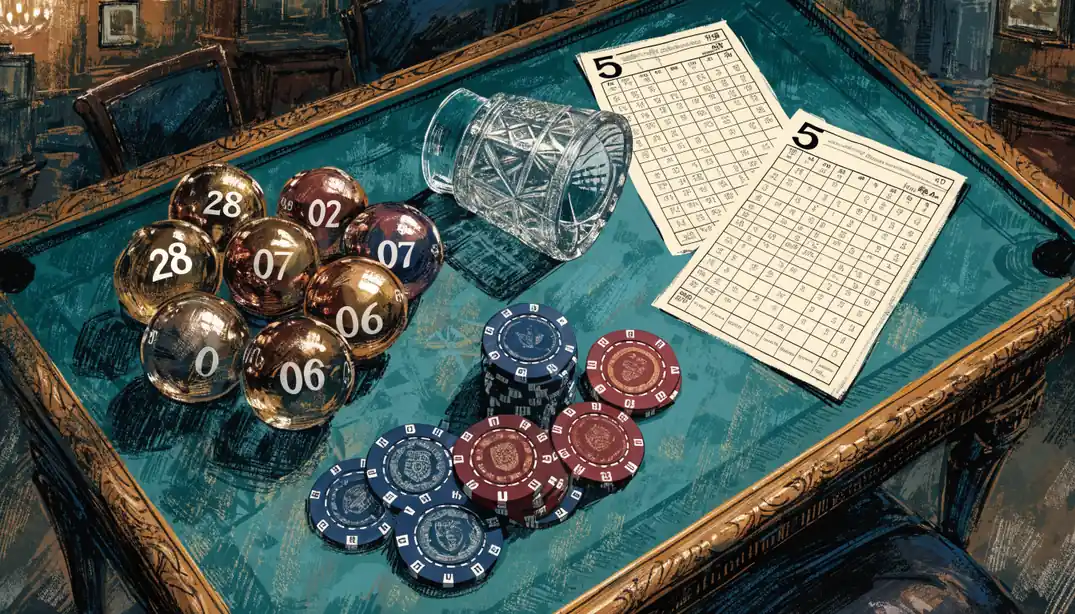
A keno round starts with a card showing the numbers from 1 to 80. Before the draw, a player marks a set of spots. The number of spots available depends on the particular game: some allow selections up to 10, 15 or 20. That choice shapes what the round is testing, but it does not influence which numbers will be drawn.
In the games I have checked, the screen makes the sequence straightforward: choose spots, confirm the selection, then let the draw run. The spots can be marked individually, or a game may offer a random-selection option. That changes how the card is filled, not how the draw works. A selected spot is not more likely to appear because it was chosen by hand, nor is an automated choice more likely to catch one.
Once selections are set, the game draws numbers at random. Online keno uses a random number generator for this process. A draw can contain as many as 20 numbers, while some versions draw fewer. The player’s chosen spots are then compared with the numbers shown in the result.
A match is often described as catching a spot. If a drawn number is among the spots marked on the card, that spot has been caught. The round’s result depends on the number of spots selected and how many of them catch. The draw itself does not change to favour a card with more selections; it is the relationship between the marked spots and the drawn numbers that determines the outcome.
A round, step by step
- The card presents numbers from 1 to 80.
- The player marks the spots allowed by that game.
- The game’s random number generator produces the draw.
- The drawn numbers are compared with the selected spots.
That is the core of a keno casino game, whether the display is on a desktop or a mobile screen. The graphics may show balls, flashing tiles or a scrolling sequence, but those are ways of presenting the same underlying event: a random set of numbers is drawn and checked against the player’s card.
It helps to separate the selection from the draw. Marking spots is an input; it does not steer the result. The random draw is the event that produces the numbers, and the comparison determines how many selected spots were caught. Number patterns that look balanced or familiar have no special effect on a legitimate game’s random process.
The pace and presentation can differ among online keno games. One version may reveal the drawn numbers one at a time; another may display the result together. A mobile keno game may arrange the card differently to fit a smaller screen. These presentation choices do not alter the basic sequence of card, selection, draw and comparison.
That distinction is easy to lose when the screen animates each number. The animation gives the round a visible rhythm, but it is not a clue about what comes next. Each round is resolved by its own draw, rather than by a pattern that can be read from previous results. The mechanics are simple. The outcome remains random.
Amatic Slots in UK Casinos: How the Games Work
Keno Odds, Payouts and the House Edge
A keno paytable turns catches into returns. It sets out what a game pays for each combination of spots selected and spots caught. The same count of catches can therefore produce different results in different games: the payout depends not only on how many spots match, but also on the game’s rules and the particular paytable.
That distinction is easy to miss when a screen highlights a possible prize. A headline amount describes a result under specified conditions; it does not show how often that result is expected or what happens across the other outcomes. I have found it more useful to read the whole table than to anchor on its largest figure. Small wins, partial matches and losing results all belong to the same calculation.
What a payout actually represents
A listed prize may be shown as a total return or as winnings in addition to the original stake. Those are not interchangeable. If the stake is included in a return, the amount left after subtracting it is lower than the displayed figure. The game’s wording should make clear which convention it uses; if it does not, the headline alone cannot establish the net result.
Attention: A listed prize may include the original stake; if so, the actual net winnings are lower than the displayed figure.
The table also needs to be read against the game’s full range of outcomes. A generous payment for a rare pattern can sit alongside modest or absent payments for more common results. Conversely, a game may distribute returns across more match patterns while offering a smaller top prize. Neither presentation, viewed alone, tells the player whether the overall terms are favourable.
A keno round is random, so the table describes possible payments rather than a reliable route to them. Choosing a pattern or repeating a selection does not make a result due. No system guarantees a win. That is the part promotional language tends to leave in the background.
The house edge, plainly
The house edge is the mathematical advantage built into a game’s payment structure over repeated play. It is not a fee visibly deducted from every round, nor does it predict the result of one session. It describes the long-run difference between the amount staked and the amount returned, based on the game’s probabilities and paytable. A player may win in the short term; the edge explains why the game is not designed to return every stake over time.
The required caution is substantial: keno should be treated as a game with a house edge of 25% or more. A specialist review has reported a range from 5% to 40% across casino keno, but that is a reported range, not a dependable description of every current game. The spread itself is the point: terms can differ sharply, and a figure attached to one game should not be carried over to another.
Amatic Online Slots in the UK: How They Work
A larger edge means a greater expected loss relative to the amount wagered over sustained play. It does not mean that a particular player will lose a fixed share, or that losses arrive evenly. Short-run results can move in either direction. The edge is a property of the game, not a forecast for the next draw.
Why the same game name is not enough
Keno rules and payouts vary across platforms. Even where two games appear similar, their paytables may reward different catch patterns or assign different returns to the same pattern. That changes the financial terms, not merely the look of the interface. Comparing a prize headline without comparing the rules behind it is an incomplete comparison.
Before wagering, the specific game’s paytable, rules and odds need to be checked together. The paytable shows the stated returns; the rules explain how the outcomes are defined; the odds indicate how likely those outcomes are. One without the others gives only part of the picture. If the information is not clear, there is no sound basis for treating the advertised prize as a measure of value.
This is where claims such as “big payouts” become less informative than they sound. The phrase may refer to a possible high return while saying nothing about the chance of reaching it or the payments elsewhere in the table. The structure matters more than the label. Read the terms, not the adjective.
For anyone comparing online keno, the practical question is not simply which game advertises the largest win. It is how the complete payment schedule works and what edge the available information indicates. A high headline prize can coexist with unfavourable overall returns. A lower headline does not, by itself, prove better value either. The paytable has to be considered as a whole.
House Edge
Keno typically carries a substantial house edge of 25% or more, meaning it is not designed to return every stake over time.
What to Check on a Keno Casino Site
A keno page can look straightforward while leaving the important conditions several clicks away. I would treat the game screen as the beginning of the check, not the whole offer. Before considering a wager, the rules, paytable and odds should be available and clear for the specific game. If those details are missing, or the wording does not explain how a return is calculated, the screen is not enough to make an informed comparison.
Start with the game’s rules. Check how many spots can be selected, how a round is settled and whether any optional features change the bet or potential return. Keno formats are not uniform: a familiar layout does not mean the underlying rules are identical. One specialist review notes that betting and payout structures can differ between platforms; that is a reason to inspect each game’s own information rather than assume the details carry over from another site.
The paytable is the practical centre of that check. It should show what happens across the possible match outcomes for the selected spots, including outcomes that pay nothing and any unusual conditions attached to a return. Read the table alongside the rules, not in isolation. A prominent prize figure can draw attention to the best-case result, but it does not explain the full distribution of outcomes. The table does.
Endorphina Online Casinos in the UK: Provider Check
Keno payouts vary across platforms. That matters even when two games appear to offer the same basic format. A table on one site cannot be used as a guide to another site’s game, and a general description of keno cannot substitute for the paytable attached to the actual round. I have seen how a headline prize can dominate the presentation while the less attractive rows sit lower down. The detail matters.
The odds deserve the same scrutiny. Check that they are stated for the game and bet being considered, and that the figures correspond to the paytable rather than to a promotional summary. Keno has a house edge of 25% or more, so it should not be treated as a low-cost way to chase a large prize. A site’s presentation cannot change that basic risk. If the rules, odds and table do not line up clearly, pause before wagering.
Next, check the betting range against the bankroll intended for play. The available stake should be manageable without relying on a hoped-for return to fund later rounds. A game may have an appealing layout and a clear paytable yet still be a poor fit if its permitted bet size does not suit the amount set aside. This is a compatibility check, not a reason to raise the budget. Keep the planned spend fixed.
Look for whether the stake is shown before the round is confirmed and whether optional features alter the total cost. If a control changes the wager, its effect should be visible before play begins. The same goes for repeating a selection across games: understand what is being charged for each round rather than reading a single displayed stake as the total commitment. Small interface details can decide whether the game behaves as expected.
Checking Keno Games
- Review the game rules and allowed number of spots.
- Inspect the full paytable for all match outcomes.
- Verify the stated odds against the paytable.
- Confirm the betting range suits your fixed budget.
- Check the operator’s UK Gambling Commission licence.
On a UK-facing casino site, the operator’s regulatory status is part of the basic check, not a decorative badge. Remote gambling operators serving the British market must hold the relevant UK Gambling Commission licence. Confirm that the site identifies its operator and provides a way to verify its status. A polished page, familiar game design or reassuring promotional language does not establish that an operator is authorised.
I would also check that the information remains accessible before signing up or depositing. Rules hidden behind an account wall are harder to assess, and an unclear table is not made clearer by a persuasive banner. “Simple” describes the interface; it does not explain the terms. Read the game details first.
A useful comparison is therefore not a shortlist based on appearance. It is a side-by-side check of rules, paytables, odds, stake options and the operator’s UK status. If any of those essentials is difficult to establish, there is no need to fill the gap with assumptions. Walk away from the screen.
Reading “Top Keno Casinos” Claims Without a Rankings List
When choosing an online casino for keno in the UK in 2026, it helps to check practical details such as how quickly withdrawals are paid. The verdicts below reflect the information available for each operator.
1. SlotoSport
Payout speed: 1-3 business days SlotoSport lists a payout speed of 1–3 business days.
2. EvoSpin
Payout speed: 1-3 business days EvoSpin lists a payout speed of 1–3 business days.
3. BeOnBet
Payout speed: 1-3 business days BeOnBet lists a payout speed of 1–3 business days.
4. Dieselwin
Payout speed: 1-3 business days Dieselwin lists a payout speed of 1–3 business days.
5. x3bet
Payout speed: 1-3 business days x3bet lists a payout speed of 1–3 business days.
6. Jetsetspins
Payout speed: 1-3 business days Jetsetspins lists a payout speed of 1–3 business days.
7. SpinFormula
Payout speed: 1-3 business days SpinFormula lists a payout speed of 1–3 business days.
8. NightLuck
Payout speed: 1-3 business days NightLuck lists a payout speed of 1–3 business days.
9. Zombillion
Payout speed: 1-3 business days Zombillion lists a payout speed of 1–3 business days.
10. Revery Play
Payout speed: 1-3 business days Revery Play lists a payout speed of 1–3 business days.
A “top” label looks like a verdict. In practice, it is only as useful as the criteria behind it. A page may compare keno availability, mobile access or advertised returns, but a ranked position does not establish that a site is suitable for every player—or that its claims have been independently checked.
I treat rankings as a starting point, not evidence. The wording around a list matters: does it explain what was assessed, distinguish promotional claims from tested details, and say when information was last checked? If the method is hidden, a first-place badge tells little. It may reflect the publisher’s chosen priorities rather than a consistent comparison of the games.
For keno, the game-specific terms matter more than a broad casino score. Rules and payouts vary between platforms, so the relevant paytable needs to be checked for the particular game before wagering. A casino’s general reputation or an attractive app listing cannot substitute for that. Nor does a label such as “best RTP” settle the question unless the figure clearly applies to the keno game being considered and the underlying information is credible.
Stakelogic Casinos in the UK: What to Verify
RTP is often used as shorthand for a return figure, but it should not be treated as a promise about an individual session. Keno outcomes are random; no system guarantees a win. I have seen promotional language turn a technical measure into a suggestion of dependable results. That is the point to slow down. Keno carries a house edge of 25% or more, so a ranking cannot make the underlying risk disappear.
The same caution applies to mobile claims. A “top keno casino app” label may refer to a dedicated app, a mobile website, or simply a casino that can be accessed on a phone. Those are not interchangeable descriptions. The ranking should make clear what it means by app and whether its comments concern the software, the keno game, or the wider casino. A polished mobile experience says nothing by itself about the game’s payout rules.
Crypto-focused comparisons need particular scrutiny. A page mentioning a crypto keno casino does not establish that a specific service is available to UK players or that it has been checked against the standards applicable to legal online gambling here. For UK players, legal online casinos must hold a current UK Gambling Commission operating licence. A comparison badge is not a licence, and the payment language in an advert does not verify the operator’s status.
Do
- Use rankings as a starting point only.
- Verify the specific game’s payout rules.
- Check for a current UKGC operating licence.
Don’t
- Treat a “top” label as absolute evidence.
- Assume RTP is a guarantee for one session.
- Rely on a comparison badge as a licence.
There is also a difference between an editorial comparison and an advert dressed as one. “Recommended” may describe a commercial relationship, while “reviewed” can mean anything from a careful examination to a brief look at a landing page. Disclosure helps explain the context, but it does not validate every claim. I look for specific, game-level information and a clear explanation of how the ranking was reached.
No ranking can settle every decision. It can organise information, but its order should not replace checking the relevant game’s rules, paytable and odds. The badge is not the evidence.
Trying Keno for Free Before Wagering
A free version is useful for learning the rhythm of a keno game without putting money at risk. The two common routes are a demo mode attached to a game or a social casino where games use play money. Neither is the same as wagering: the balance in a free session is for play, not a cash stake.
I have found that the value of a demo is practical rather than predictive. It shows how the game presents the card, where number selections are made and how the result appears after a draw. It can also make the controls less unfamiliar before a real-money session. It cannot show what a future session will return, or make a winning result more likely.
Habanero Online Casinos in the UK: Evidence Check
The basic exercise is simple: select spots manually or use the game’s random selection, start a round and follow how the result is displayed. Repeating that in free play can help clarify what the game counts as a match and where its rules are shown. The aim is familiarity with the interface, not finding a pattern. Keno results are random; no selection method or practice routine guarantees a win.
A social casino and a demo may feel similar, but they are different ways to try a game. A demo is a free version of a particular game, where available. A social casino offers free online games played with play money. In either case, the session is for learning the format, not testing a betting system or measuring what real-money play would produce.
There is a limit to what free play can teach. A simulated balance does not recreate the financial consequence of staking money, and a run of results in a demo says nothing reliable about the next draw. It is easy to mistake familiarity for an edge. It is not one.
Before moving from practice to wagering, check the specific game’s rules, paytable and odds; payouts can differ between platforms. Keno should be treated as a game with a house edge of 25% or more. Free play does not remove that edge or change the game’s terms.
A useful stopping point is when the controls and result display make sense. If the purpose was to learn how to play keno online, the demo has done its job once the format is clear. There is no need to turn practice into a promise of future success. Free play teaches the interface. Nothing more.
Free play and demo modes are for learning the interface and game rhythm; they cannot predict future results or remove the house edge.
Licensed and Live Keno: What the Format Means
“Licensed” describes the operator’s permission to offer gambling in the market; it does not tell anyone whether a particular keno game is live, how it is presented or what its rules are. In Great Britain, remote operators serving customers must hold the relevant UK Gambling Commission licence. Online gambling is legal for adults aged 18 and over when offered by a UKGC-licensed operator. Northern Ireland has a different legal framework: the Gambling Act 2005 applies in England, Wales and Scotland, but not there.
Age checks are an access condition, not a game feature. Operators must verify a customer’s age before allowing a deposit into a gambling account. A site’s use of the word “licensed” should therefore be read as a regulatory claim about the operator, not as proof that every game format is available or that a particular product has been checked.
The basic online format is RNG-based: a random number generator selects the drawn numbers. A live format, by contrast, would involve a draw presented as happening live rather than a draw generated by software. The label alone does not establish how a live game is run, whether a presenter is involved, or whether the result is independently produced. Those details need to be stated in the game’s own information.
I have seen format labels do more work in advertising than they do in practice. “Live” can sound like a different kind of game, but it is not, by itself, evidence of better odds, a more favourable paytable or a verified product. Keno rules and payouts vary between games, so the specific rules, paytable and odds matter whichever format is offered. Payouts vary across platforms. Check the details before wagering.
Amatic Slots at UK Online Casinos: How They Work
There is also a financial baseline worth keeping in view: keno has a house edge of 25% or more. The live label does not remove that disadvantage, and no presentation style changes the randomness of an RNG draw.
A search for live keno may turn up descriptions of formats rather than a confirmed live product. I would treat a claim as established only when the operator’s game information clearly identifies what is being offered and explains its rules. “Available” is not the same as verified.
Keno Bonuses, Promotions and the Fine Print
A “keno bonus” is a label, not a measure of value. The headline may describe extra funds, a promotional credit or a no-deposit offer, but it does not explain what can be played with it or what conditions apply before any resulting balance can be withdrawn. Those details belong to the terms, not the banner.
I have seen promotions judged by their size before anyone checked whether keno was eligible. The practical question is narrower: do the written conditions include the specific keno game, and how is play on it treated? If the terms are unclear, the advertised amount cannot be treated as usable keno credit. Fine print decides.
A no-deposit offer does not remove the need to check those conditions. “Free” can describe how a promotion is issued; it says nothing, by itself, about eligibility, restrictions or cash value. The wording should be read alongside the game’s own rules, rather than as a substitute for them.
The same applies to claims about keno payouts. A promotion does not rewrite a game’s paytable, and keno rules and payouts vary between platforms. Before wagering, the specific game’s paytable, rules and odds need to be checked. Otherwise, a bonus can make a weak offer look more attractive without changing the underlying terms of play.
Attention: Promotions and bonuses do not rewrite a game’s paytable or remove the house edge of 25% or more.
That distinction matters because keno has a house edge of 25% or more. A promotion should not be read as protection against that edge or as evidence that a particular selection of spots will perform better. Outcomes remain random; no number system guarantees a win. “Bigger” is not the same as better.
Bitcoin wording needs the same restraint. A bitcoin keno casino label describes a payment or promotional angle, not the quality of the keno game. It does not establish favourable odds, better payouts or a more generous offer. Claims about the best bitcoin keno casinos are not meaningful without a comparison of the actual game terms and promotion conditions; the currency alone proves none of those things.
I treat the offer and the game as separate decisions. First, establish what the promotion permits and what conditions attach to it. Then assess the keno paytable and rules on their own terms. Set a spending budget in advance, and do not chase losses to make a promotion feel worthwhile. Marketing can change the framing. It cannot change the draw.
Finding Keno Among Casino Games, Including Live Options
Keno can sit in a casino lobby under a lottery, numbers, or instant-win category rather than beside table games. A lobby search can help, but category names are not consistent: the useful check is whether opening a game leads to a keno rules page and a playable round, not whether the word appears in a promotional banner.
Wazdan Casinos in the UK: What Can Be Verified
The game itself is a numbers draw in which the result is generated at random. That distinction matters when a site groups several formats under one heading. A listing called “live” should describe what is actually live in the game, rather than simply making the experience sound more immediate. Availability can vary, and a live label alone does not establish that a particular keno product is offered.
Some players look specifically for casinos with live keno, while others are content with online keno generated by an RNG. Those are different ways of presenting play; neither label tells the full story about the game’s rules or returns. I have seen lobby language do a lot of work while the actual game information sits one click deeper. Check the game’s own description before treating a category or badge as confirmation.
The same applies to a casino that accepts bitcoin. A payment option does not show whether keno is available, whether it is live, or what the game pays. Those details belong to the keno listing and paytable, not the cashier page.
Keno rules and payouts vary between platforms. Before wagering, check the specific game’s rules, paytable and odds; the displayed title is not a substitute. Keno carries a house edge of 25% or more, so finding the format is only the first check. The numbers can look simple. The cost is not.
Age verification is also part of access: operators must verify a customer’s age before allowing a deposit into a gambling account. That requirement does not tell anything about the game selection, but it is relevant when moving from browsing a lobby to funding an account. Availability and access are separate questions.
Main Considerations
- Keno results are random and no number system guarantees a win.
- Payouts and rules vary across platforms; always check the specific paytable.
- UK operators must be licensed by the UK Gambling Commission.
- Maintain a fixed spending budget and use account-level limit controls.
- A “live” or “video” format does not change the underlying house edge.
Playing Keno for Real Money: Stakes and Spending
With real-money keno, the stake is a spending decision before it is a game decision. Players choose how much to bet, and some games let them carry the same spots into multiple rounds. That can make the total cost less obvious: a modest stake repeated across several games still adds up. I would treat each round and any repeat play as part of one spending plan, not as separate, harmless bets.
Decide in advance what amount is affordable to lose, then stop when that budget is used. Chasing losses changes the purpose of the next bet: instead of being a fresh choice, it becomes an attempt to recover money already spent. That is not a reliable way to manage a bankroll. Keno outcomes are random, and choosing particular spots does not influence a legitimate game’s draw. No number system guarantees a win.
Amatic Online Casinos UK: Games and Terms
The house edge matters to that decision. Keno can carry a house edge of 25% or more, so repeated play can be costly over time. It is not a prediction of what one session will return, nor a reason to raise stakes after a losing run. Before wagering, check the specific game’s paytable, rules and odds; payouts vary between platforms, and a familiar-looking game name does not establish that the terms are the same.
A low stake may make a budget last longer, but it does not change the underlying randomness. A larger stake increases the amount at risk on each round. Neither choice improves the chance that a selected spot will be drawn. The useful comparison is between the game’s stated terms and the amount set aside for entertainment—not between a stake and a hoped-for recovery.
In Great Britain, a remote operator must verify a customer’s age before allowing a deposit. UK-licensed operators must also prompt new customers to set a financial limit before their first deposit and make account-level limit controls accessible. These controls help put a boundary around spending; they do not make a bet safer or guarantee that the boundary will be followed. If limits are hard to maintain, stepping away is more meaningful than changing spots or increasing the stake.
Greentube Casinos UK: Amatic Games Explained
Keep it bounded. A budget is not a target to spend through.
Video Keno and the “Slots” Comparison
Video keno can look slot-like because it presents a quick, self-contained game on screen, with a result appearing after a bet. That resemblance is about the playing format, not proof that the games share the same rules. Keno still uses its own selection and draw structure; a video presentation does not change what determines a result.
The comparison matters most when considering risk. Video keno’s odds can be about as unfavourable as those of slot machines. Keno carries a house edge of at least 25%, so a fast round or an animated display should not be mistaken for a better chance of coming out ahead. The screen can make a game feel more immediate. The maths remains.
I have seen presentation do a lot of quiet work in gambling: rapid results can keep attention on the next round, while the underlying return is less visible. That is one reason to separate the look of a game from its financial terms. “Slot-style” is a description of the interface, not a claim that video keno offers slot odds, slot features or a favourable return.
UK Casino Slots: Amatic RTP, Rules and Bonuses
Some keno games may include side bets, including multipliers; a specialist review has described these as features of particular games. Their presence should not be assumed across video keno as a whole. A multiplier changes the terms attached to a bet, not the randomness of the draw, and it does not turn a losing result into a predictable one.
For anyone learning how to play keno at a casino, the useful distinction is straightforward: video keno is keno presented in a screen-based format, not a separate promise of easier wins. A game can be tried without wagering where a free-play version is available, but a demo does not establish what its real-money terms will be. Before choosing to play keno for real money, the specific rules, paytable and odds matter more than whether the game resembles a slot.
The comparison is useful, but limited. Similar entertainment pace; similarly poor odds.
What is the house edge in Keno?
It can range from 5% to 40%, depending on the game and casino; online games usually have a higher edge. Check the specific game’s paytable before playing.
How important is it to pick the right Keno game?
It matters because rules, paytables and house edges vary between games. Compare the paytable and choose a game with bets that fit your budget.
How is Keno betting done?
Choose numbers, set your stake and start the draw. Your result depends on how many of your selected numbers match the numbers drawn.
How many numbers can I choose in Keno?
The number varies by game; players commonly choose up to 10–15 numbers, while some games allow up to 20.
How do I choose a line and place a bet?
Select the permitted numbers on the card, either manually or with random selection, then choose your bet size and confirm. The draw is random, so your selection does not influence which numbers appear.
How much does it cost?
Minimum stakes start at £1. You can choose your bet size, so set a budget before playing.
Is the payout guaranteed?
No. Keno results are random, and no strategy guarantees a win.
Material created by the team Rolletto